Let’s be honest: your phone has become an extra limb, and your attention span is paying the price. We wake up and immediately surrender our focus to a feed designed to keep us outraged, anxious, or distracted. This isn’t just a bad habit; it’s a systematic hijacking of your cognitive resources. To stage a successful digital detox, you need more than just willpower—you need a new mental operating system. By choosing the right books, you can move away from the noise of information overload and begin the process of intentional living.
The Science of Overload: Why Your Brain is Frying
Before we dive into the reading list, we have to understand the “why.” Every notification triggers a hit of dopamine, creating a loop that rewards distraction. Over time, your brain loses the ability to sustain deep thought, a phenomenon often called “popcorn brain.”
Research suggests that it takes an average of 23 minutes to fully refocus after a single interruption. If you check your phone every 10 minutes, you are effectively living in a permanent state of cognitive fog.

The Digital Detox Roadmap: 5 Books to Reset Your Brain
1. The Reality Check: “Stand Out of Our Light” by James Williams
If you want to know how the “Attention Economy” really works, start here. Williams, a former Google strategist, explains that technology isn’t just distracting us from our tasks—it’s distracting us from our human goals. It is the ultimate wake-up call for anyone feeling “lost in the feed.”
2. The Strategic Framework: “Digital Minimalism” by Cal Newport
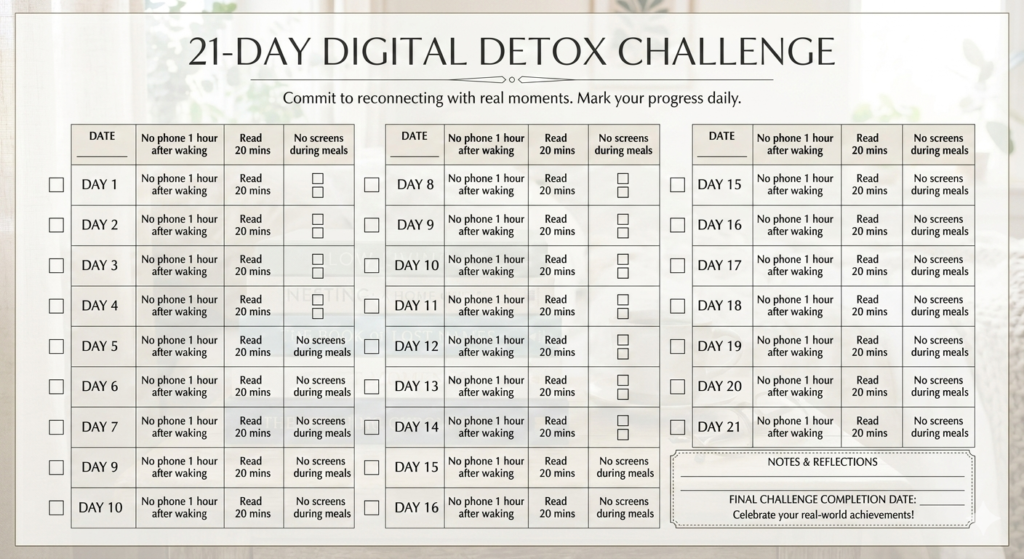
Newport doesn’t suggest you throw your phone in a lake. Instead, he advocates for a “philosophy of technology use” where you only use tools that support the things you deeply value. This book provides a tactical 30-day “digital declutter” process that is essential for reclaiming your life.
3. The Investigative Deep-Dive: “Stolen Focus” by Johann Hari
Why is our focus failing? Hari traveled the world to interview the scientists who discovered that our attention didn’t just collapse—it was stolen by design. This book shifts the guilt away from the individual and looks at the systemic changes we need to make to get our brains back.
4. The Philosophical Anchor: “Walden” by Henry David Thoreau
Sometimes, to move forward, you have to look back. Thoreau’s experiment in simple living at Walden Pond is the original digital detox. It serves as a poetic reminder that “the cost of a thing is the amount of what I will call life which is required to be exchanged for it.”
5. The Implementation: “Building a Second Brain” by Tiago Forte
Since we can’t escape the digital world entirely, we must learn to organize it. Forte’s method teaches you how to save what matters so you can stop stressing about “forgetting” and start using information to create. It’s the final step in turning information overload into personal power.
How to Implement Your Reading-Led Detox
Reading these books is step one. Step two is the execution. To make your detox stick, try these three high-impact habits:
- The Analog Hour: For the first 60 minutes of your day, no screens. Read 10 pages of a physical book instead.
- Greyscale Mode: Turn your phone screen to black and white. It makes the “candy-colored” apps far less addictive.
- Physical Friction: Place your phone in a different room while reading. If you have to walk to get it, you’re less likely to check it reflexively.
Pro Tip: If you struggle with social media addiction, check out the resources at the Center for Humane Technology. They offer incredible toolkits for redesigning your relationship with your devices.
FAQ: Reclaiming Your Mental Space
Q: Can I do a digital detox using an E-reader? A: Yes, but only if it’s a dedicated E-ink device (like a Kindle or Boox) with notifications turned off. If you’re reading on an iPad, the temptation to “just check one thing” is too high.
Q: How long does it take to feel a difference? A: Most readers report a significant “lifting of the fog” after just 72 hours of intentional screen reduction and deep reading.
Final Thought
Your attention is the most valuable thing you own. Don’t give it away for free to an algorithm that doesn’t care about your growth. Pick one book from this list, put your phone in a drawer, and start reclaiming your mind today.