
Twelve is a year of in-betweens.
Not quite a teenager, not quite a kid. Old enough to read things that are genuinely complex — morally, emotionally, narratively — but still young enough that some of those things land harder than they’re prepared for. The books they want are pulling toward young adult; the books that serve them best are often still in middle-grade, or straddling the line between the two.
Twelve-year-olds are also, for the first time, genuinely building a reading identity that is entirely their own. They have genre loyalties. They have authors they follow. They have opinions about what makes a book worth reading that don’t match yours, and they’re right about some of them. The best books for 12-year-olds honor that emerging autonomy — they don’t talk down, they don’t simplify, and they don’t pretend that being twelve is easier than it is.
This guide is built for the specific, complicated, irreplaceable year of being twelve. And for the parents who are trying to keep up.
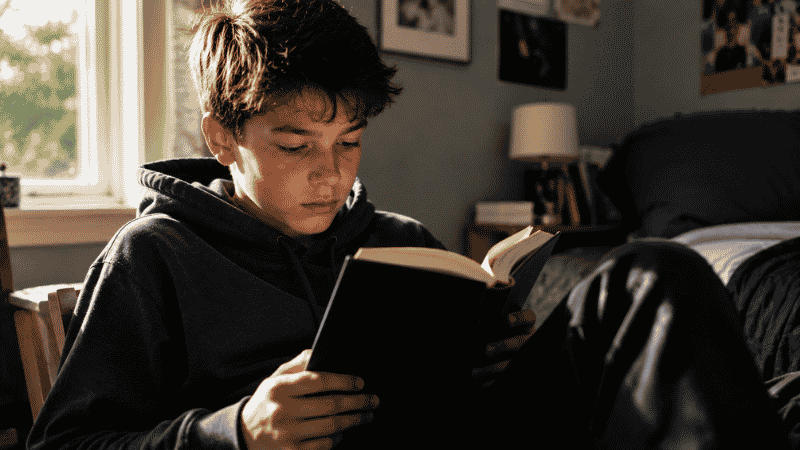
Key Takeaways
- Twelve-year-olds who read for pleasure show measurably stronger vocabulary, writing ability, and academic performance that compounds significantly into high school and beyond (Sullivan & Brown, 2015).
- Reading rates drop most sharply between ages 9 and 13 — the years when peer culture, screens, and social pressure compete most directly with books. Children who maintain reading through this window are significantly more likely to be readers at 17 and 25 (Clark & Rumbold, 2006).
- Mystery is the most searched book genre for 12-year-olds — nearly equal to fantasy in this age group. Both genres build inference, sustained attention, and narrative analysis at a developmentally critical moment.
- Graphic novels remain a fully legitimate reading format at twelve — research confirms equivalent comprehension skill development, and for reluctant readers at this age, they are often the bridge back to sustained reading.
- The middle-grade to YA transition is real but not urgent. Most 12-year-olds benefit from the best upper middle-grade fiction — which is often more emotionally sophisticated than YA, just without the explicit content.
What Twelve-Year-Olds Need From Books That Eleven-Year-Olds Didn’t
Twelve is when the questions get harder.
At eleven, children are beginning to ask who they are. At twelve, they’re starting to get answers — and not all of them are comfortable. They’re old enough now to understand that the world is genuinely unfair in specific, documentable ways. They’re old enough to feel the weight of that understanding. And they’re old enough to start asking what, if anything, they’re supposed to do about it.
The best books for 12 year olds engage that weight honestly. They don’t reassure falsely. They don’t promise that good things happen to good people, because twelve-year-olds have already noticed that’s not reliably true. What they offer instead is something more valuable: the experience of watching a character navigate a genuinely hard world with intelligence and integrity — and sometimes fail, and keep going anyway.
Twelve is also the age when books start to become private in a new way. The books a twelve-year-old loves are often not ones they’ll discuss freely — they’re held close, processed internally, returned to when no one is watching. This is a healthy sign, not a concerning one. It means the books are doing real work.
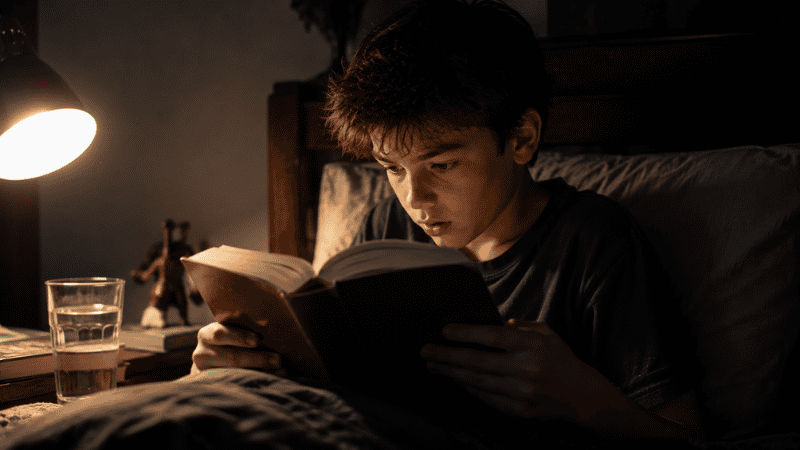
Best Mystery Books for 12-Year-Olds
Mystery is the genre that most directly engages the twelve-year-old mind — suspicious, analytical, unwilling to take things at face value. These books reward exactly that.
The Inheritance Games by Jennifer Lynn Barnes
Avery Grambs is nobody — a girl working to save for college — until a billionaire she’s never met leaves her his entire estate in his will. To claim it, she has to live in his mansion with his four grandsons and solve the puzzle of why she was chosen. The book moves like a thriller, has genuine puzzle architecture, and is essentially impossible to put down.
Why it works at 12: The social dynamics — moving into a world where everyone resents you, navigating people who are trying to use you while you’re trying to trust them — are ones that twelve-year-olds are experiencing in their own social lives in less dramatic form. The mystery gives them a framework for thinking about trust and motive that applies far beyond the book.
How to read it: Independent reading, completely. This one belongs to them. Don’t ask about it until they bring it to you.
📦 Series — The Inheritance Games trilogy
💰 Budget Pick — paperback widely available
Truly Devious by Maureen Johnson
Stevie Bell is obsessed with true crime and has engineered her way into Ellingham Academy, a school where a famous unsolved kidnapping happened in 1936. When a student dies in the present day, Stevie begins connecting the two cases. The dual-timeline structure — alternating between 1936 and now — builds suspense across both simultaneously.
Why it works at 12: The true crime genre is enormously popular with this age group for real reasons — it engages the analytical mind and the moral imagination simultaneously. Truly Devious channels that interest into genuinely literary territory. Stevie’s anxiety, her obsession, her determination — all of it is completely recognizable.
📦 Series — Truly Devious trilogy
💰 Budget Pick
And Then There Were None by Agatha Christie
Ten strangers are invited to an island. One by one, they die. The mystery of who is killing them — and why — is one of the best-constructed puzzles in the history of the genre. Christie wrote this book in 1939, and it has never stopped being read because the architecture is perfect.
Why it works at 12: Twelve-year-olds are old enough to appreciate craft — to notice how Christie plants clues in plain sight, how she misdirects attention, how the solution is both surprising and completely fair. This is the book that turns many twelve-year-olds into lifelong mystery readers.
How to read it: Read it together if you haven’t before. The solution deserves to be discovered with someone.
💰 Budget Pick — Christie’s best-selling novel; paperback under $10
Best Fantasy Books for 12-Year-Olds
Fantasy at twelve is a different animal than fantasy at nine. Twelve-year-olds want worlds that are genuinely complex — where the politics matter, where the moral choices aren’t clean, where power has consequences.
The Name of the Wind by Patrick Rothfuss (with parental awareness)
Kvothe is a legend — the greatest wizard, musician, and hero of his age — who is now living in hiding as an ordinary innkeeper. This is his story, told in his own voice. The prose is extraordinary, the world-building is meticulous, and the narrative is one of the most accomplished in modern fantasy.
A note for parents: This is the one book in this list that sits firmly in adult fantasy rather than middle-grade or YA. It contains some violence and a small amount of sexual content — nothing graphic, but worth knowing. For mature twelve-year-olds who have already read Harry Potter, Percy Jackson, and The Hobbit and are ready for the next level, this is the bridge. For others, hold it for thirteen.
How to read it: Read it together, or at least read the first chapter together to see if it’s the right moment. The opening pages are among the most beautiful in the genre.
📦 Series — The Kingkiller Chronicle; 2 books published, 3rd pending
⭐ Worth the Splurge — this one is a keeper
Ender’s Game by Orson Scott Card
Already on the eleven-year-old list, and worth rereading at twelve — the ethical questions at the end land with even more weight at this age, when children are more capable of holding genuine moral complexity without resolving it prematurely.
💰 Budget Pick
The Hunger Games by Suzanne Collins
Katniss Everdeen volunteers to take her sister’s place in the Hunger Games — a televised fight to the death between children, staged by a totalitarian government as entertainment and control. This trilogy is the defining series of its generation for a reason: it is precisely calibrated to the moment when children are old enough to understand that systems can be designed to harm people, and to ask what one person can do about it.
Why it works at 12: The Hunger Games is about power, propaganda, and what it costs to resist — questions that twelve-year-olds are newly equipped to engage with honestly. Katniss is not a perfect hero. She makes choices she’s not proud of. She survives things that cost her. The books are honest about what heroism actually requires, which is much rarer than it sounds.
How to read it: Read it together — ideally reading independently in parallel and then talking between books. The conversations about media, about government, about what “winning” actually means are some of the best you’ll have with a twelve-year-old.
📦 Series — The Hunger Games trilogy; Mockingjay is very dark — know your child
💰 Budget Pick
Best Classic Books for 12-Year-Olds
These are the books that have been read by every generation of twelve-year-olds for decades, because they keep being exactly right for this age.
To Kill a Mockingbird by Harper Lee
Scout Finch is six years old when her father, Atticus, defends a Black man accused of a crime he didn’t commit in Alabama in the 1930s. Told from Scout’s perspective as an adult looking back, this is a novel about justice, innocence, and what it costs to do the right thing when everyone around you disagrees.
Why it works at 12: Twelve-year-olds are old enough to understand what Atticus is up against — the full weight of the injustice — and to feel the specific grief of watching someone do everything right and still lose. The book doesn’t offer easy comfort. It offers something rarer: the conviction that doing the right thing matters regardless of outcome.
How to read it: Read it together. This book generates conversations about race, justice, and history that matter — and that are better had with a parent than alone or with peers.
⭐ Worth the Splurge — the illustrated edition with Meg Hunt’s artwork
The Giver by Lois Lowry
Already on the ten-year-old list, and worth rereading at twelve — the political dimensions of the Community land much harder now that children are old enough to understand what has been given up for “sameness,” and to connect it to real-world questions about conformity and control.
💰 Budget Pick — Newbery Medal winner
Lord of the Flies by William Golding
A group of British boys are stranded on an island with no adults. What follows is one of the most unflinching examinations of human nature ever written for this age group — and a book that twelve-year-olds encounter with the particular shock of recognition that comes from seeing something true that you weren’t expecting.
A note for parents: This book is dark and gets darker. It ends in violence and genuine tragedy. It is also one of the most important books a twelve-year-old can read — because it takes seriously the question of what people are like when no one is watching. Know your child.
How to read it: Read it together, or read it independently and then discuss. The question “what would you have done?” is not rhetorical with this book.
💰 Budget Pick
Best Graphic Novels for 12-Year-Olds
Twelve-year-olds who love graphic novels are serious readers. These are the ones operating at the highest level of the format.
Maus by Art Spiegelman
Art Spiegelman’s father tells him the story of surviving the Holocaust. The Jews are mice; the Nazis are cats. The visual metaphor, which sounds reductive in description, is devastating in execution. Maus won the Pulitzer Prize in 1992 — the first graphic novel ever to do so — and it remains one of the most important books ever made.
Why it works at 12: Twelve-year-olds are studying World War II in school and are developmentally ready to engage with its horror honestly. Maus makes that horror completely legible without exploiting it. It is also a book about a father and son — about how trauma is inherited, about the limits of story, about what we owe to the people who survived things we will never understand.
How to read it: Read it together. Don’t try to assign it as solo reading — this book needs to be witnessed alongside someone else.
⭐ Worth the Splurge — the complete Maus in one volume
Persepolis by Marjane Satrapi
Already on the eleven-year-old list. At twelve, the political dimensions hit harder — children this age are more capable of understanding what the Islamic Revolution meant in systemic terms, and of connecting Marjane’s experience of losing freedoms overnight to contemporary questions about rights and resistance.
⭐ Worth the Splurge
Best Nonfiction Books for 12-Year-Olds
Twelve-year-olds who love nonfiction are ready for books that don’t simplify — that engage with genuine complexity and trust the reader to hold it.
The Diary of a Young Girl by Anne Frank
Already on the ten-year-old list. At twelve, Anne’s age at the start of her diary, the reading experience is different in kind — not just in degree. Twelve-year-olds reading Anne Frank are exactly her age when she went into hiding. That correspondence is one of the most powerful things literature can do.
⭐ Worth the Splurge — the definitive edition
Sapiens: A Brief History of Humankind (Young Adult Adaptation) by Yuval Noah Harari
The young adult adaptation of Harari’s landmark book on human history — how Homo sapiens came to dominate the planet, what made us different from other animals, and what that history means for how we live now. The YA adaptation is genuinely accessible for strong twelve-year-old readers without sacrificing the intellectual ambition of the original.
Why it works at 12: Twelve-year-olds are at the age where big questions — about human nature, about history, about what it means to be the kind of animal we are — feel genuinely urgent rather than academic. Sapiens takes those questions seriously and answers them in ways that change how you see everything.
💰 Budget Pick
I Am Malala by Malala Yousafzai (Young Readers Edition)
Malala was fifteen when she was shot by the Taliban for the crime of going to school. The Young Readers Edition tells her story accessibly for twelve-year-olds — and it is, at its core, a book about the specific kind of courage required to believe that you have a right to exist as you are, and to act on that belief in the face of real danger.
Why it works at 12: Twelve-year-olds who are navigating their own questions about identity and belonging — about who they’re allowed to be — find Malala’s story genuinely galvanizing. She is not brave because she is fearless. She is brave because she is afraid and goes anyway.
💰 Budget Pick
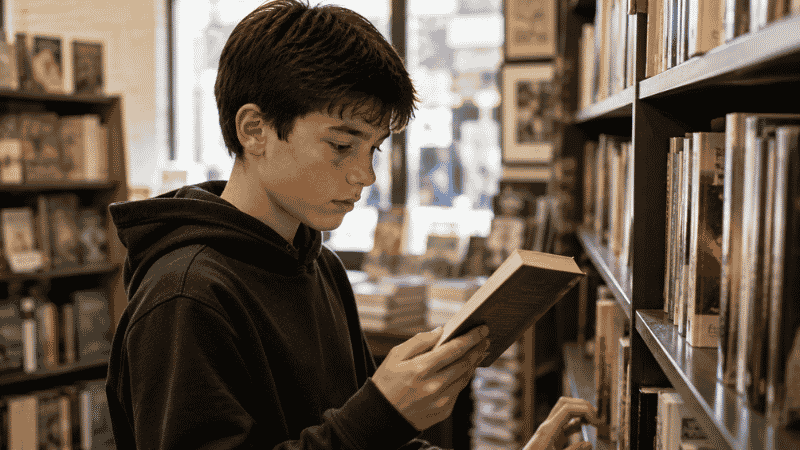
What to Skip at Age 12: The Honest Guide
Most YA, still, for most twelve-year-olds. This is the age when the pressure is most intense — from peers, from marketing, from older siblings — to read YA. And there are YA books that work well at twelve: The Hunger Games, some of John Green’s less explicit titles, certain fantasy series. But the genre assumptions of YA — romantic relationships as central plot drivers, sexual content, substance use, social crises calibrated for fifteen-year-olds — are content that most twelve-year-olds don’t yet have the emotional architecture to process productively. The books on this list are not second choices. They are the right choices.
Adult thrillers and horror marketed to young readers. Twelve-year-olds can decode these books. That doesn’t mean the content is appropriate. Know what your child is reading, at least at a general level.
Books chosen for the wrong reasons. A book a twelve-year-old reads because their friends are reading it, but that doesn’t actually interest them, will do more damage to their reading identity than no book at all. Let them have genuine preferences, even if those preferences surprise you.
When Reading Stops at Age 12: What Actually Helps
Twelve is the most common age for reading to stop entirely — and the most critical age to prevent it.
The research is unambiguous: children who stop reading at twelve almost never fully recover the habit. The window is genuinely closing. This is not alarmism — it’s the developmental reality that makes finding the right book right now more important than at any earlier age.
What actually works:
Audiobooks, fully and without apology. Twelve-year-olds who won’t sit with a physical book will often listen to audiobooks — in bed, in the car, through headphones while doing other things. Audiobooks build the same vocabulary and comprehension as print. They count. Let them count.
Follow the obsession, not the level. A twelve-year-old who is obsessed with a specific YouTuber, a specific game, a specific show has a reading entry point — because there are books about that world, or in that genre, or by that creator. Find them. Bring them without comment.
Stop talking about reading. The more reading is discussed, monitored, and encouraged explicitly, the more resistant many twelve-year-olds become. Remove all visible pressure. Read yourself. Make books available. Say nothing.
FAQ: What Parents of Twelve-Year-Olds Actually Search For
What reading level should a 12-year-old be at? By the end of seventh grade, most twelve-year-olds are reading at approximately DRA Level 70–80, or Guided Reading Level W–Z+. But reading level at twelve is less important than reading engagement — a twelve-year-old who reads voluntarily and with comprehension, even if below grade level, is in a far stronger position than one who reads at level only when required.
Should 12-year-olds read young adult books? Some YA is well-matched to twelve-year-olds — The Hunger Games, certain fantasy series, some contemporary fiction. But YA as a genre skews toward fifteen and sixteen-year-olds, and the themes of romance, sexual identity, and mental health crises are often more impactful — and more unsettling — when encountered before the emotional context to process them is fully developed. Know the specific book; don’t just trust the category.
What are the best mystery books for 12-year-olds? The Inheritance Games for contemporary thriller pacing. Truly Devious for true crime energy. And Then There Were None for classic puzzle architecture. For strong readers ready to go darker: The Girl with the Dragon Tattoo is a popular next step at thirteen or fourteen.
What are the best fantasy books for 12-year-olds? The Hunger Games for dystopian fantasy with real stakes. Ender’s Game for science fiction that asks hard ethical questions. The Name of the Wind for readers who are ready for adult-level world-building. And if they haven’t read The Hobbit or Percy Jackson yet — start there first.
How long should a 12-year-old read each day? Thirty minutes of voluntary reading is the research-supported target. But at twelve, voluntary is the operative word — forced reading at any duration undermines the reading identity more than it builds it. Ten minutes of genuine absorption is worth more than an hour of obligation.
What graphic novels are good for 12-year-olds? Maus for a twelve-year-old ready for something genuinely important and heavy. Persepolis for a political coming-of-age that resonates across cultures. The Amulet series if they want fantasy in graphic form. And for reluctant readers: almost any graphic novel is better than no book at all.
My 12-year-old used to love reading and has completely stopped. What happened? This is the most common question from parents of twelve-year-olds and the most important one. What usually happened: reading became associated with school performance, peer judgment, or parental pressure in a way that made it feel like obligation rather than pleasure. The fix is slow and requires removing all visible pressure entirely — no reading logs, no comprehension questions, no expressions of hope or worry about their reading. Find the audiobook of something they actually want. Leave physical books in their space without comment. Read yourself, visibly. Give it months, not weeks.
One Last Thing
There’s a version of this conversation that ends with: find the right book and everything will be fine. But twelve doesn’t work that way, and parents of twelve-year-olds know it.
Finding the right book matters. But what matters more is the message underneath the book — that reading is something adults who love them do, that stories are worth making time for, that the inner life a book builds is not separate from the outer life they’re navigating but continuous with it.
The books on this list are the best books for 12-year-olds that I know. But the most important thing you can do is read one yourself — and tell them, casually, what it made you feel.
That’s the whole thing. That’s what keeps the door open.
References
- Sullivan, A., & Brown, M. (2015). “Reading for Pleasure and Progress in Vocabulary and Mathematics.” British Educational Research Journal, 41(6), 971–991.
- Clark, C., & Rumbold, K. (2006). Reading for Pleasure: A Research Overview. National Literacy Trust. https://literacytrust.org.uk
- Organisation for Economic Co-operation and Development. (2002). Reading for Change: Performance and Engagement Across Countries. OECD Publishing.
- Krashen, S.D. (2004). The Power of Reading: Insights from the Research (2nd ed.). Libraries Unlimited.
Laura Bennett is the founder of ZestRead and a mom who is watching twelve arrive with the full complexity it deserves. She writes about children’s reading, family education, and the books that help children — and their parents — find their way through the hardest years. Reach her at info@zestread.com