
I used to walk past the Caldecott sticker without thinking about it.
That gold or silver seal on the cover of a picture book — I knew it meant something, but I treated it the way I treat most awards: as someone else’s opinion, useful as a rough signal but not something I’d built an actual understanding of.
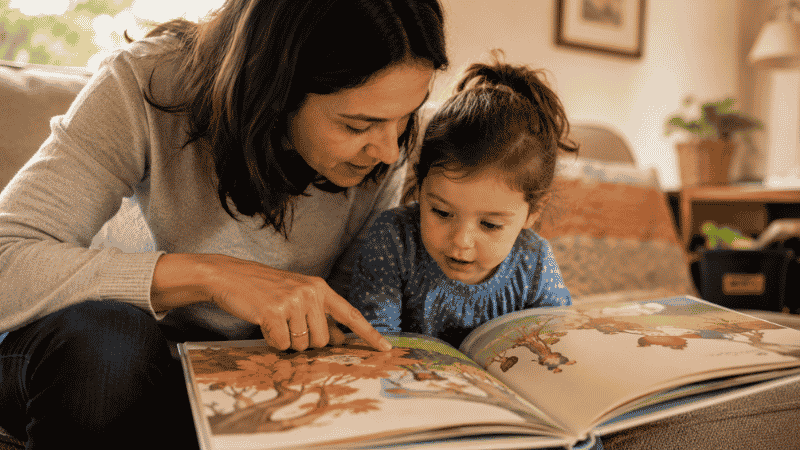
Then I started paying closer attention. I started reading the Caldecott Medal books not just to my daughter but alongside her — noticing what the illustrators were doing, asking why this book had won when other good books hadn’t. And I realized that the Caldecott isn’t just a “good book” award. It’s an illustration award, and illustration in children’s books is doing something far more sophisticated than most adults realize.
The best Caldecott Medal books are the ones where the pictures and words are doing different things simultaneously — where the text says one thing and the illustration adds something the text doesn’t say, or contradicts it, or extends it. Where a child reading the pictures is getting a story that the child reading the words alone would miss entirely.
That’s what this guide is about: not just which Caldecott Medal books to read, but how to read them — because the award-winning picture books on this list reward a kind of attention that most people, including most parents, haven’t been taught to give them.
Key Takeaways
- The Caldecott Medal has been awarded annually since 1938 by the American Library Association to the illustrator of the most distinguished American picture book for children — making it the most prestigious illustration award in children’s literature.
- Caldecott Medal books are illustration awards first, not story awards — the winning books are chosen for the quality and sophistication of the visual storytelling, which often significantly exceeds what the text alone conveys.
- Many of the most beloved picture books of all time are Caldecott Medal winners or Honor books — including Where the Wild Things Are, The Snowy Day, Make Way for Ducklings, and Goodnight Moon (Honor).
- Caldecott Honor books are frequently as strong as Medal winners — the Honor distinction means the committee considered them among the year’s very best, and many Honor books have outlasted the Medal winners of the same year.
- Reading Caldecott books actively — pausing on illustrations, asking questions about what the pictures show that the words don’t say — produces measurably richer language development than passive reading of the same books.
What Is the Caldecott Medal? (And Why It Actually Matters)
The Randolph Caldecott Medal is awarded annually by the American Library Association’s Association for Library Service to Children. It goes to the illustrator of the most distinguished American picture book for children published in the previous year.
A few things about this definition that are worth understanding:
It’s for illustration, not story. The Caldecott is not a “best picture book” award in the general sense. It’s specifically recognizing the quality of the visual art — how the illustrations function as storytelling, how they work with or against the text, how technically and artistically accomplished they are. A book with a great story but mediocre illustration will not win. A book with stunning illustration and a thin story might.
It’s American only. The Caldecott specifically recognizes American picture books — books illustrated by American citizens or residents. This is why many internationally beloved picture books (Julia Donaldson and Axel Scheffler’s work, for instance) are not eligible.
Honor books matter as much as Medal winners. Each year the committee names one Medal winner and several Honor books — typically three to five. Honor books represent the committee’s judgment that these books were also among the year’s very best. Some of the most beloved picture books in history are Honor books, not Medal winners.
The award reflects its era. Earlier Caldecott winners (1938-1960s) were selected by committees with different assumptions about whose stories mattered and what illustration styles were considered distinguished. More recent winners reflect a broader, more diverse range of voices and visual approaches. Both the history and the evolution are worth knowing.
How to Actually Read a Caldecott Book
Most parents who read Caldecott Medal books to their children read them the way they read any picture book: the words, with the illustrations as background. This is a significant missed opportunity.
The Caldecott selection criteria explicitly require that the illustrations be the primary vehicle of the story — that the book cannot be fully understood from the text alone. Which means there is always more in a Caldecott book than what the words say.
Before opening the book: Look at the cover together. Not the title — the cover art. Ask: “What do you think is happening here? Who is this person? What do you think they’re feeling?” Children who enter a Caldecott book through the visual immediately start engaging with what the illustration is actually doing.
During reading: Pause on each spread and look at the illustration before reading the words. Ask: “What do you see here?” Then read the words and ask: “Did the picture tell you something the words didn’t?”
Specific things to look for:
- Background details. Many Caldecott illustrators hide story elements in the background that the text never mentions. Where the Wild Things Are shows Max’s mischief in background details before the main text does.
- Expressions. Character faces in great illustration tell emotional stories that the text only gestures toward. The Snowy Day communicates Peter’s specific quality of wonder entirely through illustration.
- Color shifts. Many Caldecott winners use color deliberately — shifting palette as mood changes, using warm and cool tones to signal emotional states.
- What the pictures show that the words leave out. In Officer Buckle and Gloria, the dog’s antics behind the officer’s back are the entire comedy of the book — and the text never mentions them.
The Essential Caldecott Medal Books: A Curated Guide
This is not a complete list of all Caldecott winners — that would be a catalog, not a guide. These are the winners and Honor books most worth reading, most likely to land with children, and most rewarding to engage with closely.
Organized by what they’re best suited for — not by year or by alphabetical order, which tells you nothing useful.
Caldecott Books for the Very Young (Ages 0–3)
Goodnight Moon by Margaret Wise Brown, illustrated by Clement Hurd — 1948 Caldecott Honor
The great green room. The red balloon. Clement Hurd’s illustrations change subtly across the spreads — the room grows darker, the moon moves, a mouse appears in different positions across the pages — small visual details that children notice on the tenth read that they didn’t catch on the first. The illustration is doing work the text doesn’t announce.
How to read it: On a second or third read, ask your child to find the mouse on each page. The hunt makes the visual attention explicit.
💰 Budget Pick — board book edition widely available
Make Way for Ducklings by Robert McCloskey — 1942 Caldecott Medal
Mrs. Mallard leads her eight ducklings through the streets of Boston to the Public Garden. McCloskey’s detailed pencil drawings of the city — drawn from life, reportedly — give the book a specificity that makes Boston feel real and the ducks’ journey feel genuinely consequential. The illustration is doing documentary and comic work simultaneously.
How to read it: Look at the spread where the traffic stops for the ducks. Count the vehicles. Notice the expressions on the drivers’ faces. The comedy lives entirely in the illustration.
💰 Budget Pick — a genuine classic at this age
The Snowy Day by Ezra Jack Keats — 1963 Caldecott Medal
Peter walks through snow. That’s the whole story. Keats’s collage illustrations — created from marbled papers, fabric, and paint — communicate Peter’s specific quality of wonder so precisely that the book needs almost no text. The first picture book with a Black child as the fully realized hero of a joyful, ordinary story.
How to read it: Ask your child what Peter is feeling on each page — not what he’s doing, but how he’s feeling. The illustration is the entire answer.
💰 Budget Pick
Caldecott Books for Preschoolers and Early Readers (Ages 3–6)
Where the Wild Things Are by Maurice Sendak — 1964 Caldecott Medal
Max is sent to bed without supper and travels to where the wild things are. Sendak’s illustrations famously expand across the pages — the white borders disappear as Max enters the wild things’ world and return when he comes back to his room. The visual structure of the book mirrors Max’s emotional journey in a way that the text alone cannot carry.
How to read it: On a reread, point out how the pictures get bigger as Max gets angrier and more powerful, and smaller again as he comes home. “The pictures are doing something, aren’t they?”
⭐ Worth the Splurge — own this one
Officer Buckle and Gloria by Peggy Rathmann — 1996 Caldecott Medal
Officer Buckle gives boring safety speeches. Gloria, his police dog, performs behind his back — and children immediately love that they know something Officer Buckle doesn’t. The entire comedy of the book exists in the illustration; the text is straight-faced and literal. This is one of the purest examples of illustration doing something the text cannot.
How to read it: The first time through, read only the text and show only the portions of the illustration without Gloria. Then reread showing the full illustration. The difference is the whole joke.
💰 Budget Pick — Caldecott Medal winner
Owl Moon by Jane Yolen, illustrated by John Schoenherr — 1988 Caldecott Medal
A child and a father go owling on a winter night. Schoenherr’s watercolors are among the most beautiful in children’s book illustration — the cold blue of the moonlit snow, the specific darkness of the woods, the owl appearing in the distance and then suddenly, close. The book is a meditation on patience and presence that works on children and adults simultaneously.
How to read it: Read it at night, with the lights low. The atmospheric illustration rewards the right conditions.
⭐ Worth the Splurge
The Polar Express by Chris Van Allsburg — 1986 Caldecott Medal
A boy boards a magical train to the North Pole on Christmas Eve. Van Allsburg’s soft-focus pastel illustrations create a dreamlike quality that blurs the line between real and imagined — which is precisely the book’s subject. The illustration is doing epistemological work: asking “was this real?” entirely through visual tone.
How to read it: After finishing, ask: “Do you think it really happened?” Watch how the illustration shapes the answer.
⭐ Worth the Splurge — particularly beautiful in the oversized edition
Kitten’s First Full Moon by Kevin Henkes — 2005 Caldecott Medal
Kitten mistakes the moon for a bowl of milk and tries repeatedly to reach it. Henkes’s black-and-white illustrations are spare and perfectly composed — the comedy of a determined, mistaken cat against the patient moon. A masterclass in how much illustration can accomplish with minimal text.
How to read it: Ask your child to predict what Kitten will try next before turning each page. The illustration makes the prediction satisfying.
💰 Budget Pick
Last Stop on Market Street by Matt de la Peña, illustrated by Christian Robinson — 2016 Caldecott Medal, 2016 Newbery Medal
CJ and his grandmother ride the bus across town after church, and CJ wonders why they don’t have what other people have. Robinson’s vibrant gouache illustrations show a world full of color and human richness that CJ is learning to see — the illustration is teaching the same lesson as the grandmother, but visually.
How to read it: Look at the faces on the bus. Each one has a story that the text doesn’t tell. Ask your child: “What do you think happened to this person today?”
💰 Budget Pick
We Are Water Protectors by Carole Lindstrom, illustrated by Michaela Goade — 2021 Caldecott Medal
A young Indigenous girl takes a stand to protect water from a pipeline. Goade’s illustrations swirl with water imagery — the visual language is circular and flowing in ways that enact what the book argues. One of the most visually sophisticated recent Caldecott winners, and deeply moving at any age.
How to read it: Look at how water moves through the illustrations across the book. Ask: “What does the water look like at the beginning? What does it look like at the end?”
⭐ Worth the Splurge
Caldecott Honor Books Worth Equal Attention
The Medal winner is one book. The Honor books are the committee’s shortlist. These Honor books are, by any measure, essential.
The Very Hungry Caterpillar by Eric Carle — 1970 Caldecott Honor
Eric Carle’s tissue-paper collage illustrations and die-cut pages created a visual vocabulary that has influenced children’s book illustration for fifty years. An Honor book that has vastly outlasted most Medal winners of its era.
💰 Budget Pick
In the Night Kitchen by Maurice Sendak — 1971 Caldecott Honor
Mickey falls into the night kitchen where bakers are making morning cake. Sendak’s illustrations reference the visual language of 1930s comic strips and Art Deco advertising — layers of visual reference that adults catch and children feel. Occasionally challenged for its depiction of a nude child; worth reading with awareness and without alarm.
💰 Budget Pick
Sylvester and the Magic Pebble by William Steig — 1970 Caldecott Medal
Sylvester the donkey finds a magic pebble and accidentally turns himself into a rock. Steig’s illustrations are warm and detailed; the emotional range — from delight to despair to reunion — is carried almost entirely visually. One of the most emotionally complete picture books ever written.
⭐ Worth the Splurge
Lon Po Po: A Red-Riding Hood Story from China by Ed Young — 1990 Caldecott Medal
Ed Young’s Chinese panel paintings reframe the familiar story with visual sophistication that rewards close looking. The wolf’s transformation across the spreads is done through illustration alone — the text is almost incidental.
💰 Budget Pick
How to Build a Caldecott Reading Practice at Home
You don’t need to read every Caldecott winner. You need to read a few of them well.
A simple annual practice: Each February when the new Caldecott Medal is announced, find that year’s winner and read it together. Talk about why you think it won. This single habit, done annually for ten years, builds visual literacy, critical thinking, and a shared reading tradition — for the cost of one picture book per year.
Library first, purchase second: Your library almost certainly has a Caldecott shelf or collection. Use it to preview before buying. The books worth owning — the ones your child asks for again and again — will make themselves known.
The “what do the pictures say that the words don’t?” question: This single question, asked regularly with any Caldecott book, develops visual literacy more effectively than any formal instruction. Children who are asked it regularly start asking it themselves.
The Caldecott and Diversity: An Important Note
The Caldecott Medal’s history reflects the assumptions of each era in which it was awarded. The winners of the 1940s and 1950s are almost entirely focused on white, European-American experiences. This began to change gradually, with The Snowy Day (1963) representing a significant early shift, and has changed substantially in recent decades — recent winners including Last Stop on Market Street, We Are Water Protectors, The Hello, Goodbye Window, and Hair Love reflect a much broader range of American experience.
When building a Caldecott-based home library, it’s worth being intentional about this history. A collection that includes only the older winners presents a narrow picture of what distinguished American illustration has looked like. A collection that includes recent winners alongside carefully chosen classics presents a more complete and honest picture.
FAQ: What Parents Actually Ask About Caldecott Medal Books
What is the Caldecott Medal? The Randolph Caldecott Medal is the most prestigious award in American children’s picture book illustration. It has been awarded annually since 1938 by the American Library Association to the illustrator of the most distinguished American picture book for children published in the previous year. Each year also includes several Honor books — the committee’s shortlist — which are often equally excellent.
What is the difference between a Caldecott Medal and a Caldecott Honor? One Medal is awarded each year; several Honor books are also named. The Honor designation means the committee considered these books among the year’s very best. Many legendary picture books are Caldecott Honor books rather than Medal winners — including Goodnight Moon, The Very Hungry Caterpillar, In the Night Kitchen, and Where the Wild Things Are (which won the Medal).
Are all Caldecott Medal books good for children? Most are excellent. A few are dated in their depictions of race, gender, or other characteristics. Some — particularly older winners — reflect assumptions that warrant conversation. The award is for illustration quality, not for values or content, so it’s worth previewing books before reading them with children, especially older winners.
What age are Caldecott books for? Most Caldecott Medal books are picture books calibrated for ages 2–8, though the best work at any age. A few recent winners — particularly longer, more text-heavy books — work well for ages 6–10. Honor books span a wider range. The award has no age requirement — it’s for any picture book, regardless of intended audience.
Where can I find a complete list of Caldecott Medal winners? The American Library Association maintains the definitive list at ala.org. Your local library likely has a dedicated Caldecott section or shelf.
Is the Caldecott Medal only for American books? Yes. The award is specifically for books illustrated by American citizens or permanent residents and published in the United States. Many internationally celebrated illustrators — including many of the most beloved in children’s literature — are not eligible.
What is a good Caldecott book to start with? For very young children: The Snowy Day or Make Way for Ducklings. For preschoolers: Where the Wild Things Are or Officer Buckle and Gloria. For ages 5–8: Owl Moon or Last Stop on Market Street. For families new to using Caldecott books actively: Officer Buckle and Gloria, because the gap between what the text says and what the illustration shows is so clear and so funny that it teaches the skill immediately.
One Last Thing
The gold sticker means something specific: that a group of expert children’s librarians looked at every picture book published in America that year and decided that this one’s illustrations were the most distinguished. Not the best story. Not the most popular. The most visually accomplished — the most sophisticated use of illustration as storytelling.
That’s a high bar. The books that clear it are usually doing something worth your close attention.
Read them slowly. Look at the pictures before you read the words. Ask your child what the illustration is saying that the text doesn’t. Do this a few times with a few books, and you’ll find yourself doing it automatically — looking at the pictures the way the illustrators intended, finding the story that lives there alongside the one on the page.
That’s what the Caldecott Medal is pointing toward. It’s worth following.
Find the right Caldecott books for your child’s age:
- Best Books for 2-Year-Olds: What They’ll Actually Sit Still For
- Best Books for 3-Year-Olds: What Actually Works at Storytime
- Best Books for 4-Year-Olds: When Stories Start Getting Really Good
- Best Books for 5-Year-Olds: Bridging Preschool and the Big Wide World
- Best Books for 6-Year-Olds: The Year They Start Reading Themselves
- Classic Children’s Books Every Family Should Own: A Real Mom’s Guide by Age
- Dialogic Reading: The Simple Technique That Makes Every Storytime Count
References
- American Library Association. (2025). “Caldecott Medal and Honor Books, 1938–Present.” https://www.ala.org/alsc/awardsgrants/bookmedia/caldecottmedal/caldecotthonors
- Nodelman, P. (1988). Words About Pictures: The Narrative Art of Children’s Picture Books. University of Georgia Press.
- Sipe, L.R. (2008). Storytime: Young Children’s Literary Understanding in the Classroom. Teachers College Press.
- Nikolajeva, M., & Scott, C. (2006). How Picturebooks Work. Routledge.
Laura Bennett is the founder of ZestRead and a mom who learned to read picture books twice — once for the words, once for the pictures — and hasn’t been the same reader since. She writes about children’s reading, illustration, and the books that reward the closest attention. Reach her at info@zestread.com