
Have you ever felt an emotion so profound that regular prose simply couldn’t capture it? That’s the magic of poems. They aren’t just rhythmic lines on a dusty page; they are snapshots of the human experience. Whether you’re a college student seeking inspiration for a creative project or a dedicated book lover looking for a quiet retreat, poetry offers a unique sanctuary.
In this comprehensive guide, we’ll explore the most famous poems in history, break down the various types of poems you need to know, and even show you how to write a poem of your own. Let’s dive into the verse.
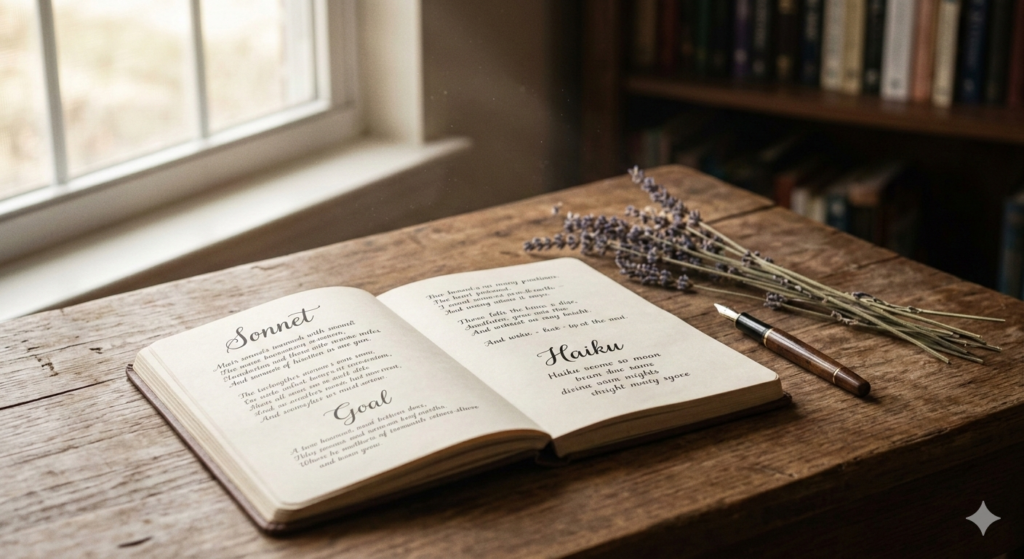
Understanding the Tapestry: 7 Common Types of Poems
To truly appreciate poetry, it helps to understand its “architecture.” The structure a poet chooses—the rhythm, the rhyme, and the line breaks—dictates the emotional weight of the message. Here are the most essential types of poems you’ll encounter:
1. The Sonnet
Traditionally 14 lines of structured passion, the sonnet is the gold standard for exploring complex themes like love, time, and mortality. Shakespearean sonnets follow a strict ABAB CDCD EFEF GG rhyme scheme.
- Best for: Deep, focused romantic or philosophical themes.
2. Free Verse
This is the “wild child” of modern poetry. Free verse doesn’t follow a set rhyme scheme or musical meter. It relies on the natural cadence of speech.
- Best for: Raw, conversational, and contemporary storytelling.
3. Haiku
A tiny, three-line powerhouse from Japan. With a 5-7-5 syllable structure, it focuses on a single, crystalline moment in nature.
- Best for: Mindfulness and observing the natural world.
4. The Ballad
Think of a ballad as a “story in song.” These narrative poems often tell tales of heroes, tragedies, or folklore, and they usually have a repetitive, musical refrain.
- Best for: Readers who love a good plot and a rhythmic beat.
Pro Tip: If you’re a beginner, start by reading free verse to get comfortable with the imagery, then move into structured forms like sonnets to appreciate the technical craft.
The Timeless Icons: Famous Poems Every Reader Should Know
Why do some verses last centuries? Because famous poems speak to universal truths that never go out of style. Here are the must-reads for your literary bucket list:
“The Road Not Taken” by Robert Frost
This is perhaps the most quoted poem in American history. While often seen as an anthem for rugged individualism, it is actually a brilliant meditation on how we justify our life choices in hindsight. It’s essential reading for anyone standing at a personal or professional crossroads.
“Still I Rise” by Maya Angelou
If you need a shot of pure resilience, this is it. Angelou’s rhythm is infectious, turning a poem into a mental suit of armor. For a college student facing a daunting challenge, these lines offer a powerful reminder of inner strength.
“Daffodils” by William Wordsworth
In our high-speed digital age, Wordsworth’s tribute to nature is the ultimate “self-care” poem. It teaches us the value of the “inward eye”—the ability to find peace in our memories of the natural world.
| Poet | Masterpiece | Core Theme |
| Robert Frost | The Road Not Taken | Choices & Identity |
| Maya Angelou | Still I Rise | Resilience & Strength |
| W.B. Yeats | The Second Coming | History & Chaos |
| Emily Dickinson | “Hope” is the thing with feathers | Optimism |

Speaking the Heart’s Language: Most Moving Love Poems
For centuries, love poems have been the primary tool for expressing devotion. Whether you’re celebrating a new spark or navigating the ache of a breakup, these verses translate heartbeats into ink.
The Passion of Pablo Neruda
Neruda is the master of sensory romance. His Sonnet XVII (“I love you without knowing how, or when, or from where”) is a staple at weddings because it describes love not as a choice, but as an inevitable force of nature.
The Devotion of Elizabeth Barrett Browning
“How do I love thee? Let me count the ways.” This classic sonnet is the blueprint for unconditional devotion. It shows how the rigid structure of a sonnet can actually make a romantic message feel more grounded and sincere.
The Modern Rawness of Warsan Shire
Poetry isn’t just about the past. Modern voices like Warsan Shire bring a visceral, honest perspective to love poems, dealing with the complexities of modern relationships and identity.

How to Read Poetry Without Feeling Overwhelmed
Many readers feel intimidated by verse. Here’s a “Healthy Blogger” approach to enjoying poetry:
- Read it Aloud: Poetry was meant to be heard. The rhythm (the “meter”) only truly wakes up when you speak it.
- Embrace the “White Space”: The gaps between lines are just as important as the words. They are invitations to breathe and reflect.
- No “Right” Answer: Poetry is subjective. If a line moves you, you’ve “understood” it. You don’t need a PhD to feel the impact of a metaphor.
FAQ: Your Creative Guide on How to Write a Poem
Q: I want to express myself, but I’m not a “writer.” How to write a poem that feels authentic? A: The best way to start is with the “Sensory Dump.” Pick one specific object—a cracked coffee mug or a rainy window—and list five things you see, smell, or feel about it. Don’t worry about rhyming yet. Focus on honesty.
Q: Which types of poems are easiest for beginners to write? A: Free verse is the most accessible because there are no rules. However, a Haiku is a great exercise in brevity and word choice because you only have 17 syllables to work with.
Q: Where can I find more famous poems online? A: Databases like the Poetry Foundation and Academy of American Poets are gold mines. You can search by mood (e.g., “joyful”) or by specific types of poems.
Conclusion: Your Journey into Verse
Whether you are drawn to the historical weight of famous poems or the intimate whispers of love poems, there is a stanza out there waiting to change your perspective. Poetry is a conversation between the writer’s past and your present.
So, grab a cup of tea, find a cozy corner, and let these words wash over you. You don’t need a degree to enjoy poems; you just need an open heart and a little curiosity.
Next Step: Why not try writing your first three-line Haiku today? Or, if you’re looking for more reading material, check out our guide on 10 Life-Changing Books for College Students.