Let’s be honest: by the time we hit our mid-30s or 40s, we’ve already heard all the “hustle culture” slogans. We don’t need more caffeine-fueled motivation; we need clarity. Between managing a demanding career and being present for our families, finding the right self improvement books isn’t just a hobby—it’s a necessity for mental survival in the urban jungle.
In this guide, I’ve curated a list of the most impactful literature that resonates with where you are in life right now. We’re looking past the fluff to find deep, actionable wisdom that respects your time and your intelligence.
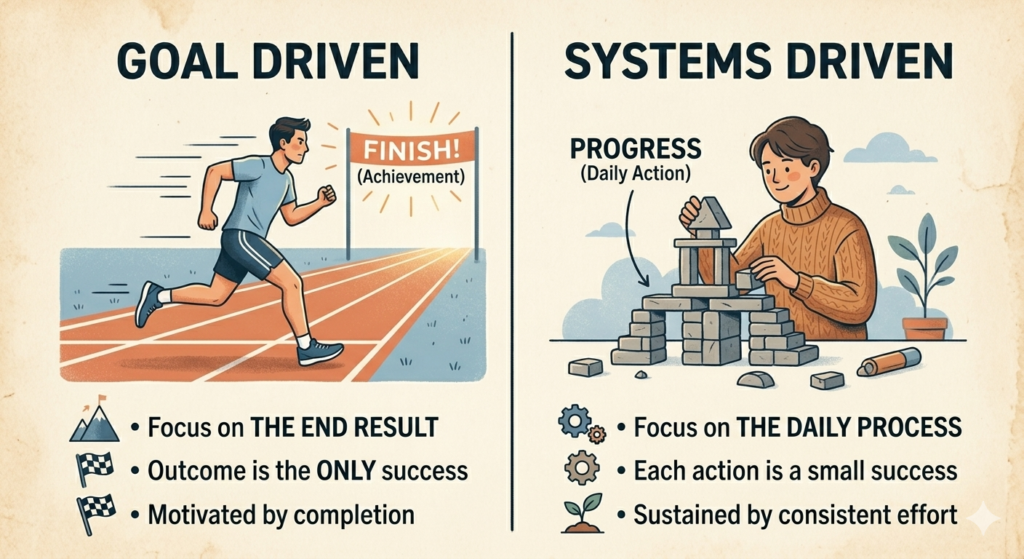
Mastering Your External World: Systems Over Goals
For the urban professional, time is the most expensive luxury. At this stage of life, personal growth isn’t about “doing more,” but about “doing what matters deeply.”
1. Reclaim Your Focus: “Deep Work” by Cal Newport
In an era of constant Slack notifications and endless Zoom calls, the ability to concentrate without distraction is becoming a superpower.
- The Science: Research from the University of California, Irvine, suggests it takes an average of 23 minutes and 15 seconds to regain full focus after a single interruption.
- The Action: Try a 90-minute “Deep Work” block before 10:30 AM. No emails, no phone, just high-level cognitive output.
2. The Power of Small Gains: “Atomic Habits” by James Clear
This is arguably one of the best books for self-improvement because it removes the guilt from the process. It’s not about willpower; it’s about environment design.
- The “Habit Stacking” Method: Attach a new habit to an old one. “After I pour my morning espresso (current habit), I will read 2 pages of a book (new habit).”

Cultivating Inner Resilience: Emotional Intelligence for Leaders
As we reach mid-life, the challenges shift from technical skills to emotional endurance. How we handle stress defines our leadership.
3. Emotional Agility by Susan David
Susan David teaches us that “positive thinking” is often a trap. Instead, we need emotional agility—the ability to experience our feelings without being held hostage by them.
- The Pro-Tip: Practice “Labeling.” Instead of saying “I am stressed,” say “I am noticing that I am feeling stressed.” This tiny linguistic shift activates your rational brain and calms the amygdala.
4. Radical Acceptance by Tara Brach
For the high-achieving professional, perfectionism can be a prison. Brach’s work is a soulful invitation to accept the “messy” parts of life. It’s the mental equivalent of a long, quiet walk in the woods.
| Book Title | Core Pain Point | Recommended For |
| Atomic Habits | Lack of consistency | Habit builders |
| Deep Work | Digital distraction | Busy executives |
| The Psychology of Money | Financial anxiety | Investors & Parents |
The Philosophical Edge: Thinking Deeply to Live Well
When the physical foundations of life—career, home, family—are set, the “existential itch” begins. These self improvement books address the soul.
5. Meditations by Marcus Aurelius
Written by a Roman Emperor 2,000 years ago, this is the original “Executive’s Handbook.” It’s about staying grounded while carrying the weight of the world on your shoulders. It remains one of the top-searched titles for a reason: it’s been “stress-tested” by history.
6. Man’s Search for Meaning by Viktor Frankl
Frankl, a psychiatrist and Holocaust survivor, argues that our primary drive is not pleasure, but the discovery and pursuit of what we personally find meaningful. For anyone feeling burnt out, this book provides an immediate perspective shift.
FAQ: What Are the Best Self Improvement Books for Busy Professionals?
Q: I have very little time. Where should I start? A: Start with The Daily Stoic. It offers one short page per day. It’s the perfect “mental anchor” to read during your morning commute or while the kettle boils.
Q: How do I actually implement what I read? A: Use the 1-1-1 Rule: For every chapter you read, find 1 core concept, apply it to 1 specific situation tomorrow, and track the result for 1 week.
Q: Are audiobooks as effective as physical books? A: For memoirs and business concepts, audiobooks are fantastic for “dead time” (commuting/gym). However, for dense philosophy or habit-building, a physical copy allows for the “tactile memory” of highlighting and note-taking.
Simple Tips to Actually Finish Your “TBR” Pile
- The 50-Page Rule: Life is too short for books that don’t speak to you. If you aren’t hooked by page 50, put it down.
- Read for 10 Minutes Before Bed: This not only helps you finish books but also improves sleep quality by reducing blue light exposure.
- Join a Micro-Community: Find one friend to read the same book with. Accountability is the best productivity hack.
Conclusion: A Gentle Suggestion for Your Journey
The path of personal growth isn’t a race to become “perfect.” It’s about becoming more “aware.” You don’t need to read all 12 of these self improvement books this month. In fact, if you just pick one—the one that made your heart beat a little faster as you read its description—and truly absorb it, that is more than enough.
Personal development is the best investment you will ever make, especially as you navigate the complexities of your 30s, 40s, and beyond. Take a breath, pour a fresh cup of tea, and open that first chapter. Your future self is already thanking you.