
Your phone is a slot machine in your pocket. Every scroll, like, and notification triggers a hit of dopamine that keeps you hooked. If you feel like your attention span has been shredded, a 21-day digital detox challenge is the only way to hard-reset your brain. This isn’t just about “using your phone less”—it’s a structured screen time reduction plan designed to rewire your neural pathways and help you rediscover life beyond the glow of a high-res screen.
The Neuroscience of Being “Always On”
Our brains weren’t built for 24/7 connectivity. Research into neuroplasticity shows that constant digital multitasking literally thins the gray matter in the prefrontal cortex—the area responsible for focus and emotional regulation. By committing to a digital detox, you aren’t just taking a break; you are lowering your cortisol levels and allowing your nervous system to exit “fight or flight” mode.

Phase 1: The Severing (Days 1-7)
The first week is the hardest. Your brain will crave the phantom vibrations of a ghost notification.
Audit Your Digital Environment
Don’t rely on willpower. Audit your phone like a Marie Kondo consultant. If an app doesn’t provide utility (Maps, Banking) or genuine joy, delete it. Move social media to your desktop only. This adds “friction,” making you think twice before mindlessly browsing.
Managing the “Phantom Ringing” Effect
You will feel itchy. You will reach for your pocket every 4 minutes. This is your brain’s withdrawal from the dopamine loop. When this happens, replace the urge with a physical action: take a deep breath, drink water, or look out a window for 60 seconds.
Phase 2: The Rewiring (Days 8-14)
By week two, the “brain fog” begins to lift. You’ll notice you can read more than three paragraphs without wanting to check Instagram.
Reintroducing Analog Hobbies
This is where you fill the void. Instead of a 2 AM scroll, pick up a physical book. Engaging with long-form text is like a gym workout for your focus.
The Sleep Transformation
Blue light from OLED screens suppresses melatonin production, sabotaging your sleep. During this phase, implement a “No Screens After 9 PM” rule. According to research from Harvard Medical School, even dim light can interfere with a person’s circadian rhythm and melatonin secretion.
Phase 3: The Integration (Days 15-21)
Now, we build a sustainable future. You aren’t going to live without a phone forever, but you are going to change who is the master.
Building a “Tech-Sanctuary”
Designate the bedroom and the dining table as “No-Phone Zones.” Buy a physical alarm clock so your phone stays in the kitchen overnight. This prevents the “revenge bedtime procrastination” that kills your morning productivity.
| Impact Category | Before Detox | After Day 21 |
| Deep Sleep (REM) | 45-60 mins | 90-110 mins |
| Focus Duration | 8 mins | 40+ mins |
| Daily Anxiety | High/Constant | Low/Manageable |
FAQ: Surving Your Digital Detox
Does Kindle count as a screen? Technically yes, but E-ink is far less stimulating than a smartphone. If it keeps you off TikTok, it’s a win.
What if I need my phone for work? The detox is about leisure scrolling. Use “Work Focus” modes to hide social apps during 9-5, and go full analog once the clock stops.
Reclaim Your Focus Today
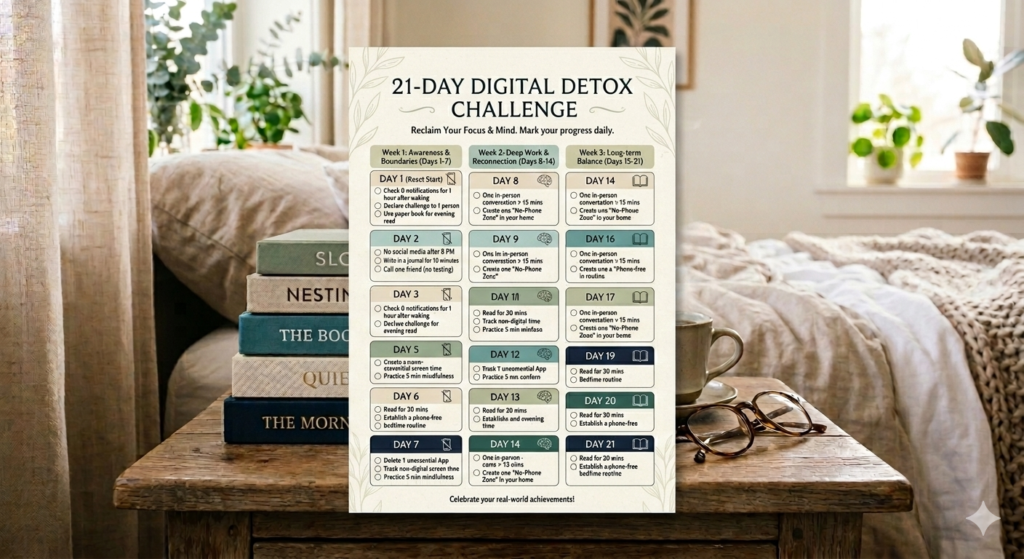
The world won’t end if you don’t see that meme or news update in real-time. What will end is the constant feeling of being overwhelmed and distracted. Use our printable checklist to track your 21-day journey.