There is a specific, almost electric shift that happens right around the third birthday. Your child is no longer just a “vessel” for language; they’re becoming a narrator.
If you pay close attention, you’ll notice they’ve stopped just pointing at pictures and have started asking why. At this stage, the books for 3 year olds you pull off the shelf act less like entertainment and more like architectural scaffolding for their soul.
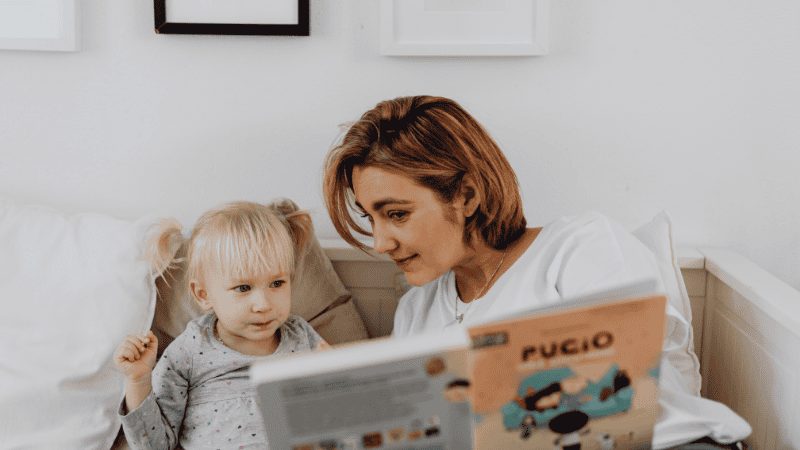
As a parent, you’re likely exhausted by the “Threenager” phase—that volatile mix of fierce independence and sudden, sobbing vulnerability. I’ve found that the right story does more than just kill ten minutes before bed; it gives you a shared code. It’s a way to discuss the world’s complexities without it feeling like a lecture.
What Most Book Lists Get Wrong
Most “best of” lists for toddlers are generated by algorithms or scraped from sales charts. They give you the top sellers, but they don’t tell you if the book is a nightmare to read for the 50th time.
Generic lists often ignore developmental intent. They treat a book as a static product rather than a dialogic reading tool. At ZestRead, we look for “Parental Sanity” metrics—stories that offer enough depth for the adult while hitting the cognitive milestones for the child.
The “Core Four”: A Curator’s Perspective
I don’t believe in “best-seller” lists for the sake of them. A book is only good if it survives the 50th consecutive reading without making you want to hide it under the sofa. These four are the ones that actually earn their keep.
1. The Overall Favorite: Don’t Let the Pigeon Drive the Bus!
The Interpretation: This isn’t just a funny book; it’s an emotional release valve. By putting the child in the position of the “parent” (telling the Pigeon what he can’t do), Mo Willems lets them practice boundary-setting.
The Nuance: It works best when you really “ham up” the Pigeon’s voice. If you read it in a flat tone, you miss the magic. It’s a performance piece, not a bedtime lullaby.
2. The Developmental Bridge: The Very Hungry Caterpillar
The Interpretation: It’s fundamentally about the passage of time—something a 3-year-old is just starting to grasp.
The Nuance: While it’s a classic, keep in mind that for a high-energy kid, the “story” might feel a bit slow. Its strength lies in the physical ritual of sticking fingers through the holes in the fruit. It’s a grounding book that helps with fine motor skills.
Which Book Should You Read First?
If you’re staring at an empty shelf and wondering where to invest your energy first, consider your child’s current “pain point”:
- For the “Strong-Willed” Child: Start with Don’t Let the Pigeon Drive the Bus!. It gives them a sense of control that they usually lack in their daily routine.
- For the “Physical” Learner: Go with Press Here. It turns the book into a tactile experience that mimics a tablet but builds better neural connections.
- For the “Big Feelings” Phase: The Color Monster is your essential toolkit for emotional intelligence.
3. The Empathy Builder: The Day the Crayons Quit
The Interpretation: This is best for advanced readers because it demands a lot of empathy. You’re asking a child to understand that a color can be “tired” or “overworked.”
The Experience: This is a longer read. If you’re trying to rush to the finish line because you’re tired, this isn’t the book to pick. Save it for rainy Saturday mornings when you have the time to stop and talk about why the Peach Crayon is embarrassed.
4. The Logic Spark: Press Here
The Interpretation: Tullet proves that paper can be “high-tech.” By shaking the book or pressing a dot, the child learns the most important lesson in early logic: My actions change the world. It’s incredibly empowering for a small person.
Beyond the Plot: The “Why” of the Library
When we choose books for 3 year olds, we are actually curating their emotional vocabulary. I’ve noticed that when we read something like The Color Monster, we aren’t just looking at art; we’re giving a child a handle for their own internal chaos.
The practical takeaway isn’t “learn your colors”; it’s “learn that your anger is a red jar you can put on a shelf.” Once a child can name a feeling, they are slightly less likely to be drowned by it. That’s not just reading—that’s survival gear for preschool.
When the “Perfect” Book Fails: A Reality Check
We’ve all had the experience: you buy a “vetted” classic, and your child uses it as a ramp for their toy cars instead of reading it.
The Case of the Wiggling Listener: I remember a friend whose son, Leo, wouldn’t sit for more than two pages. Instead of forcing the “sit-still” ritual, they started using Press Here while Leo was literally jumping on a trampoline. They turned it into a physical game. By removing the “statue” requirement, Leo stopped seeing books as a chore. Eventually, his seated attention span grew, but only because his parents met him where his energy was.
The “Nostalgia Trap”: Why Childhood Favorites Fail
It’s tempting to buy the books you loved in 1988, but be careful. Many older “classics” are surprisingly passive or, frankly, a bit dull by today’s standards.
A 2026 toddler is a digital native; they are used to a world that responds to them. If a book feels like a lecture or the pacing is too slow, don’t feel guilty about donating it. Your kid’s bookshelf should reflect their world, not your memories.
FAQ: Real Questions from the Bedtime Trenches
How many books for 3 year olds should we actually own?
Less than you think. At three, “curated repetition” is king. A child is better off with 10 books they’ve basically memorized than 100 they’ve skimmed. That repetition is where the neural pathways for grammar and prediction are built.
What if they just want to flip the pages and not listen to the story?
Let them drive. “Reading” at this age is as much about the physical object as the story. If they skip to the end, talk about the ending. You’re following their curiosity, and that’s far more important than finishing the plot.
Are audiobooks “cheating” for preschoolers?
Not at all, but they’re a different beast. They build listening skills, but they don’t build “Print Awareness.” You still need that physical time sitting together where they can see that the squiggles on the page are what’s making the sounds.
My child won’t sit still for a whole book. Is that okay?
Completely. For some kids, “listening” happens while they are upside down or playing with Legos. As long as they are engaging with the content or asking questions, the benefits are still accruing.

Final Thought
When you sit down with your three-year-old and a book, you’re doing more than teaching literacy. You’re inviting them into a laboratory of the human experience. You’re showing them that even a frustrated “pigeon” has a point of view, and that feelings can be sorted out if you have the right jars. Choose books that make you laugh, but more importantly, choose books that make you both want to linger on the last page just a second longer before the lights go out.
Hi, this is a comment.
To get started with moderating, editing, and deleting comments, please visit the Comments screen in the dashboard.
Commenter avatars come from Gravatar.