
Something clicks at seven that is genuinely different from everything before it.
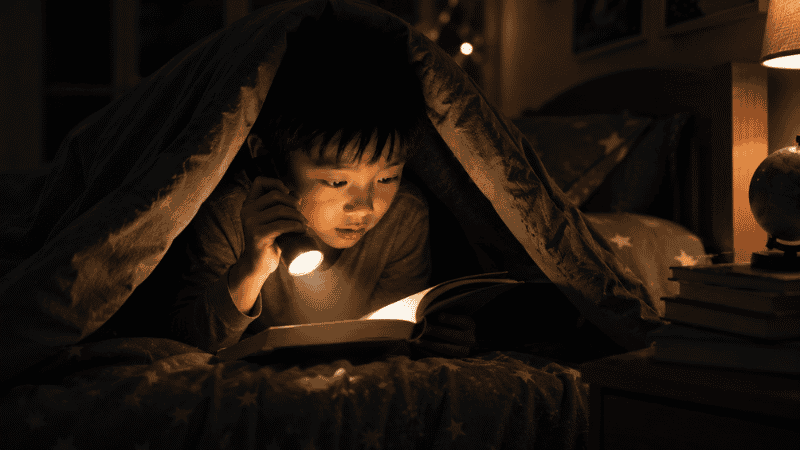
My daughter was seven when she came downstairs at 10:30 on a school night, book in hand, with the particular expression of someone who has a reasonable argument prepared. “I just need to finish this chapter,” she said. “It’s a short one.”
It wasn’t a short one. But I let her finish it anyway, because I recognized what was happening. That wasn’t a child trying to avoid sleep. That was a reader who had crossed over — the kind of reader who forgets to eat, who misses their stop on the bus, who surfaces from a book blinking as if returning from somewhere real.
Seven is when that happens for many children. It’s the age when decoding finally becomes automatic enough that reading stops feeling like work and starts feeling like flight. The best books for 7-year-olds are built for exactly that moment — long enough to get lost in, rich enough to be worth finding, and propulsive enough that finishing feels like both an ending and a beginning.
This guide will help you find the books that do all three.
Key Takeaways
- By age 7, most children have reached a level of reading fluency where comprehension — not decoding — becomes the primary cognitive task. This is the pivot point where a love of reading either takes root or begins to erode (Chall, 1983, Stages of Reading Development).
- Children who read independently for 20 minutes a day are exposed to approximately 1.8 million words per year — a compounding vocabulary advantage that affects academic performance across every subject (Anderson, Wilson & Fielding, 1988).
- The “summer slide” in reading development is most pronounced between second and third grade. Daily reading through summer — even 15 minutes — significantly reduces this regression (RAND Education, 2012).
- Series books are particularly powerful at seven: familiarity with characters reduces cognitive load and lets children engage more deeply with language and story on each subsequent book.
- Read-aloud remains genuinely valuable at this age — a parent reading to a fluent seven-year-old still builds vocabulary and comprehension beyond what they can access independently.
What Seven-Year-Old Readers Actually Need
Seven is the age researchers call “reading to learn” — the transition from learning to read to using reading as a tool for everything else. But this transition isn’t instantaneous, and the books that serve it best are the ones that honor both sides of where a seven-year-old actually is.
They need books long enough to develop real investment. A book that ends in twenty minutes doesn’t give a seven-year-old the experience of living inside a story across multiple days — the anticipation at bedtime, the remembered detail from two nights ago, the shock when something unexpected happens. Series books and chapter books that span several sittings are where the deepest reading development happens at this age.
They also need books that respect their intelligence without overwhelming their endurance. Seven-year-olds are capable of nuance, humor, moral complexity, and genuine surprise — but their stamina for density varies enormously. The best books for 7-year-olds are page-turners that don’t condescend.
And they still need to be read to. Not because they can’t read — many seven-year-olds are reading fluently — but because their listening comprehension runs years ahead of their reading level, and the books you can read aloud together are richer and more emotionally complex than what they can access independently. Don’t retire the read-aloud. It’s doing work that nothing else can.
Best Chapter Books for 7-Year-Olds: Series That Create Real Readers
At seven, the right series doesn’t just entertain — it builds a reading identity. These are the ones that do it best.
Adventure Series That 7-Year-Olds Can’t Put Down
Magic Tree House series by Mary Pope Osborne
If your child hasn’t started this series yet, seven is a perfect entry point. If they started at five or six, they’re old enough now to engage with the historical nonfiction companion books (Fact Trackers) that accompany each adventure — which transforms the series from entertainment into genuine curiosity-building.
Why it works at 7: The chapters are short enough to finish in one sitting but the books are long enough to feel like real reading accomplishments. Jack and Annie’s dynamic — one careful and research-oriented, one instinctive and brave — gives every kind of seven-year-old someone to recognize themselves in.
How to read it: If they’re reading independently, let them go. If you’re reading aloud, read the adventure book together, then let them read the Fact Tracker on their own. The nonfiction is accessible enough for independent reading and makes the fiction feel real.
📦 Series — 60+ books across multiple sub-series; start at Book 1: Dinosaurs Before Dark
💰 Budget Pick — paperback editions widely available
The Boxcar Children series by Gertrude Chandler Warner
Four siblings live independently in an abandoned boxcar and solve mysteries. The premise is absurd in the best way, and seven-year-olds find it completely intoxicating — the fantasy of competent children managing their own lives is one of the most persistent fantasies of this age group, and Warner understood it perfectly when she wrote the first book in 1924.
Why it works at 7: The mysteries are genuinely solvable if you’re paying attention. Seven-year-olds who have cracked a Boxcar Children mystery before the reveal feel a satisfaction that borders on triumph.
How to read it: Try alternating — you read a chapter, they read a chapter. The natural stopping point each time creates conversational moments about what they think will happen next. Prediction at this age is a measurable comprehension skill, not just a game.
📦 Series — 150+ original books; The Boxcar Children (Book 1) is the entry
💰 Budget Pick
The Secret Garden by Frances Hodgson Burnett (adapted editions for this age)
Mary Lennox is unpleasant, lonely, and grieving in ways she doesn’t have words for. She finds a locked garden. She finds a hidden boy. Something grows in all three of them. The original was published in 1911 and has never stopped being read — adapted editions for seven-year-olds preserve the heart of it while making the Victorian language accessible.
Why it works at 7: Mary is not likeable at the start, and seven-year-olds who are sometimes not likeable themselves find this deeply reassuring. The transformation in the book is earned, not granted — it comes from connection and effort and the specific kind of hope that gardens represent.
How to read it: This is a read-aloud book at seven, not an independent one. Read it slowly. The atmosphere is the point — the cold Yorkshire moor, the locked door, the first green shoot. Let your voice carry all of it.
⭐ Worth the Splurge — look for illustrated adapted editions that honor the original’s imagery
Funny Books for 7-Year-Olds That Are Actually Funny
Seven-year-olds have genuinely sophisticated senses of humor. They understand irony, callbacks, and the comedy of escalation. These books respect that.
Diary of a Wimpy Kid by Jeff Kinney
Greg Heffley is self-absorbed, frequently dishonest, and spectacularly bad at learning from his mistakes. He is also one of the funniest characters in children’s literature, and seven-year-olds who are navigating second grade social dynamics find him both appalling and deeply recognizable.
Why it works at 7: The diary format makes it feel like reading someone’s private thoughts — which it is — and that intimacy is part of the appeal. Children this age are intensely curious about what’s happening inside other people’s heads. Greg shows them, without filter.
How to read it: This is an excellent independent reading book — the illustrated journal format means text and pictures work together to support comprehension, and the chapters are short enough for a child to choose their own stopping point. Many reluctant readers who won’t touch a traditional chapter book will read Diary of a Wimpy Kid voluntarily. That is reason enough.
📦 Series — 18 books; start at Book 1
💰 Budget Pick
Big Nate series by Lincoln Peirce
Nate Wright is convinced he is destined for greatness. His teachers, grades, and general life outcomes disagree. The series is part graphic novel, part chapter book, and entirely committed to the comedy of a child whose confidence dramatically exceeds his competence — which seven-year-olds find both hilarious and somehow comforting.
Why it works at 7: Nate fails constantly and recovers constantly, which is essentially the emotional experience of second grade. The format — shorter chapters, illustrations throughout — makes it accessible for a wide range of independent reading levels.
How to read it: Great for independent reading. If your child is a reluctant reader who likes Dog Man, Big Nate is the natural next step — slightly more text, same energy, same humor, same sense that being a kid is inherently absurd.
📦 Series — 15+ books; Big Nate: In a Class by Himself is the entry
💰 Budget Pick
The Bad Guys series by Aaron Blabey
Still working at seven, and funnier than ever now that children are old enough to appreciate the self-aware absurdity of the format. The Bad Guys who desperately want to be good guys are essentially a metaphor for every seven-year-old who knows what they should do and keeps doing the other thing instead.
How to read it: Read it aloud if they haven’t discovered it independently yet. Do the voices. The more committed your performance, the more your child will want to read it themselves — and many seven-year-olds who read The Bad Guys aloud with their parents start reading it independently to anyone who will listen.
📦 Series — 20 books
💰 Budget Pick
Best Read-Aloud Chapter Books for 7-Year-Olds (For Reading Together)
These are the books that work best as shared experiences — either because their language rewards being heard, or because the emotional weight is better carried together.
Matilda by Roald Dahl
Matilda Wormwood is a genius raised by people who don’t notice. She finds books, then a teacher who sees her, then discovers she has telekinetic powers, and ultimately rescues herself and the teacher she loves. This is the great book about what reading can do for a child who needs it — which is, in some measure, every child.
Why it works at 7: Dahl trusted children completely. Matilda’s parents are genuinely terrible; her triumph is genuinely satisfying; the emotional payoff is earned. Seven-year-olds who feel unseen in any part of their life find Matilda and recognize her immediately.
How to read it: Don’t soften the Wormwoods. Don’t soften Miss Trunchbull. The contrast between cruelty and kindness is the architecture of the whole book. Read it as written, and trust your child to handle it — they can.
⭐ Worth the Splurge — the illustrated edition with Quentin Blake’s original drawings
My Father’s Dragon by Ruth Stiles Gannett
Still perfect at seven for children who haven’t read it yet. Elmer Elevator’s resourcefulness and kindness feel different at this age than they did at five — a seven-year-old can appreciate the strategy and the humor simultaneously in a way that wasn’t quite available before.
💰 Budget Pick — Newbery Honor
Pippi Longstocking by Astrid Lindgren
Pippi lives alone with a horse and a monkey. She is the strongest girl in the world. She doesn’t go to school, she doesn’t follow rules, and she is completely, radiantly, uncategorically herself. This book has been making children feel less trapped by what adults expect of them since 1945.
Why it works at 7: Seven-year-olds are increasingly subject to institutional expectations — school, behavior charts, social hierarchies. Pippi is the fantasy of someone who exists entirely outside all of it and is fine. Better than fine. She is magnificent.
How to read it: Let your child interrupt with “I wish I could do that.” Don’t correct the impulse. The book is designed to produce exactly that response.
💰 Budget Pick
Best Books for 7-Year-Olds Who Are Reluctant Readers
Reluctant readers at seven are not children who don’t like stories. They are almost always children who haven’t yet found their format. These books exist specifically for them.
Dog Man series by Dav Pilkey
The gold standard for reluctant readers at this age. The format — comic panels, short chapters, deliberately crude humor — is exactly what many seven-year-old reluctant readers need: proof that reading can feel like freedom, not obligation. Dav Pilkey wrote these books for children who were told their kind of reading wasn’t real reading. It is. Every page of it.
How to read it: Don’t guide this one. Don’t discuss it. Don’t turn it into a lesson. Just make it available and get out of the way.
📦 Series — 13 books; Dog Man is Book 1
💰 Budget Pick
Diary of a Wimpy Kid by Jeff Kinney
Already listed above, but worth repeating here: this is the single most effective book for reluctant readers at seven and eight. The illustrated format, the short chapters, the relatable protagonist, and the complete absence of any feeling of “educational” combine to make it the book that has converted more reluctant readers than almost any other title of the last twenty years.
💰 Budget Pick
National Geographic Kids books (nonfiction series)
For the child who loves facts and hates stories: these are the entry point. Full of photographs, short bursts of information, and the particular pleasure of knowing something specific and verifiable. A child who reads National Geographic Kids books is reading — really reading — even if it looks different from what you expected.
How to read it: Buy the one about their specific obsession. Dinosaurs, sharks, space, volcanoes, animals — whatever it is, there’s a book for it. Interest is the engine. Everything else follows.
💰 Budget Pick — individual titles under $15
What to Skip at Age 7 (The Honest Version)
Books that are technically at level but emotionally flat. Leveled readers produced primarily for reading instruction often sacrifice narrative richness for controlled vocabulary. A seven-year-old who is a capable reader deserves a real story, not a reading exercise dressed up as a book. If a book feels thin, it probably is — move on.
Series books started in the wrong place. This matters more at seven than at younger ages because seven-year-olds have strong feelings about having missed something. If they’re joining a series mid-run, back up. The investment in the beginning pays dividends through every subsequent book.
Books chosen for prestige rather than fit. Some classics that are technically appropriate for seven-year-olds — certain unabridged versions of Little Women, some Dickens adaptations — are better at nine or ten. There is no virtue in introducing a book before a child is ready to love it. The goal is love, not exposure.
When Your 7-Year-Old Hates Reading: What Actually Helps
This is more common than parents talk about, and it’s almost never permanent. A few things worth knowing.
Reading resistance at seven is often about control. Second grade is the first year when reading performance becomes visible and comparative. Children who are struggling — or who feel they are, regardless of their actual level — sometimes develop resistance as a protective mechanism. Removing all performance pressure from home reading is the first intervention. No comprehension questions. No reading logs. Just books and time.
Ten minutes is enough. If storytime battles are exhausting everyone, drop back to ten minutes. Ten focused minutes of reading aloud to a child who has given up on books independently is worth more than thirty minutes of argument. Rebuild the relationship with story before rebuilding the relationship with independent reading.
Follow the obsession, not the level. A seven-year-old who will only read Minecraft books, or dinosaur fact books, or one specific graphic novel series is building real reading skills. The format and subject matter are less important than the habit. Broaden from inside their interest, not from outside it.
A Note on Reading Difficulties at Age 7
Seven is the age when reading difficulties become clearly identifiable, and early identification makes a significant difference in outcomes.
If your seven-year-old is reading significantly below grade level despite consistent exposure and support, or showing signs of particular difficulty with phonics, letter reversals, or fluency that doesn’t seem to be catching up, a conversation with their teacher and a reading specialist is worthwhile. Dyslexia affects 15–20% of the population and responds very well to structured literacy intervention — the earlier it starts, the better the outcomes.
This is information, not alarm. Children with dyslexia who receive appropriate support become strong, capable readers. The earlier you know, the more you can do.
FAQ: What Parents of Seven-Year-Olds Actually Search For
What reading level should a 7-year-old be at? By the end of second grade, most children are reading at approximately a DRA Level 28–38, or Guided Reading Level M–P. But this range is wide, and children on both ends are often completely typical. The more meaningful question is whether your child is growing as a reader over time and finding genuine pleasure in books. That trajectory matters more than any single data point.
Should 7-year-olds be reading chapter books on their own? Many can and do. But “should” is the wrong frame. The right question is: what does your specific child enjoy reading independently? Some seven-year-olds devour chapter books; others prefer graphic novels or illustrated books; others are still building confidence with shorter texts. All of these are legitimate reading paths. Reading aloud together should continue regardless of independent reading level.
How long should a 7-year-old read each day? Twenty minutes of independent reading per day is a widely cited target, and research supports it strongly. But the quality of engagement matters more than the duration. A child who reads for twenty distracted minutes is getting less than a child who reads for ten completely absorbed ones. Build the habit around pleasure, not time.
Is Diary of a Wimpy Kid okay for 7-year-olds? Yes. Greg Heffley does things he shouldn’t, says things that aren’t kind, and gets away with more than feels fair — which is also true of most characters in children’s literature. The books are funny, relatable, and have turned more reluctant readers into real readers than almost any other series of the last generation. The occasional mild rudeness is a feature, not a bug: it’s why children trust Greg’s perspective.
What are the best series books for 7-year-olds? For independent reading: Magic Tree House, Diary of a Wimpy Kid, Big Nate, Dog Man, Boxcar Children. For read-aloud: Matilda, Pippi Longstocking, Magic Tree House Fact Trackers. The best series is always the one your child will actually read — start with their interests and let the books do the rest.
How do I get my 7-year-old to read more when screens are more exciting? Don’t compete with screens directly — you won’t win on entertainment value. Instead, find the overlap: audiobooks of their favorite video game lore, graphic novels of their favorite shows, nonfiction about whatever they’re currently obsessed with. Build the reading identity alongside the screen identity, not against it. Children who discover that books can go places screens can’t — into their imagination, into their own private world — make the shift themselves. Your job is to keep offering good books until that discovery happens.
My 7-year-old was reading well but has suddenly stopped. What happened? This is surprisingly common in second grade, and it’s almost always temporary. Possible causes: reading has become associated with assessment and performance at school; a book was assigned that they disliked; they’re exhausted by the cognitive demands of a new school year; social dynamics are taking up mental energy that used to go to reading. Remove all pressure from home reading. Read to them instead of asking them to read. Offer shorter books, audiobooks, graphic novels. Give it four to six weeks before drawing conclusions.
One Last Thing
The child who comes downstairs at 10:30 needing to finish one more chapter — that child exists on the other side of a specific kind of work. The work of finding the right book at the right moment. The work of reading together when they didn’t feel like it. The work of ten-minute sessions that became twenty, and twenty that became an hour, and an hour that became a habit so deep they can’t imagine themselves without it.
Seven is when that work starts to pay off in ways you can see.
Pick one book from this list tonight. Read the first chapter aloud, even if they’re perfectly capable of reading it themselves. Do the voice. Stop at the cliffhanger.
Watch what they do next.
References
- Chall, J.S. (1983). Stages of Reading Development. McGraw-Hill. (Framework for reading fluency pivot at age 7.)
- Anderson, R.C., Wilson, P.T., & Fielding, L.G. (1988). “Growth in Reading and How Children Spend Their Time Outside of School.” Reading Research Quarterly, 23(3), 285–303.
- RAND Education. (2012). Summer Reading: Closing the Rich/Poor Achievement Gap. RAND Corporation. https://www.rand.org
- International Dyslexia Association. (2020). “Dyslexia Basics.” https://dyslexiaida.org
Laura Bennett is the founder of ZestRead and a mom who has never once regretted letting a child finish one more chapter. She writes about children’s reading, family education, and the books that make the ordinary moments feel a little more alive. Reach her at info@zestread.com