

Third grade is the year reading either becomes something a child loves — or something they just get through.
I don’t say that to frighten you. I say it because it’s true, and because understanding it changes how you approach books at home right now. In first and second grade, learning to read was the project. In third grade, the project shifts: now children are expected to read to learn. Longer texts. More complex ideas. Fewer pictures. Longer chapters. And because that shift is hard, many eight and nine-year-olds hit a wall somewhere in September and come home saying the sentence no parent wants to hear: “I don’t like reading.”
What I know from watching this happen — and from talking with teachers who see it every year — is that this sentence almost never means what it sounds like. It doesn’t mean the child is broken or behind or will never be a reader. It almost always means they haven’t found the right book yet. The one that makes them forget they’re doing something effortful. The one they carry to the dinner table and have to be reminded to put down.
The best book for a third grader isn’t always the hardest book they can technically read — it’s the one that makes them want to turn the next page. This guide will help you find it.
Key Takeaways
- Third grade (ages 8–9) marks the transition from “learning to read” to “reading to learn” — a developmental shift that puts new demands on children and requires a deliberate approach to home reading.
- The reading level range in a typical third-grade classroom spans nearly four grade levels — what’s right for one child is completely wrong for another, and both children are within normal development.
- Children who read books matched to their interests read significantly more pages per week than those reading level-appropriate books that don’t engage them (Guthrie & Wigfield, 2000).
- Series books are the single most powerful reading motivation tool at this age — the investment a child makes in characters across multiple volumes creates momentum that standalone books rarely produce.
- Research consistently shows that 20 minutes of daily independent reading outside school produces measurable gains in reading fluency, vocabulary, and comprehension — more than most structured interventions (Anderson et al., 1988).
Quick Picks: Best Books for 3rd Graders
| Child Type | Start Here |
|---|---|
| Doesn’t like reading | Big Nate |
| Loves animals | The Wild Robot |
| Ready for challenge | Percy Jackson |
| Family read aloud | Charlotte’s Web |
How to Choose the Right Books for 3rd Graders
Most reading guides for parents jump straight to the book list. This one won’t — because understanding how to choose books for your specific child matters more than any list of titles.
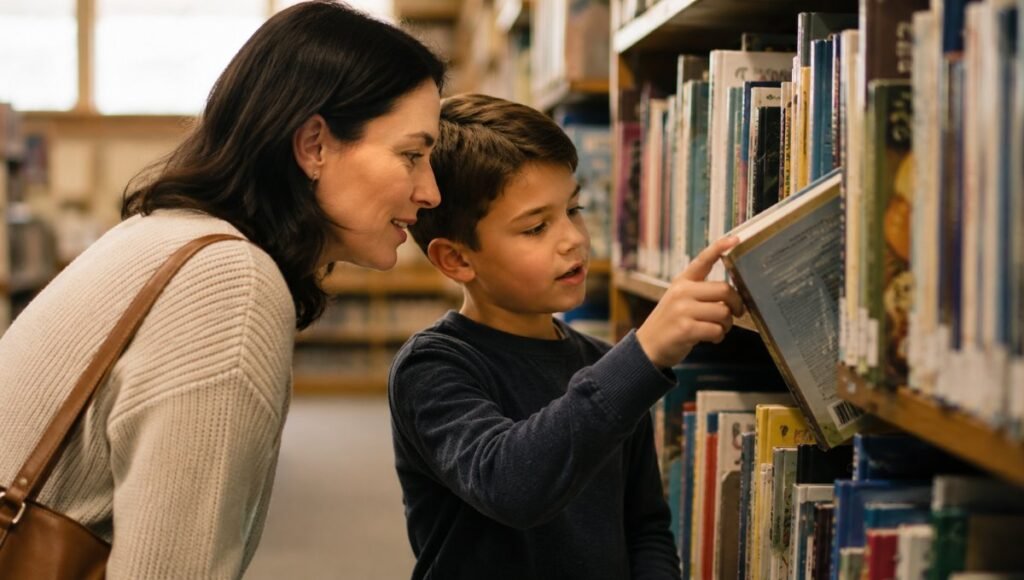
Choose Books That Match Their Reading Confidence
Third graders generally fall into three reading profiles — and each needs something different.
Hesitant readers are still finding reading effortful. They can decode words, but it takes energy, and that energy comes at the expense of enjoying the story. For these children, the priority is books that feel immediately accessible — lots of illustrations, short chapters, humor that lands quickly, characters they identify with right away. The goal is not challenge. The goal is the experience of finishing a book and feeling good about it.
Growing readers are gaining fluency but haven’t yet found their “reading identity” — the genre or type of story that makes them genuinely want to read rather than just tolerate it. These children need variety and permission to quit books that don’t grab them. One book that clicks is worth twenty that are merely appropriate.
Advanced readers can technically handle books above grade level — but “can handle” and “should be reading” are different things. A third grader who reads fluently may not yet be emotionally ready for the themes in books written for older readers. Reading level is not the same as maturity level. Vocabulary and plot complexity are one thing; content and emotional register are another.
Don’t be swayed by what the child’s classmates are reading or what grade level a book is labeled. The right reading level for a third grader is the level at which they can read independently with about 95% accuracy — enough fluency that comprehension is possible, enough challenge that growth is happening.
Look for Stories They Actually Care About
Interest beats difficulty. Every time.
A child who is moderately below grade level but passionately interested in a subject will read more, understand more, and build more reading stamina than a child reading exactly at grade level who finds their books boring.
The interests that drive third-grade reading most reliably:
- Animals — realistic or fantasy, it doesn’t matter. Children who love animals will read anything with an animal protagonist.
- Friendship and social dynamics — the specific anxieties of third grade (who likes me, do I fit in, what happens when friendships change) make realistic social fiction deeply absorbing.
- Adventure and mystery — stories with urgency, stakes, and puzzles to solve.
- Funny stories — humor is always the lowest-friction gateway to reluctant readers.
- Fantasy worlds — for children who want complete escape, fantasy delivers.
When you know what your child cares about, every book recommendation in this guide becomes easier to apply.
Balance Easy Wins and Reading Challenges
Here’s a framework that works better than “reading at grade level” for most families:
70% comfortable books — books the child can read independently without struggling, including books they’ve read before. These build fluency, speed, and the positive association with reading that sustains the habit.
30% challenge books — books that stretch vocabulary, introduce new ideas, or require more sustained attention. These build the skills that move a child forward.
The mistake most well-meaning parents make is inverting this ratio — offering almost exclusively challenging books because those feel more educational. The result is a child who associates reading with effort and failure. Protect the easy reads. They are not wasted time.
Best Books for 3rd Graders Who Are Starting Chapter Books
These are books for children who are crossing the bridge from heavily illustrated early readers into the world of real chapter books — and who need that transition to feel safe, manageable, and rewarding.
Ivy and Bean by Annie Barrows, illustrated by Sophie Blackall
Ivy and Bean are neighbors who decide they don’t like each other — until an emergency forces them to work together and everything changes. The chapters are short, the illustrations appear on nearly every page, and the friendship feels completely real.
Why kids love it: The dynamic between Ivy (quiet, bookish, interested in magic) and Bean (loud, impulsive, interested in everything else) mirrors real third-grade friendships more closely than most children’s books attempt. Children see themselves in one character and their best friend in the other.
Best for: Hesitant readers making their first serious chapter book attempt; social readers who care about friendships.
Parent tip: Read the first chapter together and then let your child continue independently. Once they’re past the initial investment, most children move through the series quickly.
📦 Series — 14 books
💰 Budget Pick
Frindle by Andrew Clements
Nick Allen wants to cause trouble in fifth grade, so he decides to call a pen a “frindle.” The word catches on. What happens next is both funny and unexpectedly moving — a book about language, creativity, and what happens when a small idea grows into something bigger than anyone expected.
Why kids love it: The premise is exactly the kind of scheme an eight or nine-year-old would find brilliant. And the way the story develops — beyond what Nick intended — gives children a satisfying experience of being surprised by a story they thought they had figured out.
Best for: Children who like the idea of getting away with something; word lovers; anyone who has ever had a funny idea they couldn’t let go of.
Parent tip: After finishing, ask: “If you could rename one ordinary thing, what would you call it and why?” The conversation that follows is always better than expected.
💰 Budget Pick
Clementine series by Sara Pennypacker
Clementine is eight years old and makes decisions that seem completely reasonable to her but tend to create complications for everyone around her. The series is warm, funny, and emotionally honest about what it feels like to be a child who is trying hard and frequently missing the mark.
Why kids love it: Pennypacker writes Clementine with genuine love, and children feel it. The humor never comes at Clementine’s expense — it comes from the gap between her intentions and her results, which is something every third grader understands.
Best for: Hesitant readers who need warmth as much as humor; children who sometimes feel misunderstood.
📦 Series — 7 books
💰 Budget Pick
The Wild Robot by Peter Brown
Roz is a robot who washes up on a wild island and must learn to survive by observing the natural world around her. She accidentally becomes the mother of a gosling named Brightbill. The book is about adaptation, belonging, and what it means to love something you didn’t expect to love.
Why kids love it: Brown’s illustrations appear throughout, making the book feel more accessible than its page count suggests. The emotional arc — Roz’s slow transformation from machine to something that can genuinely care — moves children in ways they often can’t fully articulate until they’re asked about it.
Best for: Animal lovers; children who are navigating their own questions about fitting in; strong readers ready for something with more emotional depth.
Parent tip: This is one of the books that generates the best dinner-table conversations. “What made Roz a good mother even though she wasn’t supposed to be one?” rarely gets a short answer.
📦 Series — The Wild Robot Escapes, The Wild Robot Protects follow
⭐ Worth the Splurge — the hardcover edition with full-color illustrations is beautiful
Charlotte’s Web by E.B. White
Wilbur the pig is going to be killed. Charlotte the spider decides to save him using the only tool she has — words. She does save him, and then she dies, and the book has been breaking children’s hearts for seventy years because it tells the truth about love and loss in a way that is completely bearable and completely real.
Best for: Animal lovers; read-aloud with parents; children who are ready to feel something genuinely large inside a story.
Parent tip: Don’t warn them about the ending. Trust that they can handle it. Be nearby when they get there. The conversation that follows is one of the best parenting moments reading creates.
⭐ Worth the Splurge — the illustrated hardcover with Garth Williams’ original drawings
Funny Books for 3rd Graders Who Say “Reading Is Boring”
Let’s be honest about what “I hate reading” usually means in third grade: I haven’t found a book that’s worth the effort yet.
Humor is the most reliable solution. Not because funny books are easier — Sideways Stories from Wayside School is doing sophisticated comedic work — but because a child who is laughing is not calculating the cost of reading. They’re just reading.
Big Nate series by Lincoln Peirce
Nate Wright is certain he is destined for greatness. School has not confirmed this. Each book follows Nate through another round of schemes, mishaps, and the specific indignity of being an ordinary person who believes himself extraordinary.
Why it works: The mix of prose and comic strips means every page offers something visually interesting, which lowers the activation energy for reluctant readers. And Nate’s relentless optimism in the face of constant defeat is genuinely funny — not mean-funny, but true-funny.
Why it works for reluctant readers specifically: The books look substantial but read fast. A reluctant reader who finishes a Big Nate book in two days has the experience of being a person who read a whole book in two days. That matters.
📦 Series — 25+ books
💰 Budget Pick
Sideways Stories from Wayside School by Louis Sachar
Wayside School was accidentally built thirty stories tall — one classroom on top of another — instead of one story with thirty classrooms. Mrs. Jewls teaches on the thirtieth floor. Each chapter is a different student with a different very strange problem.
Why it works: Sachar writes absurdist comedy with completely internal logic — everything that happens follows rules, they’re just different rules than the ones the real world uses. Children who have started to understand how comedy works find this extraordinarily satisfying.
Parent tip: Read the chapter about Mrs. Gorf first. If your child laughs at the ending, they will read the whole book.
📦 Series — Wayside School Is Falling Down, Wayside School Gets a Little Stranger
💰 Budget Pick
Diary of a Wimpy Kid series by Jeff Kinney
Greg Heffley is not an admirable person, exactly. He is honest in his diary about his own selfishness, laziness, and willingness to let others take blame for things he did. Children love this because it says the true things that no other children’s book quite says.
The reading level note: Diary of a Wimpy Kid has a Lexile score in the 5th-6th grade range, but it’s written for and beloved by children ages 8–12 because the content and humor are exactly right for this age group. Lexile scores are not the whole story.
Parent tip: Don’t be put off by Greg’s questionable character. Children who read Greg’s confessions are developing moral reasoning — they’re constantly evaluating his choices and finding them wanting, which is exactly what fiction is supposed to do.
📦 Series — 18+ books
💰 Budget Pick
Read-Aloud Books for 3rd Graders to Enjoy Together
Here is something I wish more parents knew: third grade is not too old for read-alouds.
Even an independent third-grade reader benefits from being read to. Your child’s listening comprehension is years ahead of their reading level — the books you can read together are richer, more complex, and more vocabulary-building than what they can currently access alone. And reading aloud together at this age creates conversations that reading independently doesn’t produce.
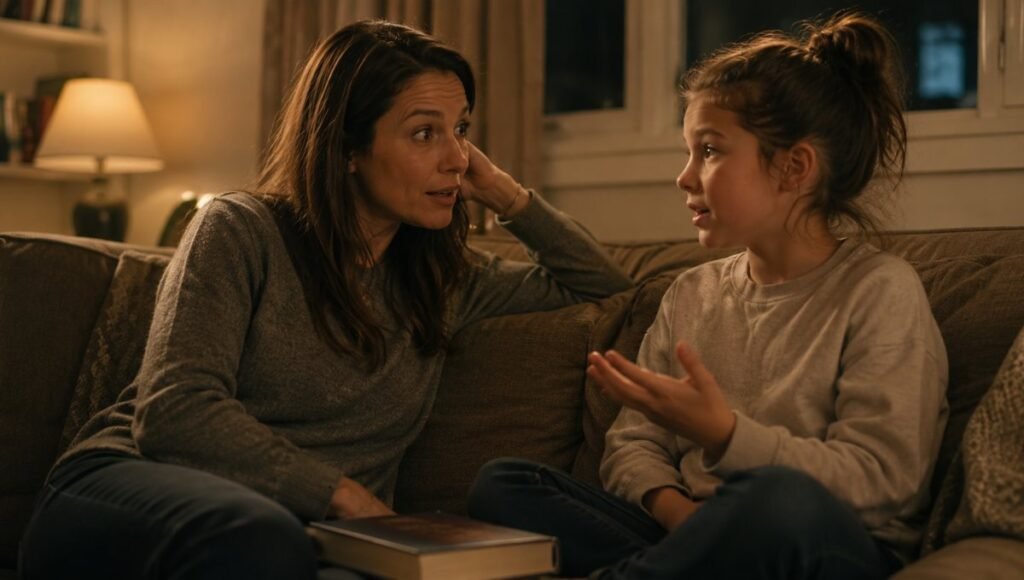
Best Bedtime Read-Aloud Choices
The BFG by Roald Dahl — Sophie is snatched from her bedroom window by a giant who turns out to be the Big Friendly Giant. The vocabulary is extraordinary; the humor is pitch-perfect for eight and nine-year-olds; the friendship between Sophie and the BFG is one of the great relationships in children’s literature.
Conversation starter: “The BFG says dreams are real and he can catch them. Do you think any of your dreams have come from somewhere?”
Pippi Longstocking by Astrid Lindgren — Pippi lives alone, is enormously strong, and does exactly what she wants. She has no parents telling her what to do, no bedtime, and complete freedom. For children who have complicated feelings about rules, this book is a revelation.
Conversation starter: “What’s one rule you’d get rid of if you lived like Pippi? What rule would you keep?”
My Father’s Dragon by Ruth Stiles Gannett — A boy’s father runs away from home to rescue a baby dragon being held captive on an island. The plan is meticulous and the execution is wonderful. Short enough to finish in a week of bedtime reading.
Books That Start Great Conversations
Wonder by R.J. Palacio — Auggie Pullman has a facial difference and is starting school for the first time in fifth grade. The book shifts between multiple perspectives, giving children experience with the radical act of understanding someone else’s point of view from the inside.
Conversation starter: “Which character did you understand the most? Which one did you have the hardest time with?”
The One and Only Ivan by Katherine Applegate — A gorilla who paints lives in a mall. His friend Stella the elephant is sick. He makes a promise he doesn’t know if he can keep. Based on a true story.
Conversation starter: “Ivan made a promise even though he didn’t know how to keep it. Have you ever made a promise like that?”
Holes by Louis Sachar — Stanley Yelnats is sent to a juvenile detention camp where the boys dig holes all day. Why? The answer involves a family curse, buried treasure, and one of the most satisfying plot resolutions in children’s literature.
Conversation starter: “What do you think the warden is actually looking for? What would you do if you found it?”
Best Books for Advanced 3rd Grade Readers
Some third graders are reading well above grade level. The challenge here is different: these children need books that satisfy their reading ability without exposing them to content they’re not yet emotionally ready for.
The mistake is equating reading level with maturity level. A third grader who reads at a sixth-grade level can decode the words in a YA novel — but may not yet have the life experience to process the themes. The goal is books that are linguistically rich and thematically appropriate.
Percy Jackson and the Olympians series by Rick Riordan
Percy discovers he is the son of Poseidon and attends a summer camp for demigods. Each book sends him on a quest drawn from Greek mythology. The vocabulary is above grade level; the plotting is sophisticated; the humor is excellent; the themes — belonging, identity, the relationship between power and responsibility — are ones third graders can engage with meaningfully.
Content note: Some violence (it’s monsters fighting demigods) and some emotional weight (absent parents, characters in danger). Preview for sensitive readers. Most confident third graders handle it well.
📦 Series — 5 books; the Kane Chronicles and Magnus Chase series follow for Norse and Egyptian mythology
💰 Budget Pick
From the Mixed-Up Files of Mrs. Basil E. Frankweiler by E.L. Konigsburg
Claudia and her brother run away from home and hide in the Metropolitan Museum of Art, where they discover a mystery about a statue that might be a lost Michelangelo. For advanced readers who are ready for a more sophisticated narrative voice and a mystery that operates on multiple levels simultaneously.
💰 Budget Pick
A Wrinkle in Time by Madeleine L’Engle
Meg Murry is awkward, angry, and certain she is not good enough. Her father has disappeared into the universe. The journey to find him takes her through time and space and into the most important question the book asks: what kind of strength does it actually take to save someone?
Best as a read-aloud for third graders who are advanced readers but not yet ready to tackle the philosophical complexity alone.
💰 Budget Pick
Books for 3rd Graders by Interest
Third grade is the year children start developing a reading identity — a sense of what kind of reader they are. These recommendations are organized by the interests that most reliably drive third-grade reading.
Adventure Books for 3rd Graders
The Magic Tree House series by Mary Pope Osborne is still the gold standard for this category at the accessible end. For children ready for longer, more complex adventure: Hatchet by Gary Paulsen (Brian survives alone in the Canadian wilderness after a plane crash) and My Side of the Mountain by Jean Craighead George (a boy runs away to live in the Catskill Mountains alone for a year) are both outstanding and completely age-appropriate.
Mystery Books for 3rd Graders
From the Mixed-Up Files of Mrs. Basil E. Frankweiler (above) for sophisticated readers. Encyclopedia Brown by Donald J. Sobol for children who want to solve the mystery themselves — each book ends with the solution in the back, and the challenge is to figure it out before you check. The Westing Game by Ellen Raskin for advanced readers ready for a complex, multi-character mystery.
Animal Books for 3rd Graders
The Wild Robot (above) for emotional depth. Charlotte’s Web (above) for classic emotional weight. Ronia, the Robber’s Daughter by Astrid Lindgren for wilderness and animals in a fantasy context. The Miraculous Journey of Edward Tulane by Kate DiCamillo for children who are ready to be genuinely moved.
Graphic Novels for 3rd Graders
Dog Man by Dav Pilkey remains the most reliable reluctant-reader gateway. For more narrative complexity: Amulet by Kazu Kibuishi (fantasy epic), Hilo by Judd Winick (science fiction comedy), and New Kid by Jerry Craft (realistic fiction, Newbery Medal winner).
How Parents Can Help a 3rd Grader Build a Reading Habit
Books are the ingredient. Habit is the recipe. Here is what actually works.
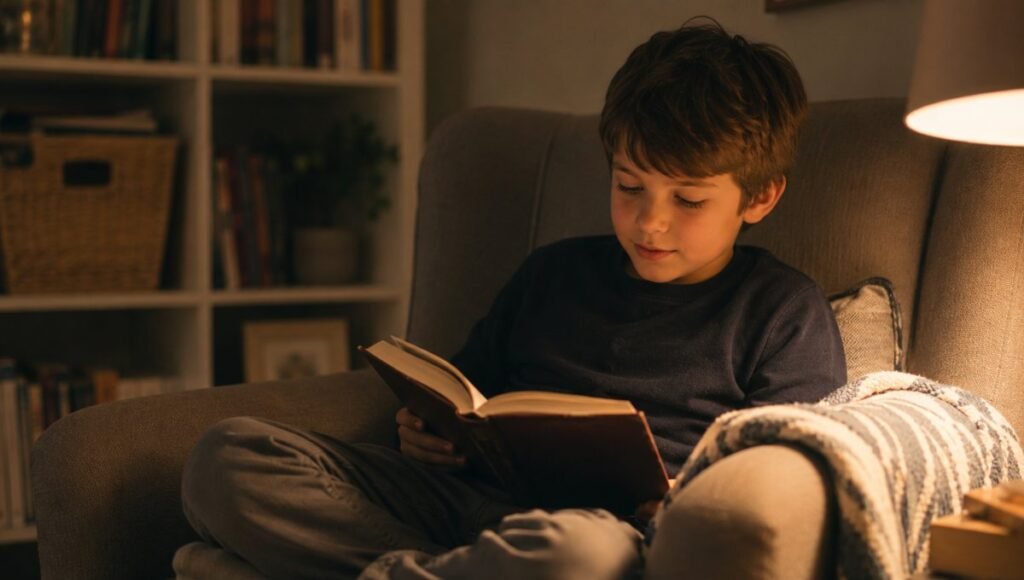
Start With 10 Minutes a Day
Not thirty. Not twenty. Ten.
The research on reading habits consistently shows that consistency matters more than duration. A child who reads ten minutes every day without exception builds more reading skill — and more love of reading — than one who reads for an hour on weekends.
Ten minutes is achievable. It doesn’t require sacrifice of screen time or play time. It doesn’t turn reading into a chore. And once a child is inside a good book, ten minutes frequently becomes fifteen or twenty without anyone noticing.
Start there. Let it grow on its own.
Let Kids Quit Books Sometimes
Adults quit books that aren’t working for them. We should extend the same courtesy to children.
A child who is allowed to abandon a book that isn’t working will pick up the next one with more hope than one who was forced to finish something they hated. The “you have to finish what you started” rule is well-intentioned and actively harmful to reading enjoyment.
The reasonable limit: try for twenty pages before deciding. If a book hasn’t grabbed a child in twenty pages, it probably won’t. Return it and try something else. There are too many good books to force through bad fits.
Talk About Stories Instead of Testing Them
The most common mistake parents make in conversations about books is turning them into comprehension checks.
“What happened in chapter three?” is a quiz. It signals that reading is homework with a right answer. Children who associate reading with being tested read less voluntarily.
Instead:
- “What surprised you in what you read today?”
- “Is there a character you’d want as a friend? Or definitely wouldn’t?”
- “If you were writing the next chapter, what would happen?”
These questions treat the child as someone whose response to a story matters — because it does.
The Best 3rd Grade Reading List: A Practical Reference
For parents who want a quick reference to share with a librarian or bookmark for the school year:
Easy chapter books for 3rd graders (confident beginners): Ivy and Bean, Clementine, Horrible Harry, Junie B. Jones
Core chapter books for growing 3rd grade readers: Frindle, The Wild Robot, Charlotte’s Web, Magic Tree House, Big Nate, Diary of a Wimpy Kid
Funny books for 3rd graders: Sideways Stories from Wayside School, Big Nate, Diary of a Wimpy Kid, Clementine
Classic books for 3rd graders: Charlotte’s Web, Frindle, From the Mixed-Up Files of Mrs. Basil E. Frankweiler, Pippi Longstocking
Read-alouds for 3rd grade: The BFG, Wonder, The One and Only Ivan, Holes, A Wrinkle in Time
Nonfiction books for 3rd graders: National Geographic Kids series (any topic), Who Was? series, I Survived series
Books for advanced 3rd grade readers: Percy Jackson, From the Mixed-Up Files, A Wrinkle in Time, Holes
FAQ: Books for 3rd Graders
What books should a 3rd grader be reading? The most useful answer: books they actually want to read, at a level where they can decode about 95% of words independently. Good starting points by interest: Ivy and Bean or Clementine for social readers; Magic Tree House for adventure lovers; Big Nate or Diary of a Wimpy Kid for humor seekers; The Wild Robot for animal and nature lovers.
How many minutes should a 3rd grader read every day? Research points to 20 minutes of daily independent reading as the threshold that produces significant gains. But 10 minutes daily, consistently, produces more benefit than 30 minutes twice a week. Start with 10 minutes and let it grow naturally. Consistency beats duration.
What if my 3rd grader hates reading? They almost certainly don’t hate reading — they haven’t found their book yet. Start with humor: Big Nate, Diary of a Wimpy Kid, Sideways Stories from Wayside School. Let them choose at the library without guidance. Allow them to quit books that don’t work. Read aloud together so books have positive association even when independent reading feels hard.
Are graphic novels good for third graders? Completely. Graphic novels require simultaneous processing of text and visual information — a cognitively distinct and valuable skill. Children who read graphic novels read more total pages per week, which produces greater vocabulary exposure and stronger habits. Dog Man, Hilo, Amulet, and New Kid are all excellent third-grade choices.
Should parents still read aloud to third graders? Yes — and don’t stop because they can read independently. Third graders’ listening comprehension is years ahead of their reading level. Reading aloud together gives access to vocabulary and ideas they can’t yet access alone, and it creates the conversations that build genuine reading understanding.
What reading level is normal for 3rd grade? The typical Lexile range for end-of-third-grade readers is approximately 520L–820L, corresponding to Guided Reading Level O–S. But the spread in any classroom is enormous — a child at 300L and one at 1000L are both within normal development. Level matters less than trajectory: consistent progress over time.
How many books should a third grader read? More than the number matters the habit. A child who reads one book per month with genuine engagement is doing more for their reading development than one who checks off titles on a list. Use 20 minutes per day as the metric rather than books per month.
How do I help my child move from picture books to chapter books? Bridge books are the answer — books that look like chapter books (real chapters, some length) but read like accessible early readers (short chapters, illustrations throughout, simple vocabulary). Ivy and Bean, Nate the Great, and the Fly Guy chapter books are all excellent bridges. Read the first chapter together before leaving your child to continue independently.
One Last Thing
Reading is not a race.
The third grader who is still in early chapter books while classmates are reading Percy Jackson is not behind in any way that matters. The third grader who reads every Diary of a Wimpy Kid book twice and nothing else this year is not stagnating. The third grader who says they hate books but spends an hour with a graphic novel is reading.
What you’re building in third grade is not a reading level. It’s a reading life. A set of habits and associations and memories that will determine whether this child reaches for a book at thirteen, at twenty-five, at forty.
Find one book this week that might be right for your child. Not the hardest book they can technically read. The one most likely to make them turn the page.
That’s all. The rest follows.
Keep exploring on ZestRead:
- Books for 1st Graders: The Complete Reading Guide for Ages 6–7
- Books for 2nd Graders: The Reading Guide Every Parent Needs Right Now
- Best Books for 8-Year-Olds: Readers Finding Their Own Path
- Best Books for 9-Year-Olds: The Independent Reader Who Still Needs You
- Graphic Novels for Kids: The Best Picks That Turn Reluctant Readers Into Devoted Ones
📚 ZestRead Reading Notes: The Research Behind This Guide
Helping a child become a reader is not about chasing the highest reading level or finishing the longest book.
It is about finding stories that build confidence, curiosity, and the feeling of “I want to read one more chapter.”
This guide is shaped by research on children’s reading development, motivation, and how lifelong reading habits are built.
Research from Anderson, Wilson & Fielding highlights the value of consistent reading time outside school, while work from Guthrie & Wigfield shows how interest and engagement influence how much children choose to read.
Reading development research, including the National Reading Panel and Jeanne Chall’s stages of reading development, reminds us that children grow as readers at different speeds.
The right book is not always the hardest book.
It is the book that helps a child believe:
“I am someone who reads.”
Laura Bennett is the founder of ZestRead and a mom who has watched third grade be the turning point — in both directions — for children she loves. She writes about reading development, the books that change things, and the habits that make reading a life rather than a task. Reach her at info@zestread.com