
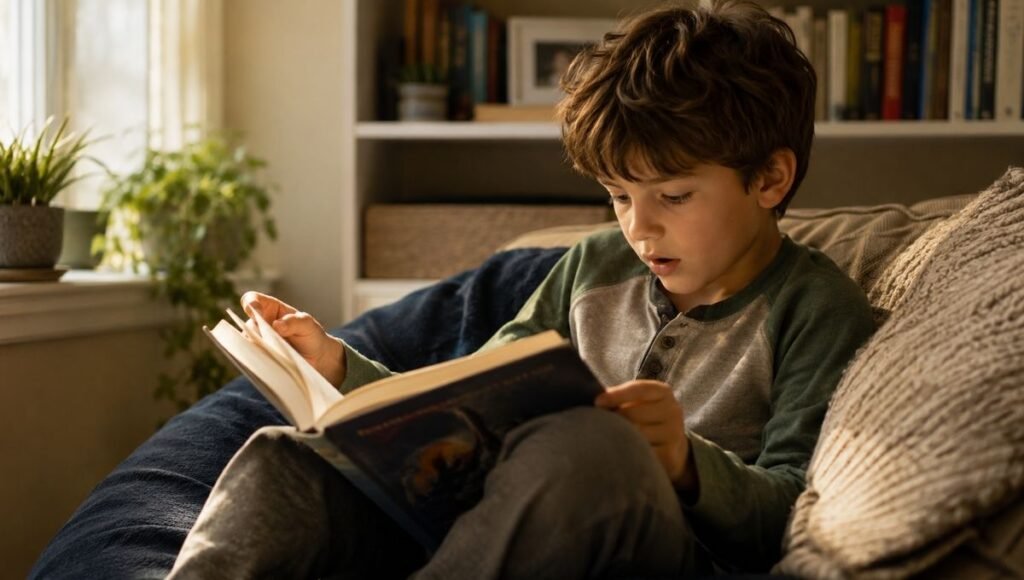
Second grade is the year the reading gap becomes visible.
In first grade, everyone was more or less at the same starting line. Some kids got there faster, some needed more time, but the range felt manageable and the finish line felt shared. Then second grade starts and suddenly — seemingly overnight — some children are tearing through chapter books while others are still working through books with pictures on every page. The child who was keeping pace with everyone in May is now watching classmates carry thick novels to reading time in September.
If you’re in this moment right now, here’s what I want you to know: the gap you’re seeing is real, and it’s normal, and the books you choose at home have more power than you might realize to change its trajectory.
Second grade — ages 7 and 8 — is the year when reading habits either lock in or slip away. Children who find books they genuinely want to read at this age become readers. Children who spend second grade slogging through books that bore or frustrate them often decide, somewhere around eight years old, that reading just isn’t for them.
This guide is built around one central idea: the right book for your second grader is not the hardest book they can technically read. It’s the book they will actually pick up and not want to put down.
Key Takeaways
- Second grade (ages 7–8) is the critical window when independent reading habits either form or fail — children who develop voluntary reading habits in second grade are significantly more likely to be strong readers at age 14 than those who don’t (Anderson et al., 1988).
- The average second grader reads at a Lexile level of 420L–820L, but the range is enormous — a child at 200L and a child at 900L are both completely within normal second-grade development.
- Series books are the single most powerful reading engagement tool for this age — the investment a child makes in characters and world across multiple volumes creates reading momentum that standalone books rarely produce.
- Children who read books matched to their interests — not just their reading level — read significantly more pages per week than those reading level-appropriate books that don’t interest them (Guthrie & Wigfield, 2000).
- Second grade is not too late — or too early — for parent read-alouds. Children’s listening comprehension exceeds their reading level by years at this age; the books you read aloud together are building the reader they’ll be independently in third and fourth grade.
What Second Grade Readers Actually Need
Here is the thing about second-grade reading that most book lists miss entirely: a second grader’s interest is more important than their level.
I know that sounds counterintuitive. Don’t we need to challenge them? Don’t they need to be reading at their level to build skills?
Yes — at school, where reading instruction is calibrated to each child’s development. At home, the goal is different. At home, the goal is a child who wants to read. A child who picks up a book because they need to know what happens next. A child who carries a book to the dinner table and has to be told twice to put it down.
That child — the one who reads from pure desire — will become a stronger reader faster than the child who reads only what’s assigned at the right level. Because the child who reads from desire reads more. And reading more is the single most powerful thing that happens to a reader’s brain.
So: match the level enough that your child can read independently without constant frustration. Then match the interest so completely that they forget they’re doing anything effortful at all.
Best Chapter Books for 2nd Graders: By What Your Child Loves
For the Child Who Loves Laughter
Judy Moody series by Megan McDonald
Judy Moody is in a mood. A different mood every book. She is opinionated, dramatic, and occasionally completely wrong — which is exactly why seven and eight-year-olds find her irresistible. The books are calibrated perfectly for second-grade independent reading: short chapters, large-ish text, black-and-white illustrations throughout.
Why it works: Judy is funny in the specific way that second graders are funny — she takes herself extremely seriously in situations that are objectively not serious. Children who have ever had a Very Important Feeling about something trivial recognize this immediately.
Editorial note: The Stink spinoff series — featuring Judy’s younger brother — works beautifully for second graders who find Judy slightly too intense. Stink is more easygoing, equally funny, and the books are slightly shorter.
📦 Series — 15+ books; Stink spinoff series adds more
💰 Budget Pick
Junie B. Jones series by Barbara Park
Junie B. Jones is starting first grade and has Opinions. About everything. Written entirely in Junie B.’s own voice, with her own particular grammar and logic, these books feel like being inside the head of a child who is doing her best and frequently missing the mark in ways that are completely forgivable.
Why it works for second graders specifically: Children who are in second grade reading about Junie B. in first grade have the specific pleasure of being older than the protagonist — of knowing more than she knows, of seeing the mistakes coming. That superior position is quietly delightful.
Reading level: Lexile 290L–530L — accessible for most second graders reading independently.
📦 Series — 28 books
💰 Budget Pick
Clementine series by Sara Pennypacker
Clementine is eight. She is smart and artistic and tends to solve problems in ways that create slightly larger problems. The books are funny in the warmest possible way — Pennypacker clearly loves Clementine completely, and that love shows in every page.
Why it matters: Clementine is not a perfect child. She makes mistakes, she misunderstands things, she occasionally makes everything worse trying to make it better. But she is never mean, and she is never unkind. For children who are navigating second-grade social complexity — who sometimes feel like they’re getting everything wrong — Clementine is company.
📦 Series — 7 books
💰 Budget Pick
For the Child Who Loves Adventure and Mystery
Magic Tree House series by Mary Pope Osborne
Jack and Annie find a tree house in the woods that takes them back in time. Each book is a different historical adventure — dinosaurs, pirates, ninjas, knights, ancient Egypt. The series has been producing passionate second-grade readers for thirty years, which is the only endorsement it needs.
The secret ingredient: The research elements in each book — real historical facts woven into the adventure — give children the specific pleasure of learning things they didn’t expect to learn inside a story they couldn’t put down. This is one of the most effective formats in children’s literature for producing readers who are also curious thinkers.
Reading level: Lexile 270L–560L. Most second graders can access the early books independently by mid-year.
📦 Series — 60+ books; Merlin Missions extend the series for more advanced readers
💰 Budget Pick
A to Z Mysteries series by Ron Roy
Dink, Josh, and Ruth Rose solve a mystery for every letter of the alphabet. The mysteries are genuinely puzzling for seven and eight-year-olds — not too easy, not too hard — and the series structure (26 books, one per letter) gives children a completely satisfying sense of progress and completion.
Why the alphabet structure works: Children who are competitive — who like to collect things, who like to finish things — find the A to Z structure motivating in a way that an open-ended series can’t replicate. “I’m on K” is a statement of accomplishment. “I’m going to finish all 26” is a project.
📦 Series — 26 books plus Calendar Mysteries spinoff
💰 Budget Pick
Nate the Great series by Marjorie Weinman Sharmat
Nate is a boy detective. He eats pancakes. He solves neighborhood mysteries with the help of his dog Sludge. The books are short enough to finish in one sitting but structured like real mysteries — with suspects, clues, and a reveal. For second graders who want to feel like real readers, these books feel like real books.
For reluctant second graders specifically: The Nate the Great books are an excellent bridge for children who found first-grade books too easy but find full chapter books overwhelming. They look like chapter books; they read like early readers. The gap between those two things is where a lot of reluctant readers live.
📦 Series — 25+ books
💰 Budget Pick
Owl Diaries series by Rebecca Elliott
Eva Wingdale is a young owl who loves art and keeping her diary. Each book is written as Eva’s diary entries, which means the format is visual, varied, and easy to follow. The mysteries Eva encounters are small and warm — lost items, misunderstandings, neighborhood puzzles — and always resolved with kindness.
For: Children who are drawn to diary formats (Diary of a Wimpy Kid fans who aren’t yet ready for Wimpy Kid) or who love animals with big personalities.
📦 Series — 15 books
💰 Budget Pick
For the Child Who Loves Realistic Fiction About Real Kid Problems
Alvin Ho series by Lenore Look
Alvin Ho is an Asian American second grader who is afraid of many things — speaking in school being at the top of a very long list. The books deal with anxiety, family, friendship, and the specific experience of feeling like you don’t quite fit — with humor that never diminishes the real feelings underneath.
Why it matters: Most second-grade realistic fiction is about winning — the talent show, the big game, the friendship that works out. Alvin Ho is about being afraid and doing the thing anyway, which is a significantly more useful story for most seven and eight-year-olds navigating real life.
📦 Series — 8 books
💰 Budget Pick
Ramona Quimby, Age 8 by Beverly Cleary
Ramona starts third grade and everything changes. Her father goes back to school. The family has less money. Her beloved teacher turns out to be difficult. And Ramona — enthusiastic, impulsive, deeply feeling Ramona — has to navigate all of it.
Why this is the perfect second-grade read-aloud: The book is exactly pitched at the emotional register of seven and eight-year-olds — the specific injustice of getting in trouble for something you didn’t mean wrong, the way adults don’t always understand what children are trying to say, the tenderness of family love that isn’t always expressed perfectly. Read it aloud and watch your child recognize themselves in every chapter.
💰 Budget Pick — a genuine American classic
Horrible Harry series by Suzy Kline
Doug narrates his second-grade class adventures and his best friend Harry, who is slightly unusual and completely loyal. The classroom setting — with Miss Mackay and the other students who recur across books — gives the series a warm continuity that children find deeply satisfying.
For: Children who want to read about school without it feeling like homework. The classroom in these books is the exact school experience most second graders recognize — the dynamics, the drama, the small moments that feel enormous when you’re seven.
📦 Series — 30+ books
💰 Budget Pick
For the Child Who Loves Fantasy and Magic
Zoey and Sassafras series by Asia Citro
Zoey discovers that her barn is a place where magical animals come for help when they’re sick. With her cat Sassafras, she uses science to solve each magical creature’s problem. The books are illustrated throughout, include actual scientific concepts, and move fast.
Why it works: The science-magic combination is unusual and effective — children who might otherwise resist a “science” book find the magical creature premise irresistible, then absorb the scientific reasoning naturally. The series has created more than a few children who are now interested in biology.
📦 Series — 12 books
💰 Budget Pick
Hamster Princess series by Ursula Vernon
Harriet Hamsterbone is a princess who is under a sleeping curse that is supposed to hit at her fifteenth birthday — but she finds a loophole. Armed with invincibility until the curse hits, she goes on adventures, fights dragons, and generally upends the usual fairy tale structure.
Why second graders love it: Harriet is funny in the deadpan, self-possessed way that children who have seen through the princess trope find completely satisfying. She knows the genre and plays against it deliberately.
📦 Series — 6 books
💰 Budget Pick
The Best 2nd Grade Reading List: Books to Read Aloud Together
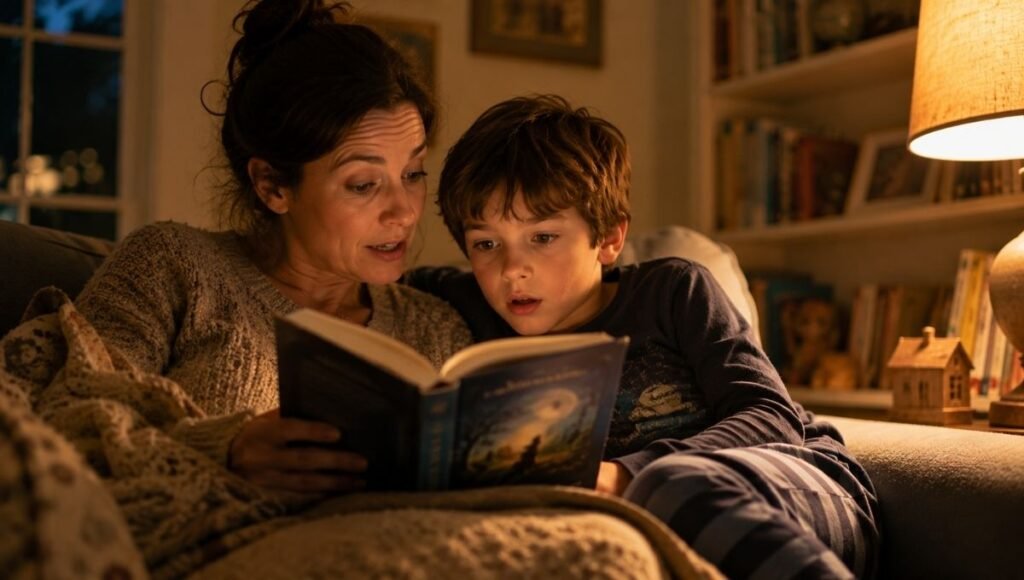
Second grade is not too old for read-alouds. Not even close.
Your child’s listening comprehension is approximately two grade levels ahead of their reading level at this age — which means the books you can read together are richer, more complex, and more vocabulary-building than what they can currently access alone. Every minute you spend reading aloud to a second grader is building the reader they’ll be in fourth grade.
Essential second-grade read-alouds:
Charlotte’s Web by E.B. White — If you haven’t done this one yet, now is the time. Two chapters per night. Don’t warn them about the ending.
The BFG by Roald Dahl — The vocabulary is extraordinary, the humor is pitch-perfect for this age, and the friendship between Sophie and the Big Friendly Giant is one of the great relationships in children’s literature.
Stuart Little by E.B. White — Shorter and quicker than Charlotte’s Web, and perfect for the child who wants to ease into chapter book read-alouds.
Pippi Longstocking by Astrid Lindgren — Pippi lives alone, is enormously strong, and does exactly what she wants. For children who have strong opinions about fairness and rules, this book is a revelation.
The One and Only Ivan by Katherine Applegate — A gorilla who paints lives in a mall. Based on a true story. Gentle, moving, and completely accessible for second graders as a read-aloud.
Nonfiction Books for 2nd Graders Who Prefer Facts to Fiction
Not every second grader wants stories. Some children — particularly those with intense specific interests — find nonfiction more satisfying than any novel. These children are not avoiding reading. They are reading in the format that works for their particular mind.
National Geographic Kids series — On any topic your child currently finds irresistible. Sharks, space, dinosaurs, ancient civilizations, animals. The photographs are extraordinary; the facts are accurate; the format is completely accessible.
Who Was? / What Was? / Where Is? series — Biography and history in a format that second graders can read independently. Each book covers one person, event, or place in approximately 100 pages. The series runs to hundreds of titles.
I Survived series by Lauren Tarshis — Historical events told from the perspective of a child who survived them. Technically fiction but grounded in meticulous historical research. For children who want the emotional engagement of a story and the factual satisfaction of history. Content note: some titles deal with disasters and war; preview for sensitive readers.
Guinness World Records — Not a teaching book. A book that children pick up and cannot put down. Treat it as a gateway, not a destination.
What to Do When Your 2nd Grader Says They Hate Reading
This happens more in second grade than at any other point in elementary school, because second grade is when the gap becomes visible and children start measuring themselves against it.
First: don’t panic and don’t lecture. A child who is told that reading is important will not suddenly want to read. A child who finds one book they can’t put down will.
Find the funny. The most reliable gateway to reluctant reading at this age is humor. Junie B. Jones, Judy Moody, Dog Man, Big Nate — funny books have lower activation energy than any other category. A child who is laughing is not thinking about whether they like reading.
Go to the library and let them choose. Not from a list you’ve curated. Let them browse. Let them pick something you wouldn’t have chosen. The ownership of self-selection is part of what makes a book feel worth reading.
Read aloud more, not less. When children are struggling with reading, parents often pull back on read-alouds because it feels like the child should be doing the work themselves. This is exactly backwards. Read-alouds build vocabulary, comprehension, and — most importantly — the love of story that makes the effort of learning to read worthwhile.
Give it time. Most children who say they hate reading in second grade don’t hate reading — they haven’t found their book yet. Your job is to keep putting good books in their path until one of them catches.
When to Talk to Someone
Most second-grade reading variation is completely normal. But some patterns are worth raising with your child’s teacher.
Talk to the teacher if your second grader:
- Is making no visible reading progress despite daily reading practice at home and school
- Has significant difficulty with phonics — sounding out words, connecting letters to sounds — that isn’t improving
- Avoids reading to a degree that feels like genuine distress rather than preference
- Was reading things they can no longer read — regression is always worth mentioning
- Has a family history of dyslexia or reading difficulties
An early conversation is information, not alarm. Second grade is an excellent time to identify reading difficulties — early support consistently produces better outcomes than waiting for the problem to resolve itself.
FAQ: What Parents Actually Search About Books for 2nd Graders
What reading level should a 2nd grader be at? By the end of second grade, most children read at approximately DRA Level 28–38, or Guided Reading Level M–P. In Lexile terms, the range is roughly 420L–820L. But the spread is enormous — children at 200L and 900L are both within normal second-grade development. What matters more than level is trajectory: consistent progress over time.
What are the best chapter books for 2nd graders? Magic Tree House for history-loving adventurers; Junie B. Jones and Judy Moody for humor lovers; Alvin Ho for children navigating anxiety; A to Z Mysteries for puzzle solvers; Clementine for warm realistic fiction. The best chapter book is the one your child will actually read.
What is a good 2nd grade reading list? A useful home reading list for second grade includes: one funny series (Junie B. Jones, Clementine, or Judy Moody), one adventure or mystery series (Magic Tree House, A to Z Mysteries), one nonfiction title on a subject your child loves, and one chapter book being read aloud together. That’s it. Four categories, updated as each book is finished.
How many books should a 2nd grader read per month? Research suggests 20 minutes of daily reading outside school produces significant gains. In practice for second graders, this might be one chapter book per week for confident readers, or one every two to three weeks for developing readers. The number matters less than the consistency — daily reading at any pace builds far more than occasional long sessions.
What are good books for reluctant 2nd grade readers? Dog Man (Dav Pilkey), Big Nate (Lincoln Peirce), Junie B. Jones, and any graphic novel with short text and strong illustrations. For children who resist sitting down with a book, audiobooks count as reading — listening builds the same vocabulary and comprehension skills, and a child who falls in love with a story through audio often seeks out the print version.
Are graphic novels good for 2nd graders? Completely. Graphic novels require simultaneous processing of text and visual information — a cognitively distinct and valuable literacy skill. Children who read graphic novels read more total pages per week than those reading only prose, which produces greater vocabulary exposure and stronger reading habits. Dog Man, Bad Guys, and Hilo are excellent starting points.
Should I still read aloud to my 2nd grader? Yes — and don’t stop just because they can read independently. Second graders’ listening comprehension is years ahead of their reading level. Reading aloud together gives them access to vocabulary and narrative complexity they can’t yet access alone, and it builds the reader they’ll be in fourth and fifth grade. The read-aloud is not competing with independent reading. It’s building toward it.
One Last Thing
My daughter was in second grade when she read her first Magic Tree House book in a single afternoon. She’d had it for three days without opening it. I’d been quietly not mentioning it, which took more restraint than I want to admit.
Then one rainy Saturday she picked it up. An hour later she came to find me in the kitchen and said, simply: “I need the next one.”
We went to the library that afternoon. She got books two, three, and four. She read two of them before dinner.
That was the beginning. Not of reading — she’d been reading for over a year. But of being a reader. Of having a book series that was hers, that she was inside, that she needed to continue. Of understanding what it feels like to want a book.
That’s the whole goal. Find the book that makes your second grader say “I need the next one.” Everything else follows from there.
Keep exploring on ZestRead:
- Books for 1st Graders: The Complete Reading Guide for Ages 6–7
- Best Books for 7-Year-Olds: When Reading Really Takes Off
- Best Books for 8-Year-Olds: Readers Finding Their Own Path
- Graphic Novels for Kids: The Best Picks That Turn Reluctant Readers Into Devoted Ones
- What Age Do Kids Learn to Read? Reading Milestones by Age
References
- Anderson, R.C., Wilson, P.T., & Fielding, L.G. (1988). “Growth in Reading and How Children Spend Their Time Outside of School.” Reading Research Quarterly, 23(3), 285–303.
- Guthrie, J.T., & Wigfield, A. (2000). “Engagement and Motivation in Reading.” In M.L. Kamil et al. (Eds.), Handbook of Reading Research (Vol. 3). Lawrence Erlbaum Associates.
- National Reading Panel. (2000). Teaching Children to Read. National Institute of Child Health and Human Development. https://www.nichd.nih.gov
- Reading Rockets. (2023). “Building a Home Reading Habit.” https://www.readingrockets.org
Laura Bennett is the founder of ZestRead and a mom whose daughter spent three days not opening a Magic Tree House book before reading it in a single rainy afternoon and immediately demanding the next one. She writes about children’s reading, second-grade reading transitions, and the specific books that turn reluctant readers into devoted ones. Reach her at info@zestread.com