

Choosing books for a 5th grader sounds simple—until you’re actually standing in the bookstore or scrolling through endless recommendations. Some books feel too easy, others look way too long, and it’s hard to tell which ones your 10- or 11-year-old will genuinely enjoy instead of abandoning after a few chapters.
That’s because fifth grade is a bit of an in-between stage. Many kids are ready to move beyond beginner chapter books, but they’re not necessarily ready for every middle-grade novel adults recommend. The right book depends just as much on your child’s interests and confidence as it does on their reading level.
Here’s the good news: choosing books for 5th graders isn’t about finding the most advanced or most acclaimed title. It’s about matching the book to this child — their interests, their reading confidence, and where they are emotionally. A book that’s perfect for one 10-year-old can completely fall flat for another, and that’s normal.
This guide is organized around real reading situations, not just a long list of titles. Whether your child says they hate reading, only wants graphic novels, or is ready for something more complex, you’ll find a starting point built around your child’s actual reading life.
Overview: What Are the Best Books for 5th Graders?
The best books for 5th graders combine three things: strong story momentum, age-appropriate complexity, and themes that feel meaningful without being overwhelming. In practice, that means books like Holes, The Wild Robot, Wonder, and Percy Jackson and the Olympians consistently work well for this age group — but the “best” book always depends on the individual child.
A quick way to think about it, by reading profile:
- Reluctant readers: Holes, The Wild Robot, Diary of a Wimpy Kid, graphic novels
- Fantasy and adventure fans: Percy Jackson, age-appropriate versions of The Hobbit, The Last Kids on Earth
- Readers drawn to real-life stories: Wonder, Out of My Mind, Because of Winn-Dixie
- History and survival fans: A Long Walk to Water, Number the Stars, Prisoner B-3087
- STEM and science lovers: engaging nonfiction and science-themed fiction
- Advanced readers: more layered middle-grade novels with complex themes
A quick start-here guide:
| If this sounds like your child… | Start here |
|---|---|
| “Books are boring” | Humor, graphic novels, or a high-concept premise |
| Only reads graphic novels | Illustrated chapter books with more text per page |
| Reads fast but avoids longer books | Short chapters with strong cliffhangers |
| Needs a great classroom read-aloud | Books with memorable characters and discussion potential |
| Wants clean fantasy or adventure | Age-appropriate adventure without heavy darkness |
What Makes a Book a Good Fit for a 5th Grader?
Not every 10- or 11-year-old is in the same place at the same time — and that’s exactly why “grade-level” reading lists only tell part of the story.
Match the Book to the Child, Not Just the Grade
Interest is often a stronger predictor of whether a child will finish (and enjoy) a book than reading difficulty is. A child obsessed with space might happily push through a slightly harder science book, while the same child could stall out on an “easier” novel about a topic that doesn’t interest them at all.
It’s also completely normal for a 5th grader to enjoy books written for younger or older readers. Reading level is one data point, not a ceiling or a floor.
Look for the Right Balance of Challenge and Confidence
There’s a meaningful difference between a book that stretches a child and one that overwhelms them. A stretch book introduces some new vocabulary or a slightly longer format, but the story still makes sense and stays enjoyable. An overwhelming book leaves a child re-reading the same page, losing the thread of the plot, or quietly giving up.
A few practical signals to watch for:
- Can they follow the plot without constant explanation?
- Are they picking the book up again without being reminded?
- Does their vocabulary let them read most sentences smoothly?
- Do they have the stamina to get through a chapter without frustration?
Consider the Child’s Emotional Readiness
Some excellent middle-grade books touch on disability, grief, war, family hardship, or social exclusion — and that’s often exactly what makes them powerful. But powerful isn’t the same as right-for-right-now.
A quick content-awareness note: before handing over a book with heavier themes, it’s worth a quick skim of reviews or a summary, especially if your child is sensitive to sad endings, scary scenes, or emotionally intense subject matter. This isn’t about avoiding hard topics — it’s about introducing them at the right moment.
A Quick 5th-Grade Book Selection Matrix
| Reading Confidence | Best Interest Match | Reading Goal |
|---|---|---|
| Reluctant | Humor, graphic novels, adventure | Build confidence |
| Developing | Fantasy, realistic fiction, sports | Improve stamina |
| Confident | History, STEM, adventure series | Encourage empathy |
| Advanced | Layered middle-grade fiction | Explore complex ideas |
Best Books for 5th Graders Who Say They Hate Reading
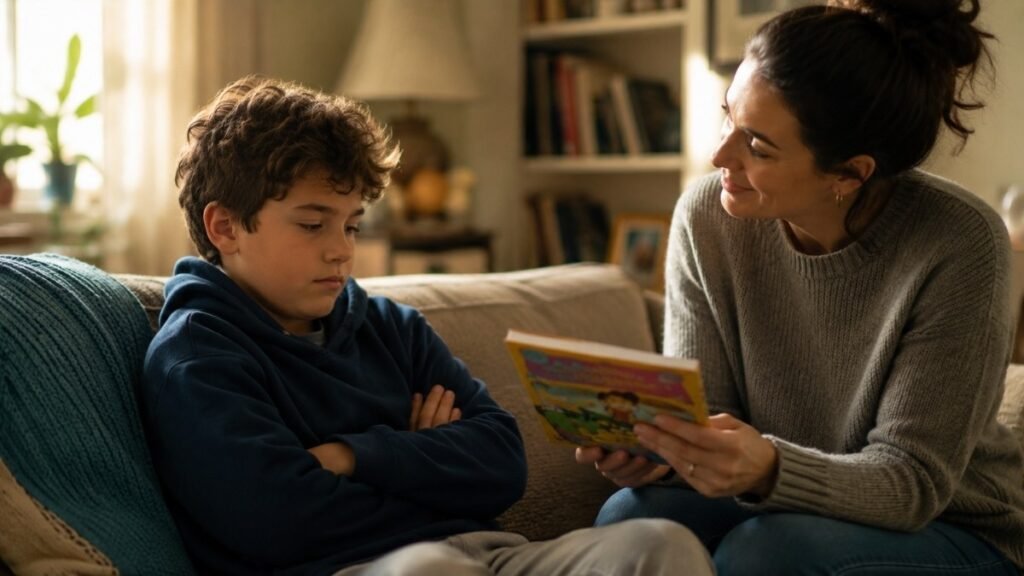
When a child insists they “hate reading,” the goal isn’t to argue them out of it — it’s to hand them a book with enough momentum that they forget they’re supposed to dislike it.
Books With Fast Hooks and Strong Story Momentum
- Holes — mystery, humor, and interconnected storylines that click into place in a satisfying way
- The Wild Robot — survival and emotion told in accessible, easy-to-follow prose
- The One and Only Ivan — a quiet but emotionally gripping story that builds real empathy
- The Last Kids on Earth — fast pacing, humor, and heavily illustrated action
Funny Books That Make Reading Feel Easy
- Diary of a Wimpy Kid series
- Big Nate series
- Other humor-driven illustrated chapter books
Humor works because it lowers the stakes. A child isn’t worried about “getting” a joke the way they might worry about following a complex plot, which makes funny books a low-pressure entry point.
How to Choose a “Gateway Book”
The goal of a gateway book is simple: get a reluctant reader to actually want to open a book again. That means prioritizing what genuinely interests this child over what feels like the “right” or most impressive choice.
Let humor, illustrations, or an existing interest (dinosaurs, sports, a favorite movie) be the entry point. A short, heavily illustrated book that gets finished is doing far more for a child’s reading life than a longer “classic” that gets abandoned on page 20.
Quick Tip: The goal of the first book isn’t to prove how advanced your child is — it’s to help them want the next one.
Best 5th-Grade Books by Interest and Genre
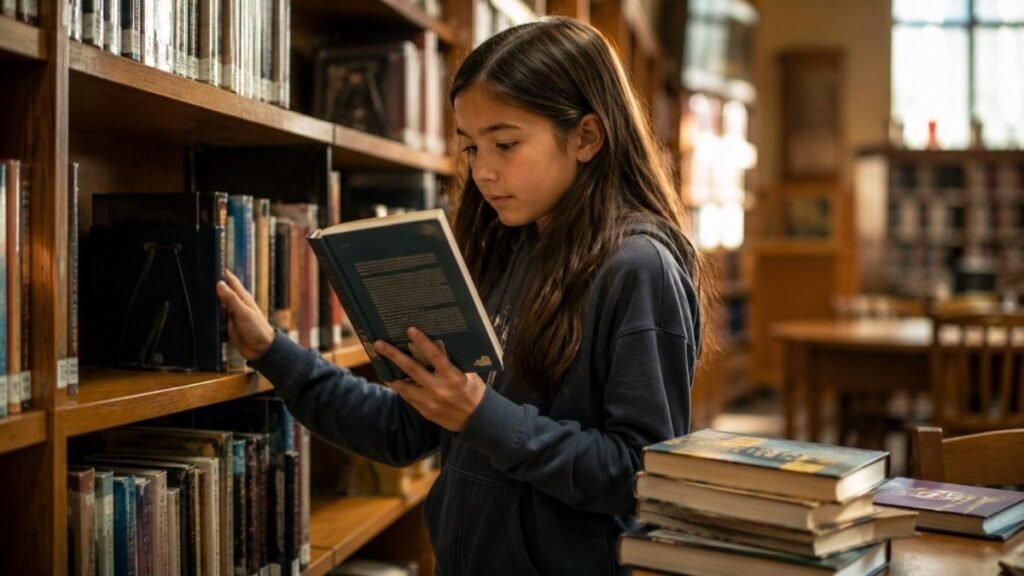
Once a child has some reading momentum, matching books to genuine interest keeps that momentum going.
Fantasy and Adventure Books for 5th Graders
- Percy Jackson and the Olympians series
- The Last Kids on Earth series
- The Wild Robot
- Other clean, age-appropriate fantasy and adventure titles
These books work because they combine imaginative worlds with friendship, courage, and humor — plus just enough suspense to keep pages turning without tipping into genuine fear.
Content note: “adventure” covers a wide range. Some fantasy series lean darker or more violent than others, so it’s worth a quick look at reviews if your child is sensitive to intense scenes.
Realistic Fiction and Books About Growing Up
- Wonder
- Because of Winn-Dixie
- Out of My Mind
These stories center on friendship, belonging, and empathy — often through a character who feels different in some way. They’re especially good for opening up conversations about social experiences, but they work just as well as stand-alone stories without turning into a “lesson.”
Historical Fiction and Survival Stories
- A Long Walk to Water
- Number the Stars
- Prisoner B-3087
These titles ground history in a single character’s experience, which tends to make big, difficult events feel understandable rather than abstract. A note for parents and teachers: these books deal honestly with war, displacement, and survival — worth considering alongside your child’s emotional readiness rather than reading level alone.
Funny Books for 5th Graders
- Diary of a Wimpy Kid
- Big Nate
- Other illustrated, humor-forward chapter books
Humor books often get dismissed as “less serious” reading, but they do real work — they build reading stamina and confidence by making the process genuinely enjoyable rather than effortful.
STEM and Science Books
Books that connect to real experiments, animals, space, or inventions give kids a reason to read beyond the story itself.
Quick Tip: Pair a science-themed book with a related hands-on activity or a quick video — reading about volcanoes hits differently right before (or after) watching one erupt.
Graphic Novels and Illustrated Books
Graphic novels are a legitimate, valuable form of reading — not a shortcut around “real” books. Following a visual narrative still requires vocabulary, inference, and context clues; kids are reading dialogue, interpreting expressions, and tracking a plot across panels.
Popular graphic novel categories for this age include:
- Adventure
- Humor
- Fantasy
- Historical stories
- Memoir and realistic fiction
For many kids, graphic novels function as a bridge into longer prose books, not a wall standing in front of them.
Best Books for 5th-Grade Boys Who Prefer Gaming, Sports, or Screens
It’s easy to assume boys only want fast-paced “boy books,” but interest is more individual than that. Humor, competition, emotion, and imaginative worlds can all be equally engaging — the key is finding the right entry point rather than defaulting to a stereotype.
Fast-Paced Books for Kids With Short Attention Spans
- Short chapters
- Frequent cliffhangers
- High-concept premises
- Series with recurring, familiar characters
Books That Connect With Gaming and Adventure Interests
Look for stories built around quests, strategy, survival, and problem-solving — themes that mirror the structure of a lot of video games. Books with strong visual elements or a sense of “leveling up” tend to hold attention especially well.
Books About Sports and Competition
Sports fiction and nonfiction can be a great match for kids who respond to teamwork, perseverance, and competition — themes that translate naturally from the field or court to the page.
A note for parents: interest comes before gender stereotypes. Some boys will love an action-packed survival story; others will connect far more with an emotional or realistic one. Following the child’s actual interests — rather than assumptions about what boys “should” like — leads to better matches every time.
How to Move a 5th Grader From Easy Chapter Books to More Advanced Middle-Grade Novels
Progression should feel like a bridge, not a sudden jump — and rushing this step is one of the fastest ways to stall a child’s reading confidence.
Start With Familiar Interests
If your child loved an easier book about dinosaurs, animals, or a particular kind of adventure, look for a more complex book on that same topic before jumping to an unrelated genre.
Use a “One Step Up” Approach
Look for books that are only slightly more advanced in one or two ways at a time:
- A bit longer than their current comfort zone
- Slightly more complex vocabulary
- Fewer illustrations
- More layered characters or subplots
Trying to advance on all fronts at once is often what makes a book feel too hard.
Use Audiobooks and Read-Alouds as Scaffolding
Listening comprehension typically runs ahead of independent reading level at this age, which means audiobooks let kids access richer language and more complex stories than they could read alone. Pairing audio with the print version can also reinforce vocabulary and pacing.
Alternate Easy Wins With Stretch Books
Confidence holds up best when a genuinely challenging book is followed by something comfortable and enjoyable — not another stretch. Think of it as interval training for reading stamina.
Avoid Comparing Reading Progress With Other Children
Every child’s growth curve looks different, and comparison rarely speeds things up. Focus on stamina, comprehension, and enjoyment instead of a specific reading level or page count.
Warning: Do not turn reading level into a competition. It tends to backfire, turning reading into a source of anxiety rather than enjoyment.
How Parents Can Use Books to Support Growth and Positive Parenting
Books can be a natural, low-pressure way to connect with your child — without turning every story into a lesson plan.
Use Stories to Talk About Empathy and Differences
Ask how a character might be feeling, or why they made a certain choice. Let the conversation stay open-ended rather than steering toward a specific moral.
Use Books to Talk About Friendship and Social Challenges
Ask what a character might do next, or what they would have done differently. If it feels natural, you can gently connect it to something happening in your child’s own life — but only when they seem open to it.
Use Stories to Explore Resilience and Failure
Instead of focusing on “what lesson did the character learn,” ask what helped the character keep going after things went wrong. This shifts the focus toward problem-solving rather than a tidy moral.
Let the Child Lead Some of the Conversation
Not every reading conversation needs to check for comprehension. Accepting different interpretations — even ones that miss a “point” you noticed — keeps the conversation feeling like connection, not testing.
Quick Tip: Try “What did you think?” before “What was the main idea?”
Parent-Child Reading Tips for 5th Graders
Independent reading is a milestone, but it doesn’t mean shared reading stops mattering.
Keep Reading Aloud Even When Your Child Can Read Independently
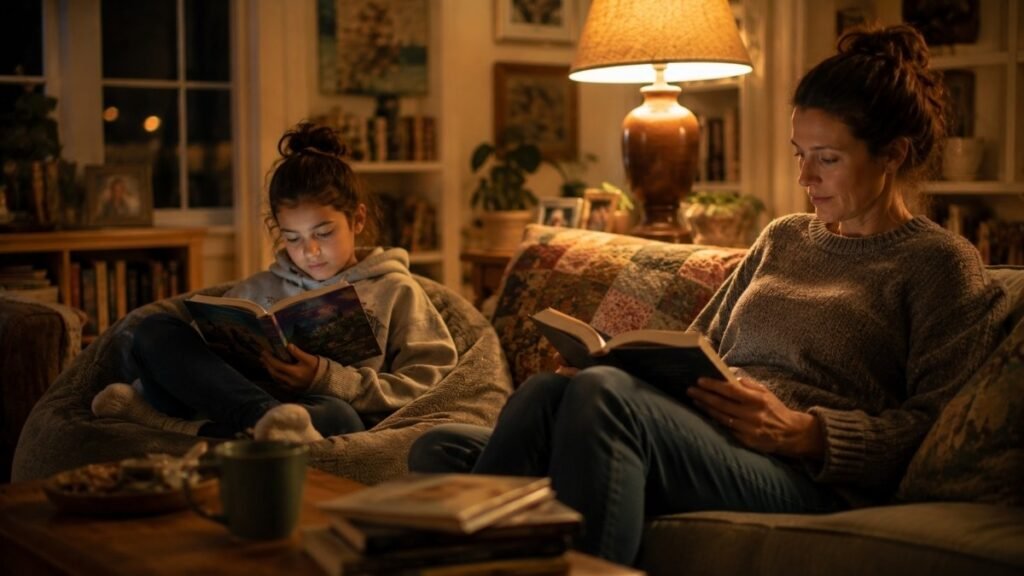
Reading aloud together still gives kids access to more complex language and ideas than they might tackle solo — and it keeps reading connected to warmth and closeness rather than a solitary task.
Create a Low-Pressure Family Reading Routine
- Set aside a consistent, predictable reading time
- Read side by side, even if you’re reading different books
- Let your child choose some titles themselves
Use the “Parent-Child Talk Box”
A few simple discussion prompts to use after a chapter:
- “What do you think will happen next?”
- “Which character would you want to spend time with, and why?”
- “Was there a choice in this chapter you would have made differently?”
Keep these conversational — closer to chatting about a TV show than reviewing for a test.
Improve Reading Comprehension Without Making Reading Feel Like Homework
Ask open-ended questions, invite predictions, and let your child retell the story in their own words. Resist the urge to correct every unfamiliar word in the moment — context often fills in the gap, and constant interruption can make reading feel more like a drill than a story.
Make Room for Audiobooks, Graphic Novels, and Shared Reading
All of these count as real, valuable reading. Presenting them as equally legitimate — rather than as a fallback from “real books” — helps kids build a genuinely positive relationship with reading in whatever form it takes.
How to Choose a Book for a 5th Grader: A Simple Decision Guide
| Situation | What to Try |
|---|---|
| Your child says books are boring | Humor, action, graphic novels, or a high-concept story |
| Your child only reads Diary of a Wimpy Kid | Move gradually toward books with similar humor or visuals, but more narrative complexity |
| Your child has a short attention span | Short chapters, quick pacing, strong cliffhangers |
| Your child loves fantasy | Imaginative but age-appropriate adventure stories |
| Your child is a confident reader | Books with more layered themes and complex characters |
| You need a classroom read-aloud | Strong chapter endings, memorable characters, discussion potential |
| You’re concerned about content | Check themes, emotional intensity, and violence before recommending |
Reluctant Reader Table
| Child Profile | Best Starting Point | Why It Works | Next Step |
|---|---|---|---|
| Says reading is boring | Holes or The Wild Robot | Fast-moving plot, minimal setup | Try a series with the same author or theme |
| Only wants comics | Illustrated chapter books | Familiar visual format, lower text density | Gradually increase text-to-image ratio |
| Distracted by screens | The Last Kids on Earth | Game-like pacing and humor | Introduce a slightly longer adventure series |
| Anxious about “hard” books | Diary of a Wimpy Kid | Low pressure, high humor | Move to illustrated realistic fiction |
5th-Grade Book-Buying Checklist
- [ ] Does the child care about the topic?
- [ ] Is the difficulty challenging but manageable?
- [ ] Does the book offer a strong reason to keep reading?
- [ ] Is the emotional content appropriate for this child right now?
- [ ] Could the child read it independently, listen to it, or enjoy it as a shared read?
Reluctant Reader Checklist
- [ ] Start with interests, not “important” books
- [ ] Allow graphic novels and illustrated books
- [ ] Offer choices instead of a single assigned title
- [ ] Celebrate finishing and enjoying a book — not just page count
Parent-Child Reading Routine Checklist
- [ ] Set a predictable reading time
- [ ] Keep the environment low-pressure
- [ ] Ask open-ended questions
- [ ] Let the child talk about the story in their own words
- [ ] Stop before reading turns into a battle
Frequently Asked Questions
How can I get a 5th grader who is “not into reading” or claims to hate books hooked on reading? Start with momentum, not merit. Choose a book with humor, a strong hook, or high visual appeal — like Holes or a graphic novel — rather than a “classic.” The goal is finishing a book and wanting another one, not proving reading ability.
What are the absolute best chapter books for a 5th-grade classroom read-aloud that will keep the whole class engaged? Look for books with strong chapter-ending cliffhangers, memorable characters, and built-in discussion potential — Holes, Wonder, and Because of Winn-Dixie all tend to work well in a group setting because they balance humor, emotion, and pacing.
Are graphic novels and comics considered “real reading” for a 5th grader, and can they help reluctant readers? Yes. Graphic novels require vocabulary, inference, and following a plot across visual panels — all core reading skills. For many reluctant readers, they’re a genuine bridge toward longer prose rather than a lesser substitute for it.
What are some fast-paced, high-interest book recommendations specifically for 5th-grade boys who prefer gaming over reading? Series with short chapters, cliffhangers, and quest- or survival-based plots — like The Last Kids on Earth — tend to mirror the pacing of games kids already enjoy. That said, interest varies by child, so don’t rule out humor or emotional stories either.
My 10-year-old only wants to read Diary of a Wimpy Kid — how do I transition them to more advanced middle-grade novels? Move one step at a time: look for books with similar humor or illustration style but slightly more text and narrative complexity, such as Big Nate, before shifting toward fuller middle-grade novels like Holes.
Should I still read aloud to my 5th grader at home even if they already know how to read independently? Yes. Reading aloud together still exposes kids to richer language and ideas than they might tackle solo, and it keeps reading tied to connection rather than becoming a solitary chore.
What are some clean, age-appropriate fantasy and adventure books for 5th graders that aren’t too dark or mature? Percy Jackson and the Olympians, The Wild Robot, and The Last Kids on Earth all offer adventure and imagination with manageable levels of suspense — though it’s worth a quick check of reviews if your child is especially sensitive to intense scenes.
How can parents use home reading to improve a 5th grader’s reading comprehension without making it feel like schoolwork? Ask open-ended questions like “What do you think happens next?” instead of comprehension-style questions, and let your child retell the story in their own words rather than quizzing them on details.
Final Thoughts
Every child finds the right book in a different way. For some, it’s a funny graphic novel. For others, it’s an exciting adventure or an audiobook they listen to every night. However they get there, every enjoyable reading experience helps build confidence, curiosity, and the habit of coming back for the next story. That’s what really matters.
🏠 Behind This Guide
Choosing books for a 5th grader isn’t about finding the longest reading list—it’s about finding the book that fits your child.
That’s why this guide focuses on real reading situations parents face, from reluctant readers and graphic novel fans to confident readers ready for bigger challenges.
This guide is built around three essentials:
- 📖 Reading Confidence — Choosing books that feel challenging but enjoyable.
- 🌟 Real Interests — Matching stories to what kids genuinely love.
- ❤️ Lifelong Reading Habits — Helping children enjoy reading instead of feeling pressured.
Because the goal isn’t simply to finish more books.
It’s to help your child enjoy reading—and keep coming back for the next story.
📚 Related Reading
- Books for 3rd Graders: A Parent’s Complete Reading Guide
- Best Books for 9-Year-Olds: The Independent Reader Who Still Needs You
- Best Books for 10-Year-Olds: The Last Year Before Everything Changes
- Graphic Novels for Kids: Why Visual Reading Can Build Stronger Readers
- Early Signs of Dyslexia: What Parents Need to Know
❤️ A Final Note
A lifelong love of reading doesn’t begin with the hardest book—it begins with the right one.
At ZestRead, we believe every child deserves stories that spark curiosity, build confidence, and make reading something they genuinely look forward to.
Our goal is simple: helping parents choose books that children love today—and helping young readers grow into lifelong learners tomorrow.