
Ten feels like a threshold.
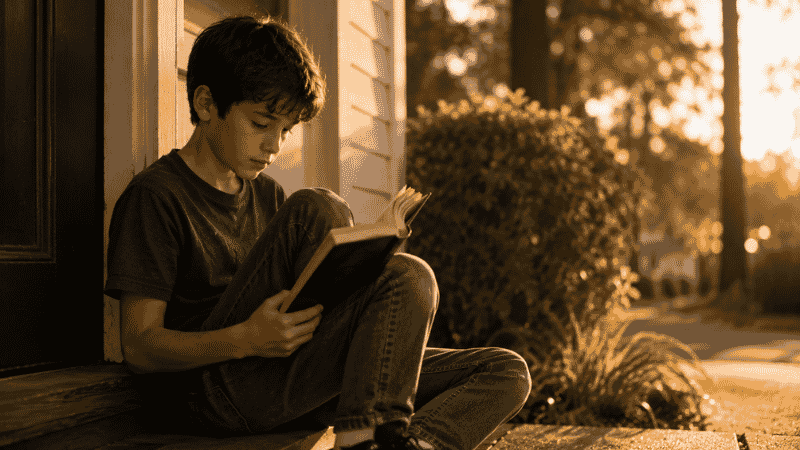
It’s the last single-digit year — a fact that ten-year-olds are often acutely aware of, even if they can’t quite say why it matters. They’re standing at the edge of middle school, of adolescence, of a version of themselves that hasn’t quite arrived yet. Old enough to feel the approach of something bigger. Young enough to still want to be read to sometimes, even if they’d never admit it to their friends.
The best books for 10-year-olds live in that exact space. They’re not children’s books in the way a picture book is a children’s book. But they’re not young adult novels either — at least not yet, for most ten-year-olds. They’re something more specific: books that take seriously the experience of being almost but not quite, of understanding more than you can explain, of being capable of more than anyone around you has noticed yet.
Ten is one of the richest reading ages there is. This guide is built for it.
Key Takeaways
- Ten-year-olds who read for pleasure 30 minutes daily encounter an estimated 2.7 million words per year, with documented advantages in vocabulary, reading comprehension, and writing quality that persist into adulthood (Sullivan & Brown, 2015).
- Fifth grade is a critical year for reading identity formation — children who identify as readers at ten are significantly more likely to maintain reading habits through adolescence, when reading rates drop sharply for most young people (Clark & Rumbold, 2006).
- The transition from middle-grade to young adult fiction is happening earlier for many children due to digital exposure — but most ten-year-olds benefit from staying in middle-grade, which offers age-appropriate emotional complexity without the themes of romance, sexuality, and substance use common in YA.
- Read-aloud remains genuinely valuable at ten — listening comprehension still exceeds reading level, and shared reading continues to build vocabulary and create conversation opportunities that independent reading cannot.
- Series completion at this age builds reading stamina and narrative analysis skills that transfer directly to academic reading across subjects.
What Ten-Year-Olds Need From Books That Nine-Year-Olds Didn’t
Ten is genuinely different — not just older, but different in the questions children are carrying.
At nine, the questions are mostly about the world: how things work, who the good guys are, whether justice will be served. At ten, the questions start turning inward. Who am I? What do I actually believe? What happens when the right thing and the easy thing are different — really different, not just in a story? What does it mean to be loyal, to be brave, to be good, when “good” starts to look more complicated than it did?
The best books for 10-year-olds engage those questions directly. Not by answering them — the best books never answer them — but by dramatizing them in ways that give children something to think with. Characters who face genuinely hard choices, whose courage costs them something real, whose friendships are tested in ways that don’t resolve neatly.
Ten-year-olds are also, for the first time, genuinely capable of literary appreciation — of noticing when a metaphor is exactly right, when foreshadowing pays off, when a sentence earns its weight. This is the age when some children start to love writing because they’ve started to love how writing works. The books you put in their hands at ten are some of the books they’ll remember at forty.
Best Books for 10-Year-Olds: The Ones That Stay With Them
Classic Middle-Grade Novels Every 10-Year-Old Should Read
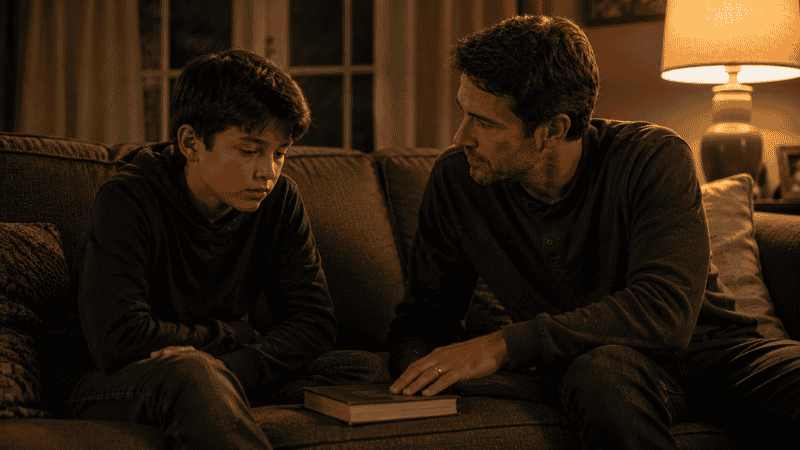
These are the books that have been read by generation after generation for a reason — because they speak to something true about being almost-but-not-quite-grown.
The Giver by Lois Lowry
Jonas lives in a community where everything is perfect — no pain, no conflict, no choice. He is selected to be the Receiver of Memory, and he begins to understand what has been given up for that perfection. This book has been assigned in fifth grade for decades because it arrives at exactly the right moment developmentally — when children are beginning to understand that the world they inherited was shaped by choices, and that they will have to make choices too.
Why it works at 10: The Giver is a book about what it costs to feel nothing, which is a question ten-year-olds who are beginning to feel everything are particularly equipped to engage with. The ending — deliberately ambiguous — drives some children to fury and others to quiet reflection. Both responses are the right one.
How to read it: Read it together if you can. The conversations this book generates — about freedom, about memory, about what we owe each other — are among the most important you can have with a ten-year-old. Don’t resolve the ending for them. Live in the ambiguity together.
📦 Series — The Giver Quartet; Gathering Blue is a companion novel
💰 Budget Pick — Newbery Medal winner; paperback widely available
Bridge to Terabithia by Katherine Paterson
Jesse and Leslie build an imaginary kingdom in the woods. Something happens that cannot be undone. This is a book about grief, about the specific loss of childhood’s most important friendship, and about what it means to carry someone you love inside you after they’re gone.
Why it works at 10: Katherine Paterson said she wrote this book after her son’s best friend was struck by lightning at age eight. The grief in it is completely real — not shaped for comfort or softened for children. Ten-year-olds who read it are often the ones who need it most, though they rarely know that when they start.
How to read it: Don’t warn them about what happens. The surprise is part of what the book is doing — it’s replicating the experience of loss itself, which arrives without warning. Be nearby when they finish. Some children need to talk immediately; some need to sit with it alone. Follow their lead.
⭐ Worth the Splurge — Newbery Medal winner; the illustrated edition is beautiful
Island of the Blue Dolphins by Scott O’Dell
Already mentioned in the nine-year-old list, and worth repeating here for children who haven’t yet found it. At ten, Karana’s resourcefulness and solitude land with even more weight — children this age are beginning to understand what it means to depend entirely on yourself, and what that costs.
💰 Budget Pick — Newbery Medal winner
Roll of Thunder, Hear My Cry by Mildred D. Taylor
Cassie Logan is nine years old, Black, and growing up in Mississippi in the 1930s. The novel follows a year in her family’s life — their land, their dignity, their survival in a world designed to take all three from them. Taylor writes with extraordinary emotional precision. This is not a comfortable book. It is an essential one.
Why it works at 10: Ten-year-olds are at the age when abstract concepts like justice and racism become concrete — when they understand not just that unfairness exists, but what it feels like from the inside. Cassie’s rage and confusion and love are completely legible at this age in a way that they aren’t quite yet at eight or nine.
How to read it: Read it together. This book requires conversation — not to explain, but to witness together. The most important thing a parent can offer while reading this book is their full, undivided attention and their willingness to sit with what it brings up.
⭐ Worth the Splurge — Newbery Medal winner
Best Fantasy and Adventure Books for 10-Year-Olds
Harry Potter — Books 6 and 7 by J.K. Rowling
If your child has been reading the series, ten is the right time for the final two books. The Half-Blood Prince and The Deathly Hallows are the darkest and most complex entries — dealing with death, sacrifice, moral ambiguity, and the specific grief of losing people you love to a war that isn’t of your making. Ten-year-olds who have grown with Harry across the series are emotionally ready for this ending.
Why it works at 10: The final books ask Harry — and the reader — to hold enormous complexity: that good people make terrible choices, that sacrifice doesn’t always look heroic, that winning comes at a cost that can’t be fully counted. Ten-year-olds who are ready for these questions find the ending of Harry Potter one of the most significant reading experiences of their childhood.
How to read it: Read the final chapter of Book 7 together, even if your child reads the rest independently. The epilogue is the kind of ending that deserves to be shared.
📦 Completing the series — Books 6 and 7
⭐ Worth the Splurge — the illustrated Jim Kay editions
The Inheritance Games by Jennifer Lynn Barnes
Avery Grambs is nobody — a girl working to save for college — until she discovers that a billionaire she’s never met has left her his entire fortune in his will, contingent on her moving into his mansion with his four grandsons and solving the mystery of why she was chosen. The book moves like a thriller, has genuine puzzle elements, and is essentially impossible to put down.
Why it works at 10: Ten-year-olds who loved mystery at nine are ready for the longer form — a mystery that unfolds across 400 pages, with multiple suspects and a satisfying (and cliffhanging) resolution. The social dynamics of moving into a world where everyone resents you also resonates for children navigating their own social complexity.
📦 Series — The Inheritance Games trilogy
💰 Budget Pick — paperback editions available
Ender’s Game by Orson Scott Card
Ender Wiggin is six years old when he’s taken from his family to attend Battle School — a military academy in space designed to train children to fight an alien invasion. The novel is a study in what it means to be extraordinarily capable in a world that uses that capability without quite valuing the person who has it.
Why it works at 10: Ten-year-olds who feel simultaneously capable and overlooked — who know they understand more than they’re given credit for — find Ender deeply, personally recognizable. The ethical questions at the novel’s end are among the most powerful in science fiction, and ten-year-olds are exactly old enough to hold them.
How to read it: Read it together and save the final chapters for a conversation. What Ender does, and whether he was right to do it, and who bears responsibility — these are not rhetorical questions. They’re the ones the book is actually asking.
💰 Budget Pick
The Name of This Book Is Secret by Pseudonymous Bosch
A secret has been discovered that must not be revealed. A mysterious musician has died. Two eleven-year-olds and a narrator who refuses to tell you his real name are all that stand between the Secret and the people who will do anything to possess it. The meta-fictional format — a narrator who constantly breaks the fourth wall and argues with the reader — is one of the most distinctive in children’s literature.
Why it works at 10: Ten-year-olds who are ready for books that play with form — who are beginning to notice how stories are made — find the narrative games here absolutely delightful. It’s a mystery, a comedy, and a meditation on secrets and stories simultaneously.
📦 Series — 5 books; The Name of This Book Is Secret is Book 1
💰 Budget Pick
Best Nonfiction Books for 10-Year-Olds
Ten-year-olds are often more genuinely curious about the real world than any subsequent age — before the social preoccupations of adolescence crowd out other interests. These books serve that curiosity.
The Diary of a Young Girl by Anne Frank
Anne Frank began her diary at thirteen and kept it for two years in hiding. The Young Readers’ Edition is adapted to be fully accessible for ten-year-olds while preserving the essential authenticity of Anne’s voice. This is perhaps the most important book a ten-year-old can read — not for its historical significance, though that is enormous, but for Anne herself: funny, vain, passionate, deeply intelligent, and completely real.
Why it works at 10: Ten-year-olds reading Anne Frank are the same age she was when she went into hiding. That correspondence — being the same age as someone in a different world — is one of the most powerful things literature can do. Anne’s ordinariness makes her extraordinary circumstances completely legible.
How to read it: Read it together. Look up the locations together. Find out what happened after the diary ends — Anne didn’t know, and neither do readers while they’re in the diary’s world. The moment of finding out is one that should not happen alone.
⭐ Worth the Splurge — the definitive edition
Bomb: The Race to Build — and Steal — the World’s Most Dangerous Weapon by Steve Sheinkin
The true story of the Manhattan Project, told with the pacing of a thriller — the scientists racing to build the bomb, the Soviet spies trying to steal it, the saboteurs trying to stop it. Sheinkin is the writer who proved that narrative nonfiction could be as unputdownable as any novel, and this is his masterpiece.
Why it works at 10: Ten-year-olds who are beginning to understand that history is a story made of choices — and that those choices were made by people who were uncertain, who were wrong sometimes, who were trying — find Sheinkin’s approach revelatory. History becomes something that could have gone differently.
💰 Budget Pick — National Book Award finalist
Books for 10-Year-Olds About Growing Up
These are the books that speak most directly to the particular experience of being ten — of standing at a threshold and not knowing quite what’s on the other side.
From the Desk of Zoe Washington by Janae Marks
Zoe is twelve, passionate about baking, and has just received a letter from a father she’s never known — who is in prison for a crime he says he didn’t commit. The novel is a mystery and a family story and a study in what it means to believe someone when the evidence says you shouldn’t.
Why it works at 10: Ten-year-olds are at the age where they’re beginning to understand that adults — including parents — are complicated, fallible, capable of being both wrong and worthy of love simultaneously. This book handles that complexity with extraordinary grace.
💰 Budget Pick
The One and Only Ivan by Katherine Applegate
A gorilla who paints. A mall he’s lived in for years. A promise he makes to a baby elephant. Based on a true story, told in Ivan’s voice, this novel is quiet and devastating and ultimately about the specific kind of courage required to choose someone else’s freedom over your own comfort.
Why it works at 10: Ten-year-olds who are beginning to think about justice — real justice, not just fairness — find Ivan’s situation and his choice genuinely moving in a way that lands differently than it did at eight. The question of what we owe to beings who cannot speak for themselves is one that children this age are newly equipped to hold.
💰 Budget Pick — Newbery Medal winner
What to Skip at Age 10: The Honest Version
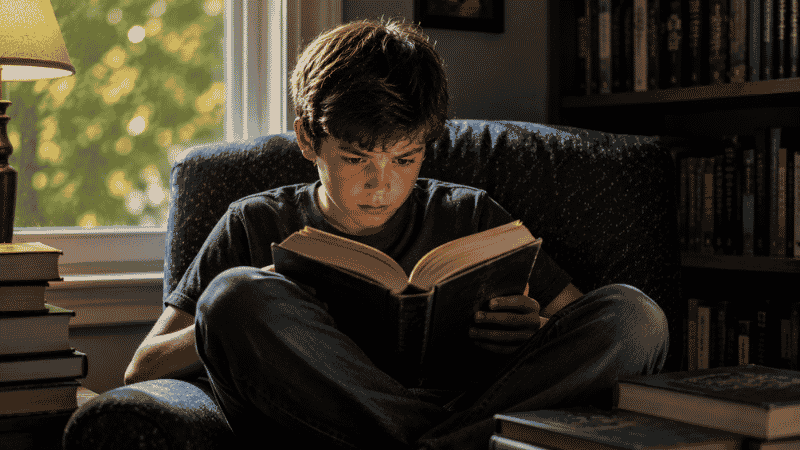
Most young adult novels, for most ten-year-olds. This is the question parents most often ask — “when can my child read YA?” — and the honest answer is: it depends on the book and the child, but most ten-year-olds benefit from staying in middle-grade for another year or two. YA fiction often centers romance, sexual identity, substance use, and social dynamics calibrated for fourteen or fifteen-year-olds. A ten-year-old can decode these books; that doesn’t mean they’re the right books for where they are developmentally. The middle-grade books on this list are not consolation prizes. They are exceptional literature.
Books 8-15 of a series without Books 1-7. At ten, series loyalty is real and entering mid-run creates genuine narrative gaps. If your child wants to start a series that friends are already deep into, back up to Book 1. The investment pays off every subsequent book.
Books chosen because they’re short enough to finish the reading log. If reading log requirements are driving book choices toward thin books, something has gone wrong. Talk to your child’s teacher about alternative approaches. A ten-year-old reading a 400-page novel in three weeks is doing more valuable work than one reading six 60-page books in the same period.
When Reading Competes With Everything Else at Age 10
Ten is often the year when reading faces its most serious competition. Friend groups, social media access, gaming, extracurriculars — all of it is competing for the same hours that used to be reading hours.
The research is clear: children who maintain reading habits through ages 10-12 are significantly more likely to be readers at 16 and 25. The habits formed now are stickier than at any subsequent age. This doesn’t mean eliminating everything else — it means protecting reading time with intentionality.
Practical things that work at ten:
- A specific reading time that isn’t negotiated away — after school, before bed, or on weekend mornings
- Access to books in the right format — audiobooks for commutes, e-readers for portability, physical books for preference
- A parent who is also visibly reading, regularly, for pleasure
- Not asking comprehension questions after every session — let reading be private sometimes
FAQ: What Parents of Ten-Year-Olds Actually Search For
What reading level should a 10-year-old be at? By the end of fifth grade, most children are reading at approximately DRA Level 50–60, or Guided Reading Level S–V. But this range is wide, and fluent readers at ten are often reading well above grade level. The meaningful question is whether your child is reading with comprehension and pleasure — the level matters less than the engagement and growth over time.
Should 10-year-olds read young adult books? For most ten-year-olds, not yet — and not because YA is “too mature” in a simplistic sense, but because the best middle-grade books are more emotionally matched to where ten-year-olds actually are. The Giver, Bridge to Terabithia, Roll of Thunder Hear My Cry — these are not easier or simpler than YA. They’re calibrated differently. Save YA for 12-13, when the themes of romance and identity crisis will land with more resonance.
Is Harry Potter okay for 10-year-olds? Books 6 and 7 are well-matched to ten-year-olds who have read the series. The Half-Blood Prince and Deathly Hallows deal with death, war, sacrifice, and moral ambiguity at a level that most ten-year-olds who have grown with the series are ready for. Children who haven’t read the earlier books should start at Book 1 and let the series do its work.
How long should a 10-year-old read each day? Thirty minutes of independent reading per day is the research-supported target. But the more meaningful measure at ten is whether your child is reading voluntarily — choosing books over other options when they have genuine freedom of choice. Voluntary reading, even at shorter durations, builds stronger reading identity than required reading at longer ones.
What are the best series books for 10-year-olds? For independent reading: Harry Potter (Books 6-7), Ranger’s Apprentice, The Inheritance Games, Ender’s Game. For read-aloud: The Giver, Roll of Thunder Hear My Cry, Bridge to Terabithia, Bomb. The best series is always the one your child will actually finish — follow their enthusiasm wherever it leads.
How do I get my 10-year-old to read more when they say they’re too old for kids’ books? “Kids’ books” is a category they’ve invented to describe books they’ve outgrown. The fix is finding books that don’t feel like kids’ books — Ender’s Game, The Inheritance Games, Bomb — while staying within middle-grade. Ten-year-olds who discover that books can be genuinely sophisticated, genuinely suspenseful, genuinely about something real usually don’t stay reluctant for long.
When can kids read young adult books? There’s no fixed age — it depends on the child and the specific book. As a general guideline: twelve or thirteen for most YA, with parental awareness of the specific themes involved. A ten-year-old who is a very advanced reader and emotionally mature might be ready for certain YA titles earlier; a twelve-year-old who is still finding their footing emotionally might benefit from staying in middle-grade longer. Know your child.
One Last Thing
Ten is the last year before the world starts to complicate everything.
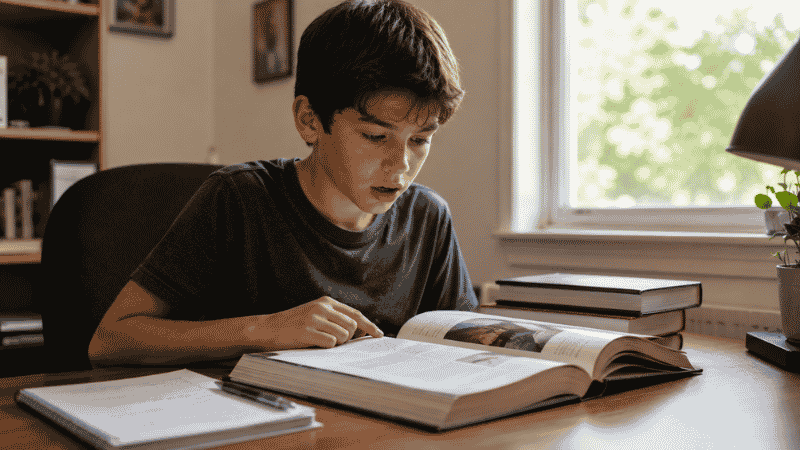
The social pressures of middle school, the hormone shifts of early adolescence, the sudden self-consciousness that makes some children put down books because reading starts to feel like something younger kids do — all of that is coming. And the reading life you’ve built with your child through these years — the nights of chapter books and the conversations mid-story and the books pressed into each other’s hands — that life is the foundation that reading in adolescence either stands on or doesn’t.
The books you find together at ten are some of the books they’ll carry for decades. The conversations you have mid-chapter are the ones they’ll remember when they’re parents themselves.
This year matters. Make it count.
References
- Sullivan, A., & Brown, M. (2015). “Reading for Pleasure and Progress in Vocabulary and Mathematics.” British Educational Research Journal, 41(6), 971–991.
- Clark, C., & Rumbold, K. (2006). Reading for Pleasure: A Research Overview. National Literacy Trust. https://literacytrust.org.uk
- Anderson, R.C., Wilson, P.T., & Fielding, L.G. (1988). “Growth in Reading and How Children Spend Their Time Outside of School.” Reading Research Quarterly, 23(3), 285–303.
- Chall, J.S. (1983). Stages of Reading Development. McGraw-Hill.
Laura Bennett is the founder of ZestRead and a mom who is watching her daughter’s tenth year with the specific tenderness of someone who knows it doesn’t last. She writes about children’s reading, family education, and the books that help children become more fully themselves. Reach her at info@zestread.com