
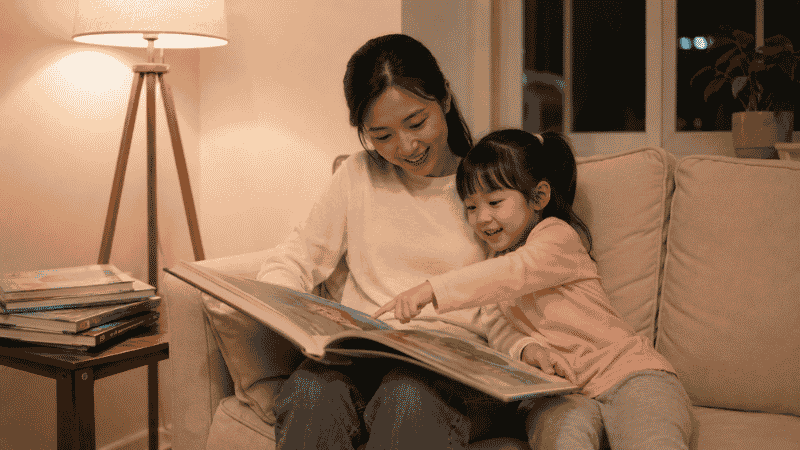
It was 7:52 PM on a Wednesday. My daughter was standing on the couch in her pajamas, holding Goodnight Moon above her head like a trophy she’d already won. “Again,” she said. Not asked. Said.
We had read it four times that week. I knew every word. She knew every word. And yet there she was, completely certain that the fifth read was going to be different somehow — more magical, more satisfying, the one that finally completed whatever internal mission that little book was helping her accomplish.
Here’s what I know now that I didn’t know then: she was right. The repetition wasn’t stubbornness. It was learning. At age three, the brain is doing something remarkable — absorbing language patterns, emotional structures, and narrative logic through the exact same stories, repeated until the knowledge is solid. The “best books for 3-year-olds” aren’t just good stories. They’re tools your child is using to build their mind.
This guide is for the parent standing in the bookstore feeling overwhelmed, the one staring at a list of fifty titles with no idea where to start, and the one — like me that Wednesday — wondering if there’s something better than what’s already on the shelf.
Key Takeaways
- Children aged 3 are in a critical language window: shared reading just 11 minutes per day is linked to measurable improvements in vocabulary, grammar, and early numeracy (Journal of Developmental & Behavioral Pediatrics, 2021).
- The American Academy of Pediatrics recommends reading aloud starting at birth — and at age 3, the how you read matters as much as the what.
- The best books for this age match four things: your child’s current emotional landscape, their attention span (typically 10–15 minutes), their developmental stage, and your willingness to read it again tomorrow.
- You don’t need 50 books. You need 8–10 great ones, read deeply and often.
- A “How to Read It” tip makes any book twice as effective — we’ve included one for every pick below.
Why Age 3 Is a Magical (and Brief) Reading Window
Something shifts around the third birthday that most book lists don’t mention. Your child stops being a passive listener and becomes an active participant. They start predicting what comes next, filling in words they’ve memorized, and asking the question that will define the next two years of your life: why?
This is the stage researchers call “dialogic reading” readiness — the point at which a shared book becomes a real conversation. A 2020 study published in Early Childhood Education Journal found that parent-child dialogue during reading, not just reading aloud, was the strongest predictor of vocabulary growth at this age.
Which means the books you choose at three matter less than what you do with them. But the right books make that conversation so much easier to have.
How to Actually Choose a Book for a 3-Year-Old (The 3-Question Test)
Before we get to the list, here’s the fastest way to evaluate any book at this age — three questions you can answer in sixty seconds at the bookstore or scrolling online:
1. Does it have a natural pause built in? Look for repeated phrases, questions directed at the reader, or moments where the page turn creates anticipation. These are the gaps where your child’s brain lights up.
2. Is there one clear emotional thread? Three-year-olds can hold one feeling at a time — not a complex subplot. The best books at this age follow one character through one feeling, clearly.
3. Could you read it out loud without looking at the words? Books with strong rhythm and repetition become internalized. That’s not a bug — that’s the whole point.
Best Books for 3-Year-Olds, Organized by What You’re Actually Dealing With Tonight
Most book lists give you categories like “bedtime books” and “emotional books.” What parents actually need is a list organized around real life. So here’s ours.
When Bedtime Is a Battle Every. Single. Night.
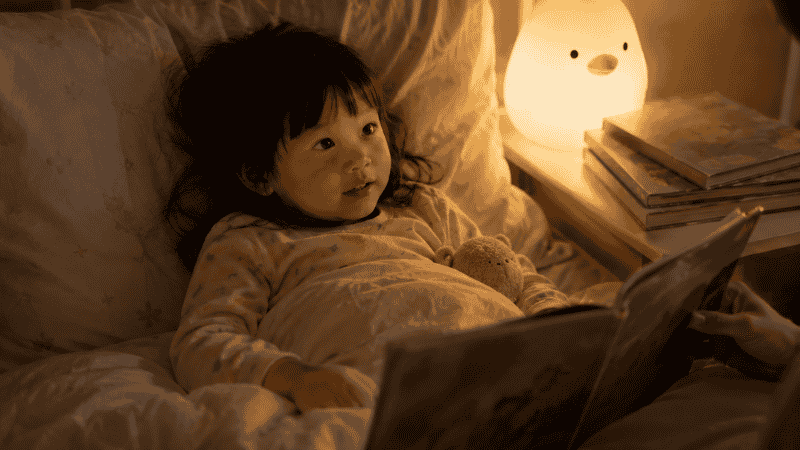
Some books don’t just tell a story — they do the work of winding a child down. These are the ones that earn their place on the nightstand.
Goodnight Moon by Margaret Wise Brown
Every sleep expert and pediatrician recommends this one for a reason that goes beyond nostalgia. The rhythm is deliberately slowing — each page quieter than the last, each item named and then released. It mimics the natural descent into sleep.
Why it works at 3: The predictability is the point. Your child’s nervous system learns to follow the pace of the book. By page ten, even the wiggly ones start to settle.
How to read it: Lower your voice with each page. By “goodnight noises everywhere,” you should be whispering. It works like a dimmer switch.
💰 Budget Pick — available in board book and paperback under $8
Llama Llama Red Pajama by Anna Dewdney
Bedtime resistance and separation anxiety wrapped in a gentle, rhyming package. Llama Baby calls for his mama, feels scared, and then — crucially — learns he’s okay. This is the book for the child who needs one more hug, one more glass of water, one more reason to come back downstairs.
Why it works at 3: It validates the feeling without reinforcing the behavior. Llama Mama doesn’t rush back — she reassures from a distance, which is exactly the message you want your child internalizing.
How to read it: After Mama says “Llama llama, red pajama — Mama’s always close, don’t you know?” pause and make eye contact. Let that land. Then keep reading.
⭐ Worth the Splurge — the hardcover holds up to years of nightly reads
Little Owl’s Night by Divya Srinivasan
Set entirely after dark, this book follows Little Owl through a nighttime forest where everything is peaceful, interesting, and safe. It reframes darkness as cozy rather than scary — which matters enormously at this age.
How to read it: Ask “what do you think Little Owl hears?” on the quieter pages. Let your child answer. Then turn the page and find out together.
💰 Budget Pick
When Big Feelings Are Taking Over
Three-year-olds feel everything at full volume. These books don’t teach emotions — they model them, which is what actually helps.
The Feelings Book by Todd Parr
Bold, bright, and wonderfully non-judgmental. Todd Parr’s signature chunky illustrations and simple sentences make every feeling feel legitimate. “Sometimes I feel like dancing in my underwear.” “Sometimes I feel mean.” Three-year-olds love that a book says the true things.
Why it works at 3: No single feeling is positioned as better than another. This matters for children who are learning that their emotional range is acceptable, not something to suppress.
How to read it: Stop after each page and ask “have you ever felt like that?” Don’t redirect toward positive feelings — let them name the real ones.
📦 Series Starter — Todd Parr has 30+ books in this style; once your child clicks with the format, the whole series opens up
In My Heart: A Book of Feelings by Jo Witek, illustrated by Christine Roussey
This one is more lyrical than Todd Parr — each emotion gets a full spread with a physical description (“joy feels like sunshine pouring out of my fingertips”). It’s beautiful enough to read slowly, which is its own kind of therapy.
How to read it: Trace your finger across the illustrations as you read. The tactile engagement keeps wandering attention anchored.
⭐ Worth the Splurge — the die-cut heart on the cover opens and closes as you “feel” different emotions, and children never stop being delighted by this detail
When Sophie Gets Angry — Really, Really Angry by Molly Bang
Sophie’s rage is depicted honestly — red, huge, overwhelming. And then she finds her way back. This is a book about the full arc of a big feeling, which most emotional books skip.
Why it works at 3: It doesn’t tell children how to feel better. It shows Sophie’s process and trusts the child to recognize their own version of it.
How to read it: When Sophie runs outside and sits in the tree, ask: “What does your calm-down place look like?” You might be surprised by the answer.
💰 Budget Pick — Caldecott Honor winner, widely available
When They’re About to Start Preschool
The anxiety before a first separation is real — for children and parents. These books normalize the transition without minimizing how big it feels.
The Kissing Hand by Audrey Penn
A mother raccoon kisses her child’s palm before school, promising that love travels with him. Chester can press his hand to his cheek any time he needs his mother. This ritual — which thousands of families have adopted in real life — is why this book has never gone out of print.
How to read it: Do the ritual while you read it. Kiss your child’s palm. Let them kiss yours. The book becomes a rehearsal for the real goodbye.
⭐ Worth the Splurge — the hardcover edition with envelope-style pages feels special enough to become a family keepsake
The Night Before Preschool by Natasha Wing
Written in the style of “The Night Before Christmas,” this one works because the rhythm is familiar and the outcome is positive — the first day of preschool is good. It’s a simple, direct confidence-builder.
How to read it: Start reading it two weeks before the first day. Repetition before a big transition helps children rehearse the experience mentally. By day one, it will feel less unknown.
💰 Budget Pick
When They’ve Asked for the Same Book Fourteen Times and You Need Something New
Repetition is healthy. But sometimes a child is ready to expand — they just don’t know it yet. These books are the natural “next step” for families stuck in a loop.
We’re Going on a Bear Hunt by Michael Rosen, illustrated by Helen Oxenbury
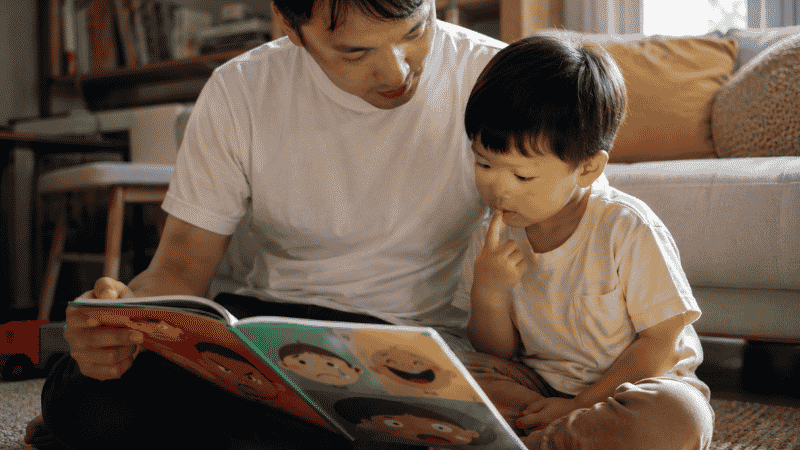
If your child loves Goodnight Moon for its rhythm, this is the escalation. The repeated refrain (“we can’t go over it, we can’t go under it…”) gives them the predictability they crave, but the story builds and climaxes and resolves — introducing genuine narrative structure.
How to read it: Stand up. Act it out. Stomp through the grass, splash through the river. For children who are wired and need movement before settling, this book is a physical outlet and a story.
📦 Series Starter — leads naturally into other Michael Rosen titles
Don’t Let the Pigeon Drive the Bus! by Mo Willems
For the child who has memorized their three favorites and is ready for something with genuine comic structure. The Pigeon argues, pleads, and melts down — and the child reading gets to be the one who says no. The power dynamic is delicious at this age.
How to read it: Give your child explicit permission to yell “NO!” at the pigeon. Lean into the call-and-response. It teaches narrative expectation and humor simultaneously.
💰 Budget Pick — and the gateway to an entire Pigeon universe
When You Just Need Something Funny
Not every book needs to teach a lesson. Joy is developmental too.
Dragons Love Tacos by Adam Rubin, illustrated by Daniel Salmieri
Completely, joyfully absurd. The premise (dragons love tacos but cannot handle spicy salsa) escalates through increasingly ridiculous logic. Three-year-olds find it profoundly hilarious, and that laughter is doing real cognitive work — tracking cause and effect, anticipating consequences, processing irony at a rudimentary level.
How to read it: Let yourself laugh. Authentic adult laughter at a book is one of the most powerful reading signals you can send.
📦 Series Starter — Dragons Love Tacos 2 follows up perfectly
Interrupting Chicken by David Ezra Stein
Papa tries to read fairy tales; Little Chicken keeps interrupting with the endings. It’s a story about stories — which means a three-year-old who loves books will feel genuinely seen by it. Also: reliably funny every single time.
How to read it: Read the fairy tales in an exaggerated “story voice,” then let your child be the one who interrupts. They will not need encouragement.
💰 Budget Pick — Caldecott Honor winner
What to Skip at Age 3 (Or Save for Later)
This is the section most book lists leave out — but it’s where real expertise lives.
Books with multiple storylines or subplots. Three-year-olds track one thread. Books written for 5–7-year-olds often have parallel stories or a secondary character arc that will simply confuse and lose a younger reader mid-page. When attention drops suddenly, it’s often the book’s complexity, not the child’s focus.
Heavily text-dense picture books. If you find yourself skimming or summarizing aloud because there are too many words per page, the book isn’t right for this age yet. The best 3-year-old books let the illustration carry at least 40% of the story.
The overhyped adult-facing books. The Giving Tree and Love You Forever are often recommended for toddlers because they make parents cry — which is a sign those books are emotionally calibrated for adults, not three-year-olds. Save them. They’ll land differently, and better, at age 6 or 7.
FAQ: What Parents Actually Want to Know
Are board books still okay for a 3-year-old? Yes, with context. Board books are designed for durability and for very early readers — most have minimal text and are calibrated for ages 0–2. A three-year-old can handle board books, but they may feel “too easy” and lose interest faster. The sweet spot at this age is picture books with 1–3 sentences per page. That said, if your child loves a board book, let them love it — developmental ranges are wide.
How long should storytime be for a 3-year-old? Typical attention span is 10–15 minutes, but this varies enormously by child and by book. A better measure: stop while they’re still engaged, not after they’ve already checked out. Two focused books beats five distracted ones every time.
What if my 3-year-old won’t sit still for books? First: this is normal, not a reading problem. Some children process stories better while moving. Try reading on the floor instead of a chair, letting them hold a small fidget item during storytime, choosing shorter books (under 10 pages), or trying audiobooks with a physical book to follow along. If they engage with the story but not the sitting — the story is working.
How many books a day is enough? Research from the American Academy of Pediatrics supports reading aloud daily, with no specific number required. One book read slowly, with conversation, is worth more than five books read quickly to check a box. Start with what feels sustainable — even ten minutes — and let it grow naturally.
Do the books need to be “educational”? No. Joy is educational at this age. Laughter is educational. Emotional recognition is educational. A book that makes your child ask for it again has done its job, regardless of whether it covers the alphabet.
When do kids start reading on their own? Most children begin recognizing words independently between ages 4–6, with full independent reading emerging around ages 6–7 — though this range is wide. At age 3, reading to your child is the entire goal. Exposure to print, voice, and story is the foundation everything else builds on.
What if my child only wants the same book repeatedly? Let them. Research consistently shows that repetition at this age is a feature, not a flaw. Children re-reading the same book are consolidating language, predicting story structure, and building confidence. When they’re done with it, they’ll tell you — by asking for something new.
One Last Thing Before You Head to the Bookshelf
You don’t need the perfect book. You need the books that let you be present together.
The moments that matter most in early reading aren’t the ones where the book is developmentally optimal or the keyword matches the right cognitive milestone. They’re the ones where your child leans into your arm, points at a picture, and says something you didn’t expect. The book is just the reason to sit close.
Start with two or three from this list — ideally one funny, one emotional, one bedtime-friendly. Read them until you know every word. Then follow your child when they reach for something new.
That reach is the whole point.
References
- Hutton, J.S., et al. (2020). “Parent-Reported Shared Reading Practices and Child Outcomes.” Early Childhood Education Journal. doi:10.1007/s10643-020-01082-0
- American Academy of Pediatrics. (2014, updated 2023). “Literacy Promotion: An Essential Component of Primary Care Pediatric Practice.” Pediatrics. https://publications.aap.org
- Kalb, G., & van Ours, J.C. (2014). “Reading to Young Children: A Head-Start in Life?” Economics of Education Review. doi:10.1016/j.econedurev.2014.04.009
- Lonigan, C.J., & Whitehurst, G.J. (1998). “Relative Efficacy of Parent and Teacher Involvement in a Shared-Reading Intervention for Preschool Children from Low-Income Backgrounds.” Early Childhood Research Quarterly.
Laura Bennett is the founder of ZestRead and the mom of a daughter who still requests the same three books on rotation. She writes about children’s reading, family education, and the books that make both easier. Reach her at info@zestread.com