
She grabbed the book herself.
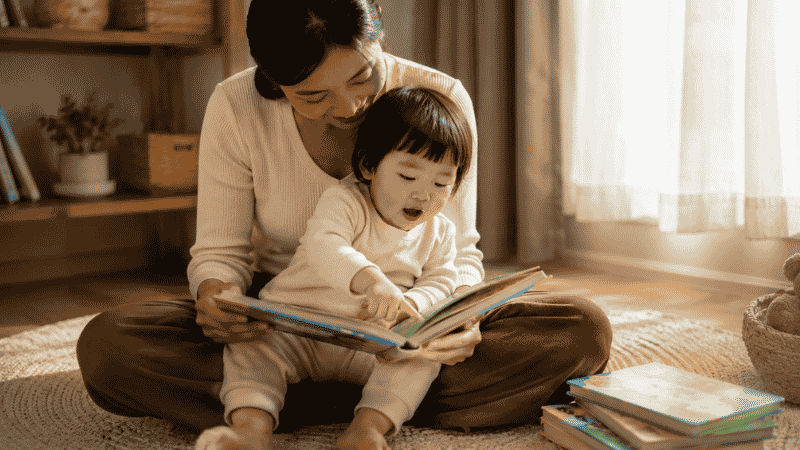
That was the moment I didn’t see coming. My daughter was 22 months old, barely talking in full sentences, and one afternoon she toddled over to the bookshelf, pulled out a board book with both hands, walked back to the couch, and climbed up next to me. She didn’t say “read.” She just opened it on her lap and looked at me.
I don’t know what she expected. But I remember thinking: something is clicking in there that I can’t see.
Two-year-olds don’t get enough credit. They’re in the middle of one of the most intense language explosions of their entire lives — absorbing somewhere between five and ten new words every single day. And books, the right ones, are one of the most powerful ways to feed that hunger. Not because they’re “educational.” But because the rhythm, the repetition, the pointing and the talking and the turning of pages together — all of it is building something.
This guide is your shortcut to the best books for 2-year-olds: what to look for, what actually holds their attention, and what to skip. Every pick includes a practical tip for how to read it — because at this age, how you read matters just as much as what you read.
Key Takeaways
- Two-year-olds are in a peak language acquisition window, learning up to 5–10 new words per day (American Speech-Language-Hearing Association, 2023).
- Shared reading at age 2 is one of the strongest predictors of kindergarten readiness, according to a landmark study in Child Development (Raikes et al., 2006).
- The best books for 2-year-olds have three things in common: repetition, interactivity, and a single clear emotional beat.
- Board books are still completely appropriate at this age — durability is a feature, not a compromise.
- You don’t need a big library. Five books read 50 times each will do more than 50 books read once.
What Makes a Book Work at Age 2 (The 3-Second Shelf Test)
Before we get to the list, here’s the quickest way to evaluate any book for a two-year-old — three things to look for in the first three seconds.
Repetition in the text. Not just rhyming, though that helps. Look for repeated phrases, recurring questions, or a refrain that appears on multiple pages. This gives your child something to hold onto — and something to say back to you. “Brown bear, brown bear, what do you see?” isn’t a literary device. It’s an invitation to participate.
Illustrations that tell their own story. At two, children spend a lot of time looking at the pictures while you’re reading the words. The best books have illustrations detailed enough to spark conversation beyond the text — a hidden mouse, a color that changes, a face with an expression worth naming.
A short page count. Not because two-year-olds have no attention span — some of them will sit for 20 minutes if the book is right. But shorter books mean more complete read-throughs, and a completed story arc matters even at this age.
Best Books for 2-Year-Olds, Organized by What You Need Tonight
Like all the best things in parenting, the “right” book depends entirely on the moment. Here’s how to find yours.
When You Want Them to Talk Back (Language Development Books)
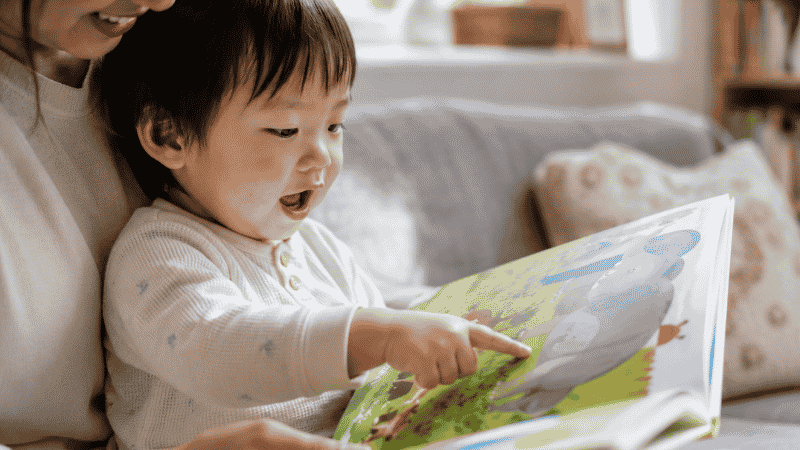
At two, every book is a language lesson — but these ones are especially good at pulling words out of even the quietest toddler.
Brown Bear, Brown Bear, What Do You See? by Bill Martin Jr., illustrated by Eric Carle
This is the gold standard of participatory books for a reason. The repeated question-and-answer structure is so predictable that most two-year-olds start filling in the answers before the page turns. Colors, animals, the pattern of call-and-response — it teaches three things simultaneously without feeling like teaching at all.
Why it works at 2: The repetition isn’t just comforting — it’s a scaffold. Each page is a low-stakes chance to say something right, which builds confidence alongside vocabulary.
How to read it: After the third page, stop reading the answer and just look at your child. Wait. The pause is where the learning happens. You’ll be surprised how quickly they start completing the sentences.
💰 Budget Pick — board book edition under $10, practically indestructible
The Very Hungry Caterpillar by Eric Carle
Yes, every child has this one. That’s because it works. Counting, days of the week, food names, the concept of transformation — all wrapped in a story simple enough for a two-year-old to follow from beginning to end. The die-cut holes in the pages are endlessly fascinating at this age.
How to read it: Point to each food as you name it. Ask “what’s this one?” even if they don’t know yet. By the fourth read, they’ll be telling you.
💰 Budget Pick — the board book version handles enthusiastic two-year-old handling
Duck! Rabbit! by Amy Krouse Rosenthal and Tom Lichtenholt
An optical illusion picture book — is it a duck or a rabbit? — that sparks genuine back-and-forth conversation. Two-year-olds love having an opinion and defending it, and this book is built entirely around that impulse.
How to read it: Don’t tell them the “right” answer. Take a side. Disagree with each other. The argument is the point — and it’s one of the most naturally language-rich conversations you’ll have all day.
⭐ Worth the Splurge — the hardcover holds the illustrations better
When Bedtime Is a Negotiation
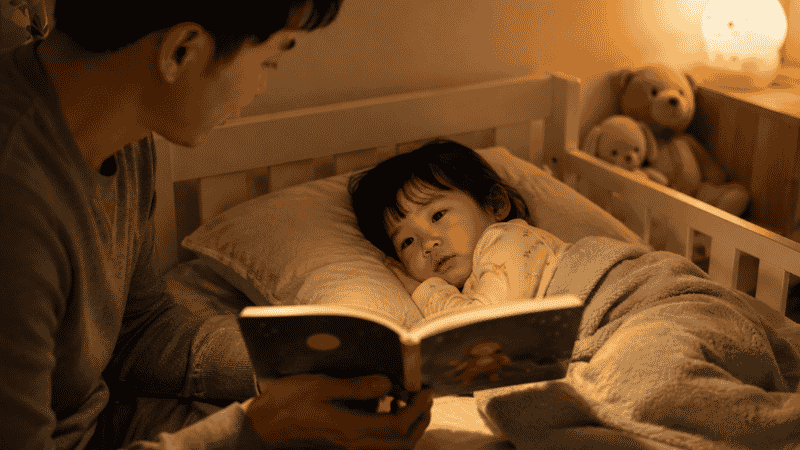
The two-year-old bedtime routine is its own kind of theater. These books play a supporting role.
Goodnight Gorilla by Peggy Rathmann
Almost wordless — which sounds counterintuitive for a bedtime book, but it’s a stroke of genius. The gorilla sneaks out of his cage and lets all the zoo animals follow the zookeeper home to bed. The story unfolds entirely in the illustrations, which means your child does the narrating.
Why it works at 2: “Almost wordless” becomes “we tell it ourselves,” which means it can be read 400 times without you losing your mind. The story is always slightly different, always collaborative.
How to read it: Point at the animals following behind and let your child name them. When the zookeeper’s wife discovers the whole zoo in her bedroom, pause and let the page say everything.
💰 Budget Pick — one of the most-recommended toddler books of the last 30 years
Time for Bed by Mem Fox, illustrated by Jane Dyer
Gentle, rhythmic, and cumulative — each animal mama says goodnight to her baby, and the pattern builds softly toward sleep. The illustrations are watercolor-soft and genuinely beautiful. This is a book that feels like slowing down.
How to read it: Lower your voice with each page, the way you’d naturally quiet a room. By the last spread, you should be barely above a whisper. Your child’s body follows the sound.
⭐ Worth the Splurge — the hardcover edition with full illustrations is worth it
The Going to Bed Book by Sandra Boynton
Boynton is in a category of her own — funny, irreverent, and completely at ease with the absurdity of toddler life. A group of animals on a boat go through the bedtime routine. It’s ridiculous. It works perfectly.
How to read it: Do the exercises on the “exercise” page. Yes, really. If your two-year-old is wound up, moving their body through the book and then lying down mirrors what the animals do. It’s sneaky effective.
💰 Budget Pick — Boynton board books are cheap, cheerful, and built to survive
When Big Feelings Are Running the Show
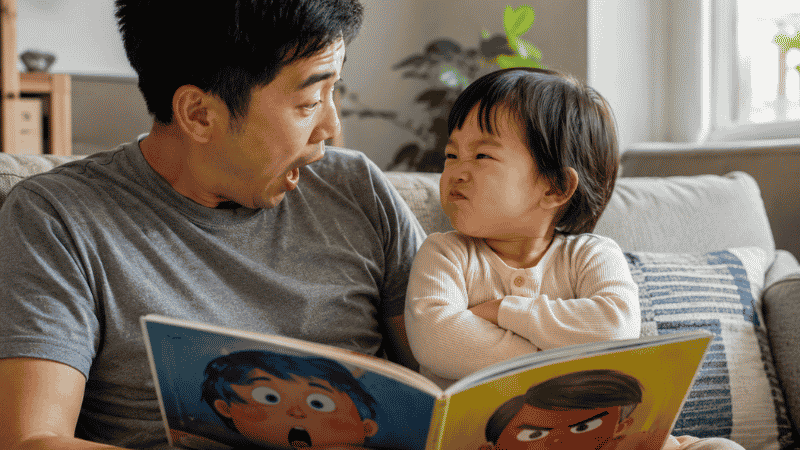
Two-year-olds are having enormous feelings in bodies too small to manage them. These books don’t fix that — but they help name it, which is where regulation actually starts.
Grumpy Monkey by Suzanne Lang, illustrated by Max Lang
Jim the chimpanzee is grumpy and has no idea why. Everyone suggests he do things to feel better. None of it works. And then something shifts. This book is quietly revolutionary because it doesn’t insist on resolution — it just lets Jim be grumpy until he isn’t.
Why it works at 2: Most toddler “feelings books” try to teach emotion regulation. This one just validates the experience of a bad day for no particular reason. Children recognize themselves immediately.
How to read it: Ask “has that ever happened to you? When you’re just grumpy?” Don’t rush them toward a lesson. Sit in the grumpiness together for a minute. That’s the whole point.
📦 Series Starter — Grumpy Monkey Party Time! and others follow naturally
The Rabbit Listened by Cori Doerrfeld
Taylor’s block tower falls down. Every animal comes with advice: talk about it, roar about it, laugh about it, forget about it. The rabbit just sits and listens. This is the quietest, most profound book in the list.
Why it works at 2: It models something most adults struggle with — that presence without fixing is its own form of comfort. For a two-year-old going through big changes (new sibling, new house, new routine), this one lands deeply.
How to read it: After reading, try being “the rabbit” the next time your child is upset. Just sit close. Don’t talk. See what happens.
⭐ Worth the Splurge — the hardcover is genuinely beautiful; this one gets kept
Today I Feel Silly by Jamie Lee Curtis, illustrated by Laura Cornell
A little girl cycles through 13 different moods across the book. The illustrations are chaotic and expressive and deeply funny. At the end, she gets to decide how she feels tomorrow.
How to read it: Stop at each emotion and make the face together. Exaggerate it. Two-year-olds learning to name emotions need to feel them in their bodies first — making the face is the shortcut.
💰 Budget Pick — paperback is widely available and holds up well
When You Just Need Five Minutes of Calm
Not every storytime needs to be a learning moment. Sometimes you both just need to sit together and breathe. These books are made for that.
Owl at Home by Arnold Lobel
Gentle, slightly absurd short stories about Owl doing things like worrying about the bumps in his bed (his feet) and trying to be friends with the moon. Lobel’s books are slower-paced than most toddler fare — and that’s exactly why they work for the moments when you both need to slow down.
How to read it: Don’t rush the punchlines. Let your child sit with the confusion for a beat before you turn the page. The humor lands better with the pause.
💰 Budget Pick
Bear Snores On by Karma Wilson, illustrated by Jane Chapman
A bear is sleeping in his cave while a growing crowd of animals sets up a winter party around him. The cumulative rhyming text is warm and musical, and the illustrations are cozily detailed. This is a hibernation-themed book that works in any season.
How to read it: Read the refrain (“but the bear snores on”) in the same low, rumbly voice every time. Your child will start saying it with you after the second page.
📦 Series Starter — leads into Bear Wants More, Bear’s New Friend, and the full series
When They Want Silly and Nothing Else Will Do
Joy is developmental. Laughter is too. Don’t underestimate a book that just makes them howl.
Don’t Let the Pigeon Drive the Bus! by Mo Willems
Yes, it’s also on the 3-year-old list. That’s because it starts working at two and keeps working for years. The Pigeon’s increasingly dramatic demands to drive the bus — and the reader’s role in saying no — is one of the purest forms of toddler comedy ever written.
How to read it: Really perform the Pigeon. Do the voice. Do the tantrum. Two-year-olds need to see adults being dramatically silly — it teaches them that big feelings can be funny, not just scary.
💰 Budget Pick — paperback is ideal, they’ll wear this one out
Dragons Love Tacos by Adam Rubin, illustrated by Daniel Salmieri
Also on the 3-year-old list, and also starts working at two. The logic escalates beautifully — dragons love tacos, but spicy salsa causes catastrophic consequences. Two-year-olds may not fully follow the cause-and-effect chain on the first read, but they laugh at the pictures, and by the third read, they’re anticipating the disaster.
How to read it: Pause dramatically before anything spicy happens. Build the suspense. Then react with them when it goes wrong.
📦 Series Starter
What to Skip at Age 2 (Or Save for Later)
Most parents make the same three mistakes when picking books for this age. Worth knowing before you buy.
Books where the story lives in the words, not the pictures. At two, your child is splitting attention between listening and looking. If the illustrations are decorative rather than narrative — if they can’t figure out what’s happening from the pictures alone — the book will lose them. Always test a book by flipping through it silently first.
Books about patience, sharing, and taking turns. These are the most-purchased and least-effective books for two-year-olds. Not because children don’t need to learn these things — they desperately do — but because they learn them through experience and modeling, not story. A book that lectures a two-year-old about sharing is a book that will be thrown across the room.
Long chapter books read in installments. Even eager two-year-olds do best with books that complete in a single sitting. The narrative closure — the story being done — is an important cognitive beat. Installment reading can work beautifully at 4 or 5; at 2, it usually just results in a confused, frustrated child when you have to stop mid-story.
If Storytime Isn’t Working: What to Try Before You Worry
Some two-year-olds will sit happily through five books in a row. Others will flip to the last page, close the book, and slide off your lap after 90 seconds. Both are normal.
If storytime is consistently a struggle, try these before drawing any conclusions:
Change the location. Floor instead of chair. Outside instead of inside. Bathtub books are a real and underrated category. A new physical context resets the association.
Let them hold the book. Two-year-olds want agency. If they’re controlling the page turns — even turning back, even skipping pages — they’re still engaging. The narrative doesn’t have to go in order.
Try shorter books, not fewer books. A four-page board book read three times in a row is more effective than a twenty-page picture book read once with a restless child.
Follow their point, not the text. If they point at something on the page, talk about it. Let the book become a conversation rather than a performance. The research on dialogic reading consistently shows that the back-and-forth is more valuable than reading the words correctly.
When to Talk to Someone
Reading development varies enormously at this age, and most variation is completely normal. That said, it’s worth mentioning a developmental concern to your pediatrician if your two-year-old:
- Shows no interest in looking at pictures or being read to, even briefly
- Doesn’t point at objects in books when prompted
- Has fewer than 50 words at age 2, or isn’t combining two words (“more milk,” “big dog”) by 24 months
These aren’t book-reading milestones — they’re language milestones. Early speech-language support is most effective when it starts early, and your pediatrician is the right first call.
FAQ: What Parents of Two-Year-Olds Actually Want to Know
Are board books still appropriate for a 2-year-old? Completely. Board books aren’t just for babies — they’re designed for the hands of children who are still learning how to handle books carefully. Most two-year-olds will move naturally toward picture books during this year, but there’s no developmental reason to rush it. Let your child’s interest lead.
How many books should I read to my 2-year-old each day? The American Academy of Pediatrics recommends daily reading with no specific number attached. Research supports that quality of engagement matters more than quantity. One book read with full attention, conversation, and warmth outperforms five books read distractedly. Start where feels sustainable and build from there.
What if my 2-year-old won’t sit still for books? This is one of the most common concerns parents bring to ZestRead — and it’s almost always temporary. Try shorter books, more physical locations (the floor, outside), and books with flaps or textures that require doing something. Also: some children engage better with audiobooks paired with a physical book to hold. The goal is engagement with story, not stillness.
When should a 2-year-old start recognizing letters? Letter recognition typically develops between ages 3–5, and the range is wide. At two, the goal is exposure to print — noticing that symbols exist and have meaning — not identification. Reading to your child is the most effective way to build this foundation. Don’t rush alphabet drills.
My 2-year-old wants the same book every single day. Is that okay? It’s more than okay — it’s ideal. Repetition at this age is consolidation: each re-read deepens vocabulary, reinforces narrative structure, and builds confidence. When they’re done with a book, they’ll tell you — usually by stopping mid-page and reaching for something else.
What’s the difference between reading to a 2-year-old and reading with them? Reading to is a performance. Reading with is a conversation. The research consistently shows that dialogic reading — where you pause, ask questions, follow their pointing, react to what they notice — produces significantly stronger language outcomes than reading straight through. The book is a prompt, not a script.
Do boys and girls need different books at age 2? No. Two-year-olds connect with characters who have big feelings, funny situations, and satisfying repetition — regardless of whether the character shares their gender. That said, representation matters: if your child rarely sees characters who look like them, actively seek those out. It makes a quiet but meaningful difference.
One More Thing Before You Head to the Bookshelf
You don’t need to get this exactly right.
The research on early reading is compelling, but it has never produced evidence that the specific books matter as much as the habit of reading together. What your two-year-old needs is not the perfect curated collection. It’s you, sitting close, willing to read Brown Bear for the seventeenth time this week without sighing.
That willingness is the whole thing. Books are just the excuse to do it.
Start with two or three from this list. Let your child pick which one comes first. Read it until you know every word, until they finish your sentences, until the pages are soft at the corners. Then follow them when they reach for something new.
That reach means it’s working.
References
- American Speech-Language-Hearing Association. (2023). “Language Development in Children Ages 1–2.” https://www.asha.org
- Raikes, H., et al. (2006). “Mother-Child Bookreading in Low-Income Families: Correlates and Outcomes During the First Three Years of Life.” Child Development, 77(4), 924–953.
- American Academy of Pediatrics. (2014, updated 2023). “Literacy Promotion: An Essential Component of Primary Care Pediatric Practice.” Pediatrics. https://publications.aap.org
- Whitehurst, G.J., & Lonigan, C.J. (1998). “Child Development and Emergent Literacy.” Child Development, 69(3), 848–872.
Laura Bennett is the founder of ZestRead and the mom of a daughter who once carried the same board book around for three weeks straight. She writes about children’s reading, family education, and the books that make the hard days a little easier. Reach her at info@zestread.com