
Something happens right around the fourth birthday that no one really warns you about.
Your child stops just listening to stories and starts living inside them. My daughter was four when she first asked me to “do the voices” — not just read, but perform. She wanted the wolf to sound actually scary. She wanted the princess to have a different voice than the narrator. She started correcting me when I skipped a word, because she had memorized the text and knew when something was wrong.
That’s when I realized: four is different. Four-year-olds are no longer passive receivers of stories. They’re critics, participants, and co-authors. They’re at the age when a great book can genuinely transport them somewhere else — and a bad one gets closed in thirty seconds flat.
Finding the best books for 4-year-olds isn’t about finding something “age-appropriate.” It’s about finding stories complex enough to hold a mind that’s suddenly capable of so much more, but still warm and concrete enough to feel safe. That’s a specific kind of magic, and not every book has it.
This guide will help you find the ones that do.

Key Takeaways
- Four-year-olds are entering a critical period for narrative comprehension — they can now follow multi-step plots, understand cause and effect, and begin to predict story outcomes (National Institute for Literacy, 2008).
- Children who are read to regularly at age 4 arrive at kindergarten with vocabularies up to 32% larger than peers who are not, according to research published in Reading Research Quarterly.
- The best books for 4-year-olds share three qualities: a character with a clear internal life, a problem that gets genuinely resolved, and language rich enough to stretch without overwhelming.
- This is the age when read-aloud sessions can comfortably extend to 20–30 minutes — a significant jump from the toddler years.
- Series books become powerful tools at this age: familiarity with a character reduces cognitive load and lets children engage more deeply with story and language.
What Four-Year-Olds Actually Need From a Book
Before the list, it’s worth spending a moment here — because the shift from three to four is bigger than most parents expect.
At three, a child needs repetition, rhythm, and emotional validation. At four, they still want those things, but they’ve added something new to the list: they want to be surprised. They want a character who makes a mistake and has to figure out how to fix it. They want a moment where something unexpected happens and they didn’t see it coming. They want — and this is the part that sneaks up on parents — to feel something.
Four is when books start doing real emotional work. Stories about friendship and fairness and what it means to be brave land differently at this age than they did twelve months ago. The concepts aren’t new, but the child’s capacity to genuinely wrestle with them is.
The books below are chosen specifically for that capacity. They’re not simplified. They’re not dumbed down. They’re just written with the understanding that a four-year-old is one of the most engaged readers you will ever sit next to.
Best Books for 4-Year-Olds, Organized by What You’re Looking For Tonight

When You Want a Story With Real Heart
These are the books that create the moments you’ll remember. Not because they’re sentimental, but because they’re honest.
Corduroy by Don Freeman
A small bear in a department store waits to be chosen. A little girl sees him, wants him, and comes back for him even when it isn’t convenient. This book is fifty-five years old and has never gone out of print, and that tells you everything you need to know about what it does to a four-year-old’s heart.
Why it works at 4: Four-year-olds understand wanting something and not being sure they’ll get it. They understand loyalty. Corduroy’s quiet hope and Lisa’s quiet determination speak to something children this age feel deeply but rarely see named.
How to read it: Slow down on the pages where Corduroy is alone in the dark store. Let the stillness sit. The contrast when Lisa comes back hits harder when you’ve let the waiting breathe.
⭐ Worth the Splurge — the hardcover edition is a genuine keepsake
The Story of Ferdinand by Munro Leaf, illustrated by Robert Lawson
Ferdinand the bull would rather sit under his cork tree and smell flowers than fight in the bullfighting ring. He doesn’t change. He doesn’t learn to be more like other bulls. He just gets to be himself, and it works out. This book, published in 1936, is still quietly radical.
Why it works at 4: Four-year-olds are navigating enormous pressure to perform, participate, and be like other children. A story that simply says “your way of being in the world is valid” — without a lesson attached — is rarer than it should be.
How to read it: Don’t editorialize afterward. Don’t ask “what did we learn?” Let Ferdinand’s ending be enough. The message lands precisely because it doesn’t announce itself.
💰 Budget Pick — widely available in paperback, has been in print for nearly 90 years
The Snowy Day by Ezra Jack Keats
Peter wakes up to snow and spends the day in it — alone, exploring, fully present. That’s the whole story. No conflict, no resolution, no lesson. Just a child and a winter day and the quiet joy of being exactly where you are.
Why it works at 4: In a world of books about problems to solve, this one is about delight. Four-year-olds need permission to experience joy without it needing to go anywhere. This book gives that permission.
How to read it: Read it slowly. Point at the illustrations. Ask “what do you think the snow felt like?” This is a book for lingering, not moving through.
💰 Budget Pick — Caldecott Medal winner, 1963; still perfectly current
When They’re Ready for Bigger, Funnier Stories
Four-year-olds have genuine comic sensibility now. They understand setup and punchline. They can hold a running joke across a whole book. These picks reward that sophistication.
Click, Clack, Moo: Cows That Type by Doreen Cronin, illustrated by Betsy Lewin
The cows find a typewriter and start leaving Farmer Brown demands. He refuses. They negotiate through Duck. The whole thing escalates in a perfectly calibrated arc of absurdist humor that four-year-olds find deeply, genuinely funny.
Why it works at 4: The comedy here requires understanding that the cows are doing something unexpected and that Farmer Brown’s frustration is justified — a level of social comprehension that simply wasn’t available at two or three. Four-year-olds get the joke, and knowing they get it makes them feel capable.
How to read it: Read the farmers’ notes in an increasingly exasperated voice. Read the cows’ notes in a very calm, reasonable tone. The contrast is where the humor lives.
📦 Series Starter — Duck for President and Giggle, Giggle, Quack follow naturally
Elephant and Piggie series by Mo Willems
Gerald the elephant and Piggie the pig are best friends who navigate everyday situations — waiting, sharing, being afraid, feeling left out — with such perfect comic timing that these books have become a modern classic of early reading. Any title works as an entry point.
Why it works at 4: The dialogue-heavy format makes these books perfect for two voices, which means you and your child can perform them together. The emotional situations are real (Gerald worries a lot; Piggie is relentlessly optimistic) but handled with such lightness that children laugh while absorbing genuinely useful emotional modeling.
How to read it: Split the characters. You take Gerald; let your child be Piggie. Ham it up. The speech bubbles make it easy to follow even for pre-readers. Many four-year-olds begin “reading” these books independently — recognizing repeated words and phrases — within a few weeks of regular exposure.
📦 Series — 25 books in the series; We Are in a Book! is a perfect starting point
Dragons Love Tacos by Adam Rubin, illustrated by Daniel Salmieri
Still funny at four in ways it wasn’t quite at two. The cause-and-effect logic (dragons + tacos + spicy salsa = disaster) clicks more completely now, and the dramatic escalation of the illustrations lands with the full comedic force it was designed for.
How to read it: Ask your child to predict what’s going to happen before each page turn. At four, they’re good enough at narrative logic to get it right — and delighted when they do.
💰 Budget Pick
When Kindergarten Is Coming and Everyone Has Feelings About It
The year before kindergarten is its own emotional territory. These books navigate it honestly.
The Kissing Hand by Audrey Penn
Chester Raccoon doesn’t want to go to school. His mother gives him a kiss in his palm to carry with him — a piece of her love he can press to his cheek any time he needs it. This book has helped millions of children through their first real separation, and the ritual it introduces works in real life just as well as it does in the story.
How to read it: Do the ritual. Seriously — kiss your child’s palm before reading it. By the time you finish the book, the gesture already has meaning. Then use it on the actual first day of school.
⭐ Worth the Splurge — the hardcover with the envelope pages is the version worth owning
David Goes to School by David Shannon
David breaks every rule. He’s late, he’s loud, he doesn’t raise his hand, he runs at recess. And at the end of the day, his teacher says: “good job, David.” This book does something most school-prep books don’t — it acknowledges that following all the rules all the time is genuinely hard, and that being seen despite the mistakes matters more than being perfect.
Why it works at 4: Children about to start school are anxious about getting things wrong. David shows them that getting things wrong doesn’t mean you’re bad — and that teachers are, mostly, on your side.
How to read it: Let your child be the one who says “no, David!” They will not need prompting. The participation is the point.
💰 Budget Pick — part of a beloved series; No, David! is the perfect companion
When They’re Ready to Go Deeper: First Chapter Books for 4-Year-Olds
Not every four-year-old is ready for chapter books read aloud — but some are, and the ones who are ready are ready for something that a picture book simply can’t give them anymore.
Frog and Toad Are Friends by Arnold Lobel
Five short stories about two friends who are different in almost every way and love each other completely anyway. Frog is confident and optimistic; Toad is anxious and self-doubting. They are one of the great pairs in children’s literature, and at four, children start to recognize themselves in both of them.
Why it works at 4: The stories are short enough for a single sitting but rich enough to talk about. “The Letter” — in which Toad has never received mail and waits sadly for something that never comes — is one of the most quietly moving stories in the English language, at any age.
How to read it: One chapter per night. Let each story be its own small event. Ask afterward: “Are you more like Frog or more like Toad today?” The answer changes. That’s the whole point.
💰 Budget Pick — Newbery Honor; the whole series is essential
Magic Tree House series by Mary Pope Osborne
Jack and Annie find a magic tree house that takes them through history. The chapters are short, the stakes feel real, and the series covers enough historical periods to spark genuine curiosity about the wider world. Many four-year-olds who are read these aloud become obsessed.
How to read it: Two chapters per session — one to get into the story, one to reach a natural stopping point. The cliffhangers at chapter endings are real. Use them. “We have to stop here” is one of the most powerful reading motivators you have.
📦 Series — 60+ books; Dinosaurs Before Dark is the entry point
When Nothing Is Working and You Just Need a Win
Some nights the mood is wrong and the child is tired and nothing you choose is landing. These are the guaranteed-engagement books for exactly those nights.
Where the Wild Things Are by Maurice Sendak
Max is sent to bed without supper and travels to where the wild things are and becomes their king and comes home. The whole arc — anger, escape, power, homesickness, return — takes less than ten minutes to read aloud, and it has never, in sixty years, failed to hold a four-year-old completely.
How to read it: Make the wild rumpus loud. Stand up. Let it be big. Then bring your voice all the way down for the ending. The contrast is everything.
⭐ Worth the Splurge — this is a book to own, not borrow
Zog by Julia Donaldson, illustrated by Axel Scheffler
Zog is a young dragon at dragon school who keeps trying and failing and trying again. He’s helped each time by a little girl named Pearl. The rhymes are perfect, the story is warm and funny, and the ending subverts every expectation in exactly the right way.
Why it works at 4: Persistence and failure and trying again are the central themes of being four years old. Zog doesn’t make it look easy — he makes it look worth it.
How to read it: The rhymes have a strong rhythm; once you’ve read it twice, your child will be finishing lines before you do. Let them. That finishing is the whole reward.
💰 Budget Pick — Julia Donaldson and Axel Scheffler is one of the most reliable partnerships in children’s literature
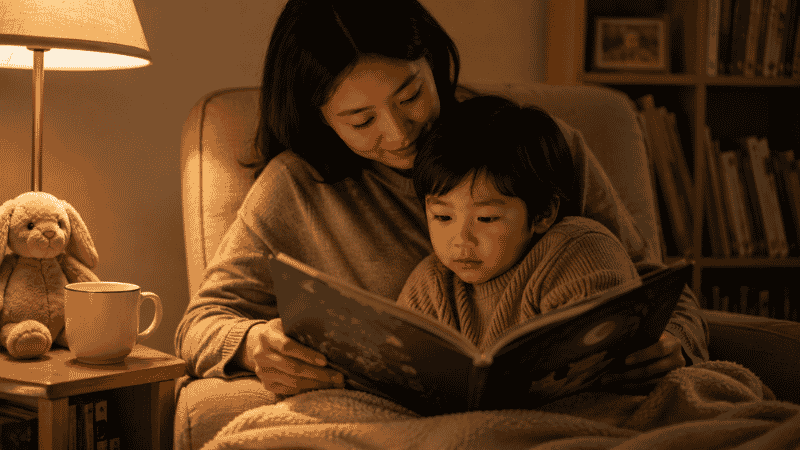
What to Skip at Age 4 (The Honest Guide)
Three categories of books that are widely recommended for four-year-olds but frequently disappoint in practice.
Overly didactic books about values. Books that exist primarily to teach a lesson — about kindness, honesty, gratitude — without a compelling story underneath tend to fall flat at four. Children this age can feel when a book is trying to instruct them rather than tell them something real. The lesson lands better when it’s embedded in a story they actually care about.
Books calibrated for much younger children. Four-year-olds are often still given board books and very simple picture books — sometimes by well-meaning relatives who aren’t tracking how much has changed in the past year. A four-year-old who has been reading regularly is ready for longer sentences, more complex vocabulary, and stories with multiple events. Underestimating that capacity leads to disengagement.
Series books started in the wrong place. Magic Tree House at book 12 without context, or Elephant and Piggie chosen at random, often don’t land as well as starting at the beginning. With series books especially, entry point matters. Always start at book one.
If Your 4-Year-Old Seems to Be Losing Interest in Books
This happens — and it’s almost always situational, not permanent. A few things worth trying before drawing conclusions:
Let them choose. Four-year-olds have strong opinions about what they want to read, and being handed a book you’ve selected for them sometimes triggers refusal on principle. Offer two options and let them pick. The agency matters.
Try audiobooks as a bridge. Many four-year-olds who resist sitting still for a read-aloud will happily listen to an audiobook while drawing or building. The story is reaching them either way. Engagement with narrative is the goal, not the specific format.
Take a week off. Sometimes the resistance is fatigue or a need for control over something in a world where most things are decided for them. A week without any pressure around reading often resets the relationship entirely.
A Note on Reading Readiness at Age 4
There is enormous variation in what four-year-olds can do with print independently, and almost all of it is normal.
Some four-year-olds are beginning to recognize letters and sound out simple words. Some are reading simple sentences. Some show no interest in print at all and are instead absorbing everything through listening. All of these are within the expected range for this age.
If your child is not yet reading independently at four, this is not a concern. The research is clear: the strongest predictor of reading success is not early independent reading, but rich exposure to language through conversation and read-aloud. Keep reading to them. That is the whole job right now.
If you have concerns about your child’s language development, speech delays, or ability to engage with stories, your pediatrician and a speech-language pathologist are the right first resources. Early support, when it’s needed, makes a significant difference.
FAQ: What Parents of Four-Year-Olds Actually Ask
What reading level should a 4-year-old be at? Reading levels for independent reading don’t meaningfully apply at four — this is a read-aloud age for most children. What matters is engagement with stories and exposure to rich language. If your child is independently recognizing letters and sounding out simple words, that’s wonderful. If not, it’s also completely normal. The range is wide.
Should 4-year-olds be reading on their own? Some can, some can’t, and both are fine. Independent reading typically emerges between ages 5–7. At four, the job is to build a love of stories and a rich vocabulary through being read to. Children who are read to extensively at this age almost always become strong independent readers — just on their own timeline.
How long should storytime be for a 4-year-old? Twenty to thirty minutes is very achievable at this age for most children, particularly with engaging books. Some will happily sit for longer. The best measure is your child’s engagement: stop when they’re still enjoying it, not after they’ve mentally left. Ending on a high note makes them want to come back.
When should kids start chapter books? There’s no fixed age — it depends on the child and the book. Many four-year-olds are ready for short chapter books read aloud (Frog and Toad, Magic Tree House). A good test: can they follow a story across multiple sessions and remember what happened last time? If yes, they’re ready.
How do I get my 4-year-old interested in books when screens are more exciting? You probably can’t compete with screens directly, so don’t try. Instead, make reading feel like its own category of special — a specific time of day, a physical space, a ritual. Bedtime reading is powerful partly because it’s associated with closeness and calm. Find books that genuinely excite your child — funny, exciting, surprising — rather than books you think they should like. Interest follows genuine engagement.
My 4-year-old only wants the same book every night. Is that a problem? No. Repetition remains valuable at four — it consolidates language, builds confidence, and deepens comprehension each time. The sign that they’re ready for something new isn’t boredom: it’s when they start asking for it. Trust that signal.
What are the best books for a 4-year-old boy who doesn’t like reading? Start with humor and physical comedy — books like Click, Clack, Moo, Dragons Love Tacos, or anything by Mo Willems. Boys who resist reading often respond powerfully to books where they can participate (saying lines, making sounds, predicting outcomes). Nonfiction about their specific interests — trucks, dinosaurs, space — is also often a better entry point than fiction.
One Last Thing
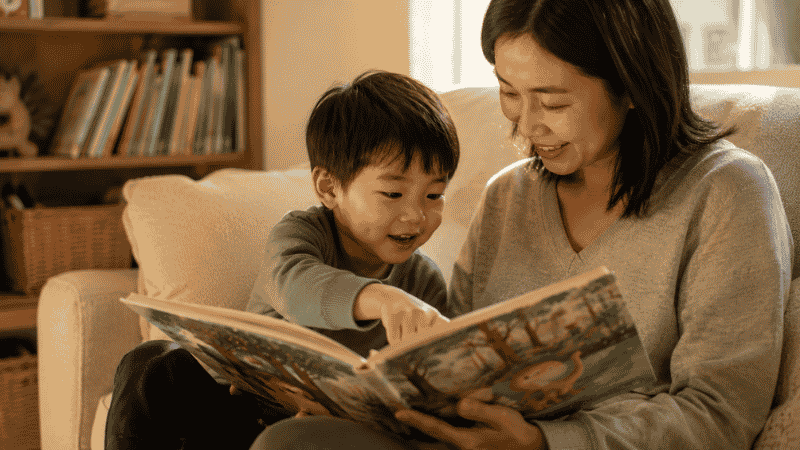
Four is one of the best ages to read with a child, and I don’t say that lightly. The toddler years are sweet but exhausting. The school-age years bring their own rewards. But four — four is the age when they’re curious enough to want to go anywhere a book will take them, and young enough that sitting together in the lamplight is still the best place to be.
You don’t need to find the perfect book. You need to find the next one. The one that makes them lean forward a little. The one they ask about the next morning. Start there.
References
- National Institute for Literacy. (2008). Developing Early Literacy: Report of the National Early Literacy Panel. https://lincs.ed.gov
- Cunningham, A.E., & Stanovich, K.E. (1998). “What Reading Does for the Mind.” American Educator, 22(1–2), 8–15. (Data on vocabulary gap cited in Reading Research Quarterly, subsequent replications.)
- American Academy of Pediatrics. (2014, updated 2023). “Literacy Promotion: An Essential Component of Primary Care Pediatric Practice.” Pediatrics. https://publications.aap.org
- Mol, S.E., & Bus, A.G. (2011). “To Read or Not to Read: A Meta-Analysis of Print Exposure From Infancy to Early Adulthood.” Psychological Bulletin, 137(2), 267–296.
Laura Bennett is the founder of ZestRead and a mom who has read Frog and Toad Are Friends so many times she could recite it from memory. She writes about children’s reading, family education, and the books that make the ordinary moments feel a little more extraordinary. Reach her at info@zestread.com