
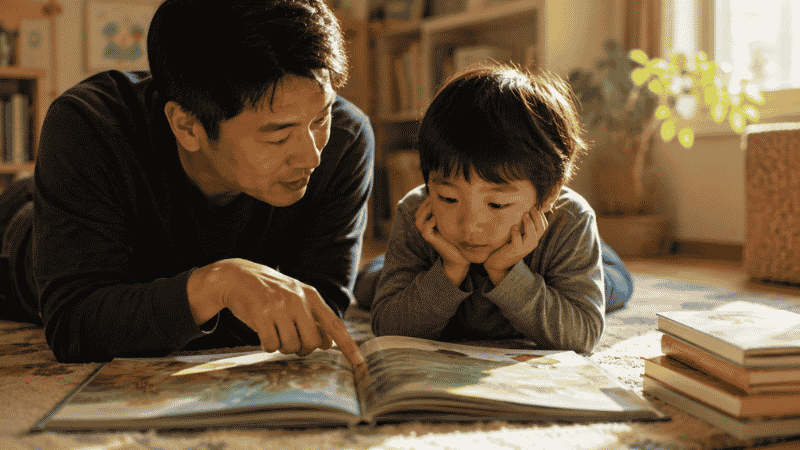
The week before kindergarten, my daughter asked me a question I wasn’t ready for.
We were halfway through a chapter book — one of the Magic Tree House ones, the dinosaur adventure — and she looked up at me and said, “Mom, when I learn to read by myself, will we still do this?”
I had to put the book down for a second.
Because the honest answer is: yes, absolutely, always. But I understood what she was really asking. She was five years old and standing at a threshold she could feel but not quite name. Something was about to change. The way she moved through the world, the way she understood stories, the way she fit inside a classroom — all of it was shifting. And somehow, the books we read together had become the steady thing she was holding onto.
Five is like that. It’s the age when children are simultaneously becoming more independent and more aware of how much they still need you. The best books for 5-year-olds meet them exactly there — at that edge between big and small, capable and uncertain, ready and not quite yet.
This guide is built for that specific, irreplaceable year.
Key Takeaways
- Children who are read aloud to regularly through age 5 and 6 develop significantly stronger phonemic awareness, the single strongest predictor of early reading success (National Reading Panel, 2000).
- Five-year-olds span an enormous developmental range: some are beginning to read independently, others won’t be ready for another year or two — both are completely normal and within expected development.
- The American Academy of Pediatrics confirms that reading aloud remains valuable even after children can read independently, building vocabulary and comprehension far beyond what early readers can access on their own.
- At five, children can follow complex multi-chapter narratives read aloud, making this the ideal age to introduce short chapter book series.
- Picture books remain essential at this age — the best ones are written at a vocabulary and emotional complexity level that exceeds what most five-year-olds can access independently.
What Five-Year-Olds Need From Books That Four-Year-Olds Didn’t
It’s worth pausing here, because five is genuinely different — not just older, but different in kind.
A four-year-old engages with a story. A five-year-old starts to inhabit one. They’re developing what researchers call “theory of mind” at a new depth — the ability to understand that characters have inner lives, hidden motivations, and perspectives that differ from their own. This is why a five-year-old will suddenly want to know why the villain is bad, not just that they are. Why they start asking “but how does the character feel about that?” and actually waiting for a real answer.
Books that worked beautifully at four can feel thin at five because of this shift. The best books for 5-year-olds have characters who are genuinely complicated — not morally complex in an adult sense, but real enough that children can disagree with their choices, worry about them, and cheer for them in the same breath.
That’s the bar. It’s a high one. The books below clear it.
Best Books for 5-Year-Olds, Organized by What You Need Right Now
The Best Picture Books for 5-Year-Olds That Aren’t “Baby Books”
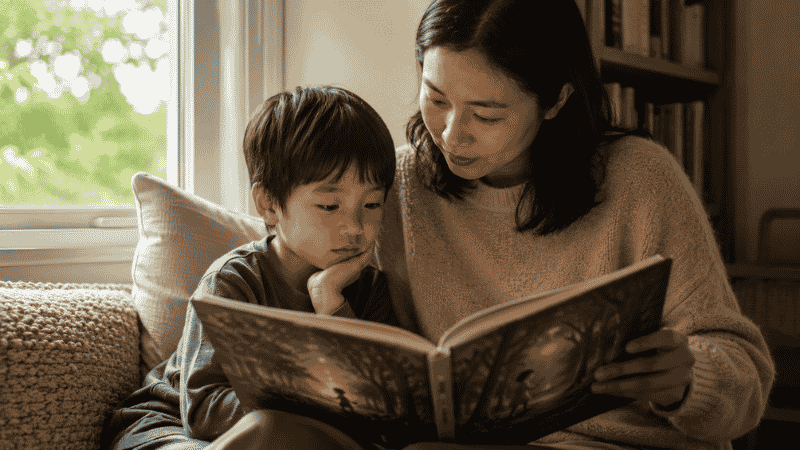
One of the most common mistakes at this age: parents assume their child has outgrown picture books. They haven’t. The best picture books for five-year-olds are operating at a level of emotional and linguistic complexity that early chapter books simply can’t match. These are the ones worth keeping.
The Invisible String by Patrice Karst, illustrated by Joanna Lester
When a child worries about being separated from the people they love, a mother explains that an invisible string of love connects everyone who cares for each other — across distance, across time, even after death. This book has become a staple of grief counselors, kindergarten teachers, and parents navigating every kind of goodbye.
Why it works at 5: Kindergarten separation, new siblings, grandparent illness — five-year-olds are suddenly encountering the real weight of love and loss. This book gives them a concrete image to hold onto. The string is real to them in the way that metaphors are suddenly able to be real at this age.
How to read it: After finishing, run an invisible string between your heart and your child’s. Name it. Use it on the first day of school. A lot of parents have texted their kids the concept on the first day of kindergarten drop-off. It works.
⭐ Worth the Splurge — this one gets kept, referenced, and returned to for years
Last Stop on Market Street by Matt de la Peña, illustrated by Christian Robinson
CJ and his grandmother ride the bus across town every Sunday after church. CJ wonders why they don’t have a car, why the city is so gray, why some people have less. His grandmother answers every question with something that reframes it entirely. By the end, CJ sees beauty he didn’t know how to look for before.
Why it works at 5: Five-year-olds are starting to notice inequality and difference and ask genuine questions about fairness. This book doesn’t give pat answers — it models a way of seeing the world that takes practice and patience. The Newbery Medal it won is deserved.
How to read it: Don’t rush to explain or editorialize. Let CJ’s grandmother’s answers land and breathe before you move to the next page. After, ask your child: “What’s something beautiful you almost didn’t notice today?”
💰 Budget Pick — paperback edition widely available
Enemy Pie by Derek Munson, illustrated by Tara Calahan King
A boy is sure he has an enemy — the new kid next door. His father offers to make Enemy Pie, which will get rid of enemies for good. The catch: he has to spend a whole day with the enemy first. This book is funny, honest, and quietly one of the best things ever written about how friendships actually start.
Why it works at 5: Kindergarten is full of perceived enemies — children who got the thing you wanted, who sat in your spot, who looked at you wrong at lunch. This book gives children a framework for curiosity over hostility that sticks.
How to read it: Stop before the last few pages and ask: “Do you think Jeremy is really an enemy?” Let your child change their mind in real time. The revision of their own earlier opinion is the whole learning moment.
💰 Budget Pick
The Day You Begin by Jacqueline Woodson, illustrated by Rafael López
On the first day of school, children who feel different — who speak another language, who ate different food over summer, who don’t look like the others — find their way toward connection anyway. Woodson’s prose is almost poetry. The illustrations are luminous.
Why it works at 5: Starting school means suddenly being seen by people who don’t already love you. This book names that specific vulnerability without minimizing it, and offers something true: your difference is the thing that makes connection possible, not the thing that prevents it.
How to read it: Read it the week before school starts. Then read it again on the first night after. The second reading hits differently.
⭐ Worth the Splurge — this is a book to own and return to
Best First Chapter Books for 5-Year-Olds (Read Aloud Together)
Five is the ideal age to begin chapter books read aloud — not because they can read them independently (most can’t yet), but because their listening comprehension is ready for sustained narrative. These are the series that create the “we have to stop here” magic of a real cliffhanger.
Frog and Toad Are Friends by Arnold Lobel
Still the perfect entry point for chapter books at any age between four and six. Five short stories, two friends, endless emotional truth. If you read this at four, read it again at five — they’ll catch things they missed entirely twelve months ago.
How to read it: One chapter per sitting. Ask between chapters: “What do you think Toad is going to do?” Prediction is the cognitive skill that chapter books develop above everything else.
💰 Budget Pick — Newbery Honor, I Can Read Level 2
Mercy Watson series by Kate DiCamillo, illustrated by Chris Van Duerksen
Mercy Watson is a pig who lives with the Watsons and is beloved above all things. The stories are gentle, funny, and warm — perfect for a five-year-old who is ready for chapters but needs the comfort of predictable, affectionate storytelling.
Why it works at 5: DiCamillo writes with genuine love for her characters, and children feel it. Mercy is absurd and dear and the situations are always resolved with warmth. This is the series for children who need stories to feel safe.
How to read it: Two chapters per night. The chapters are short enough that two feel like a complete meal without overstaying their welcome.
📦 Series — 6 books; Mercy Watson to the Rescue is the entry point
My Father’s Dragon by Ruth Stiles Gannett
Elmer Elevator runs away to Wild Island to rescue a baby dragon. The adventure is inventive, the obstacles are real, and the ending is genuinely satisfying. Published in 1948, it has never stopped finding new readers — and at five, children hear it as a story written specifically for them.
Why it works at 5: Elmer is a child who solves problems with cleverness and kindness, not strength or luck. Five-year-olds who feel small in a big world find something genuinely empowering in watching him succeed.
How to read it: This one has natural chapter stopping points that build real suspense. Use them. “I think we have to stop there for tonight” said with genuine reluctance is one of the most powerful reading tools you have.
💰 Budget Pick — Newbery Honor; the trilogy continues with Elmer and the Dragon
Magic Tree House: Dinosaurs Before Dark by Mary Pope Osborne
Jack and Annie find a tree house full of books that can take them anywhere in history. Book one goes to the time of dinosaurs. It’s been introducing children to the concept of historical fiction — and to the idea that reading is itself a form of time travel — for over thirty years.
How to read it: Keep a globe or simple world map nearby. When they arrive somewhere new, find it together. The connection between story and geography is one of the most lasting things this series plants.
📦 Series — 60+ books across multiple sub-series; start at book one
Best Books for 5-Year-Olds About Starting School
The kindergarten transition is one of the biggest things that happens at five. These books don’t sugarcoat it — they honor it.
Wemberly Worried by Kevin Henkes
Wemberly worries about everything, and starting school is just the latest worry on a very long list. She worries about the first day, and then she meets Jewel, another worrier, and something shifts. This is the most honest kindergarten book ever written, because it doesn’t promise everything will be fine — it just shows that worrying together is its own form of comfort.
How to read it: Name the worries. Before reading, ask your child what Wemberly might be worried about. Afterward, ask what they’re worried about. Let the list be as long as it needs to be.
💰 Budget Pick
Chrysanthemum by Kevin Henkes
Chrysanthemum loves her name until she goes to school and the other children make fun of it. Then her music teacher, who is named Delphinium, saves the day in the most perfect way. This is a book about names and identity and belonging, and it handles all three with remarkable delicacy.
Why it works at 5: Children at this age are acutely aware of being different, and names are one of the first places difference is made visible. This book gives them something to hold.
How to read it: Count the letters in your child’s name together. Tell them what you love about it. The conversation the book opens is as valuable as the story itself.
💰 Budget Pick
Best Funny Books for 5-Year-Olds
Five-year-olds have developed genuine comic sophistication. They understand irony. They can hold a running joke. They appreciate absurdity that has its own internal logic. These books respect that.
Bad Guys series by Aaron Blabey
A wolf, a shark, a piranha, and a tarantula want to be good guys — but they keep accidentally doing bad-guy things. The format is part graphic novel, part chapter book, all chaos. Five-year-olds find this series almost physically funny.
Why it works at 5: The Bad Guys are trying, failing, and trying again — which is essentially the emotional experience of kindergarten. The comedy comes from recognition, and recognition at this age is deeply satisfying.
How to read it: Read the sound effects out loud. Commit to them. The more you perform it, the funnier it gets, and the more your child will want to “read” it themselves after you’ve modeled how.
📦 Series — 20 books; Mr. Wolf’s Class is a natural companion series
The True Story of the Three Little Pigs by Jon Scieszka, illustrated by Lane Smith
The Big Bad Wolf tells his side of the story. He was just borrowing a cup of sugar. He had a cold. It wasn’t his fault. Five-year-olds who know the original story find this genuinely hilarious — and it introduces them to the concept of unreliable narrator without ever using those words.
How to read it: Read the original Three Little Pigs first, then this one. The comparison is the whole joke, and five-year-olds are old enough to hold both versions in their heads at once.
💰 Budget Pick
What to Skip at Age 5 (The Honest Version)
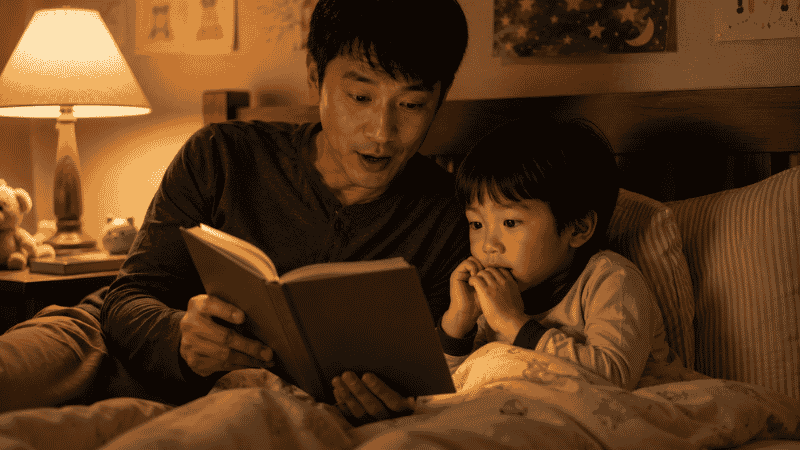
Books that talk down to them. Five-year-olds can feel condescension in a text. Simple vocabulary is fine; simple ideas are not. A book that treats its five-year-old reader as someone who needs to be spoken slowly at will lose them. Look for books that assume intelligence and explain nothing unnecessarily.
Early reader books chosen for reading level rather than story quality. When children begin sounding out words, parents often gravitate toward books calibrated to their decoding ability — and some of these are genuinely wonderful. But many are thin stories chosen for controlled vocabulary rather than narrative quality. Read the good ones aloud together; save the decoding practice for books they’re reading independently.
Books about “lessons” without a story underneath. At five, children can detect when a book exists primarily to teach them something. They don’t object to learning, but they object to being managed. A book that is clearly trying to make them share better or be kinder will work less well than a book that simply tells a true story about a character who happens to do those things.
When Reading Feels Like a Battle at Age 5
Some five-year-olds resist reading at exactly the moment parents expect them to love it. A few things worth knowing before you worry:
Starting school exhausts them. A child who has been “on” all day at kindergarten has very little left for engagement in the evening. If storytime is a battle, try moving it to a different time — morning, after school before they crash, even lunch on weekends. The resistance is often tiredness, not disinterest in books.
Let them lead more. At five, children sometimes resist read-alouds because they want to be in control of the book. Let them hold it. Let them turn the pages. Let them “read” the pictures while you read the words. Shared control makes shared reading feel less like something done to them.
Try audiobooks without pressure. A five-year-old listening to an audiobook in the car or while drawing is still building vocabulary, narrative comprehension, and love of story. Format flexibility is not a failure.
A Note on Reading Independence at Age 5
There is perhaps no developmental milestone that creates more parental anxiety than reading independence — and no milestone with a wider normal range.
Some five-year-olds read fluently. Some are just starting to decode simple words. Some show no interest in print at all. Research consistently shows that children who are read to richly through age five and six — even those who aren’t reading independently — catch up to and often surpass early readers by second or third grade.
The goal at five is not independent reading. The goal is a child who loves stories, expects books to be interesting, and experiences reading as something that happens with someone they love. Independent reading follows from that foundation, not the other way around.
If you have concerns about your child’s language development, hearing, or attention that go beyond typical variation, your pediatrician is the right first conversation. Early literacy support, when genuinely needed, is most effective when it starts early.
FAQ: What Parents of Five-Year-Olds Actually Search For
What reading level should a 5-year-old be at? Reading levels at five span an enormous range — from not yet reading independently to reading simple chapter books on their own. Both ends of this range are completely normal. The more useful question: is your child engaged with stories and eager to be read to? That enthusiasm is the foundation everything else is built on.
Should 5-year-olds be reading on their own? Some can, some can’t, and both are fine. Independent reading typically emerges between 5–7. The research is clear that children who are read to richly at this age — regardless of whether they’re reading independently — become stronger readers over time. Don’t rush the milestone at the expense of the habit.
When should kids move from picture books to chapter books? There’s no age cutoff, and the question is slightly misleading — picture books don’t get replaced, they get supplemented. The right time to introduce chapter books read aloud is when a child can follow a story across multiple sessions and remember what happened last time. Many five-year-olds are ready for this; many aren’t yet, and both are fine.
How long should storytime be for a 5-year-old? Most five-year-olds can sustain 20–30 minutes of engaged read-aloud time, and many can go longer with the right book. The better measure is always engagement: stop while they still want more. The habit of wanting more is what you’re building.
What are the best first chapter books for 5-year-olds? For read-aloud: Frog and Toad Are Friends, Mercy Watson, My Father’s Dragon, Magic Tree House. For early independent reading (if they’re ready): Elephant and Piggie, Mo Willems’ Pigeon books, and the Fly Guy series are all excellent entry points with strong narrative satisfaction.
How do I get my 5-year-old to love reading when kindergarten has made them hate it? First: this is more common than parents realize, and almost always temporary. School introduces reading as work — with assessment, with correction, with stakes. Home reading needs to be its opposite: no pressure, no testing, just story. Follow their interests completely. If they only want books about trucks or dinosaurs or magic, that’s where you start. Interest is the engine.
My 5-year-old can already read independently. Do I still need to read aloud to them? Yes — and this is one of the most important pieces of reading research parents miss. Reading aloud to children who can already read independently continues to build vocabulary and comprehension at a level significantly above what they can access through their own reading. The books you can read to a five-year-old are far richer than the books they can decode on their own. Don’t stop reading to them just because they’ve started reading themselves.
One More Thing
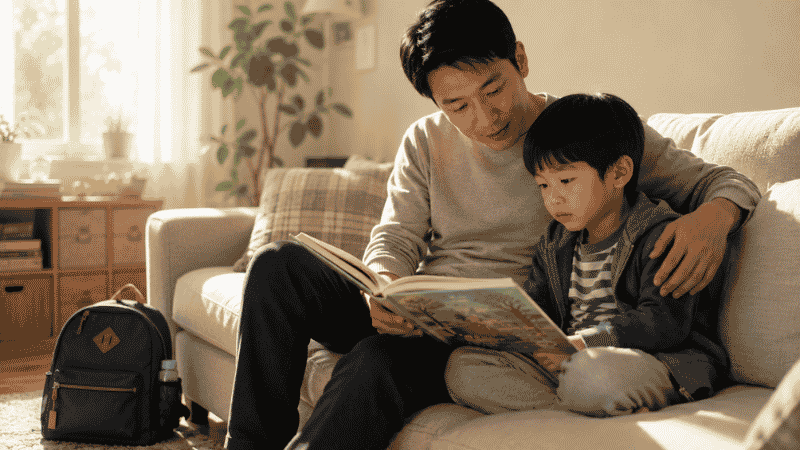
The year your child turns five is not the year you hand them books and step back. It’s the year the books get better, and the conversations get longer, and the stories start to do something you didn’t entirely expect: they become part of how your child understands being alive.
My daughter still asks if we can read together, even now. The tree house is still magic. The invisible string is still there.
Start with one book from this list tonight. Not the whole list — just one. Read it slowly. Do the voices. Stop at the cliffhanger and really refuse to turn the page. Watch what happens to their face.
That’s the whole thing. That’s all of it.
References
- National Reading Panel. (2000). Teaching Children to Read: An Evidence-Based Assessment of the Scientific Research Literature on Reading and Its Implications for Reading Instruction. National Institute of Child Health and Human Development. https://www.nichd.nih.gov
- American Academy of Pediatrics. (2014, updated 2023). “Literacy Promotion: An Essential Component of Primary Care Pediatric Practice.” Pediatrics. https://publications.aap.org
- Cunningham, A.E., & Stanovich, K.E. (1998). “What Reading Does for the Mind.” American Educator, 22(1–2), 8–15.
- Whitehurst, G.J., & Lonigan, C.J. (1998). “Child Development and Emergent Literacy.” Child Development, 69(3), 848–872.
Laura Bennett is the founder of ZestRead and a mom who cried at the kindergarten drop-off and then went home and read the chapter they’d left off the night before. She writes about children’s reading, family education, and the books that make the big transitions feel a little more navigable. Reach her at info@zestread.com