
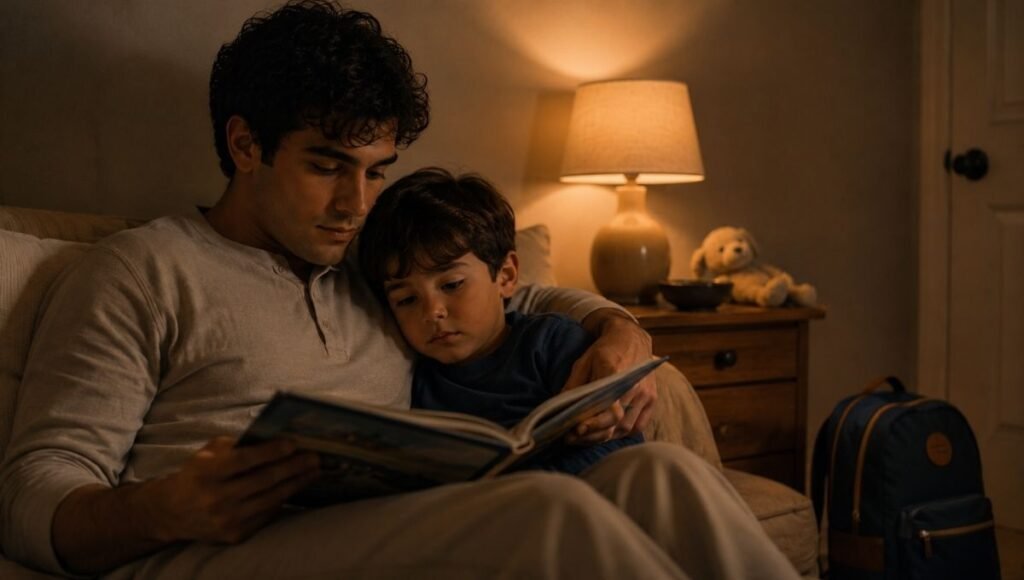
The night before my daughter’s first day of kindergarten, I did something I’m slightly embarrassed to admit.
I made a pile. Not of her things — her backpack was already packed, her outfit was already laid out, her lunch was already made. I made a pile of books. Seven of them, stacked on the kitchen table, carefully chosen from everything I’d collected over the previous three months. Books about starting school. Books about making friends. Books about being brave when you don’t feel brave.
I had read reviews. I had asked friends. I had stood in the children’s section of the library and felt quietly overwhelmed by the fact that there were approximately four hundred picture books about the first day of school and I had no idea which ones would actually help.
What I know now, five years later: the books themselves matter less than how you use them. A great first day of school book read the night before the first day is useful. The same book read weekly through August, then again after the first week, then pulled out in October when a social situation gets complicated — that’s the book that actually does something.
This guide is organized around when to read, not just what to read. Because first day of school books are tools, and tools work better when you know how to use them.
Key Takeaways
- Children who are read books about specific upcoming transitions show significantly less anxiety about those transitions than children who are not — the mechanism is “mental rehearsal,” in which the story allows the child to experience the event before it happens (Berthelsen & Walker, 2008).
- The best first day of school books don’t promise everything will be fine. They validate the anxiety and then show a character navigating it — which is more useful than false reassurance.
- Reading first day of school books should start 2–3 weeks before school begins, not the night before. Repeated exposure builds the mental model that makes the real experience feel familiar.
- Books work differently for different children: anxious children benefit most from books that validate worry; shy children benefit most from books about making one friend; children leaving younger siblings at home benefit from books that address that specific experience.
- The first day of kindergarten is a milestone for parents as much as children — many of the books on this list are written for both audiences simultaneously.
When to Read First Day of School Books: The Three-Phase Approach
Most parents pull out the school books the night before the first day. This is better than nothing. It is also significantly less effective than starting earlier.
Here’s what the research on children and transitions consistently shows: the more times a child has mentally rehearsed an event before it happens, the less unfamiliar — and therefore less frightening — it feels when it arrives. A book read once is an introduction. A book read six times across three weeks is a rehearsal.
Phase 1: 2–3 weeks before school starts Start with the warmest, most reassuring books. The ones where school is depicted as a place of interest and warmth. Let your child begin to build a positive mental model of what school is like before any specific anxiety attaches.
Phase 2: The week before Move to the books that acknowledge worry directly — the ones that say “it’s okay to feel nervous” and show a character navigating that feeling. These books validate what your child is likely beginning to feel, which reduces the isolation of the anxiety.
Phase 3: After the first week Don’t put the books away. Pull them back out after the first week, when the novelty has worn off and the longer emotional work of settling in begins. The books that were too abstract before the first day often become very concrete after it — “that’s exactly what happened to me.”
Best First Day of School Books for Preschoolers (Ages 3–5)
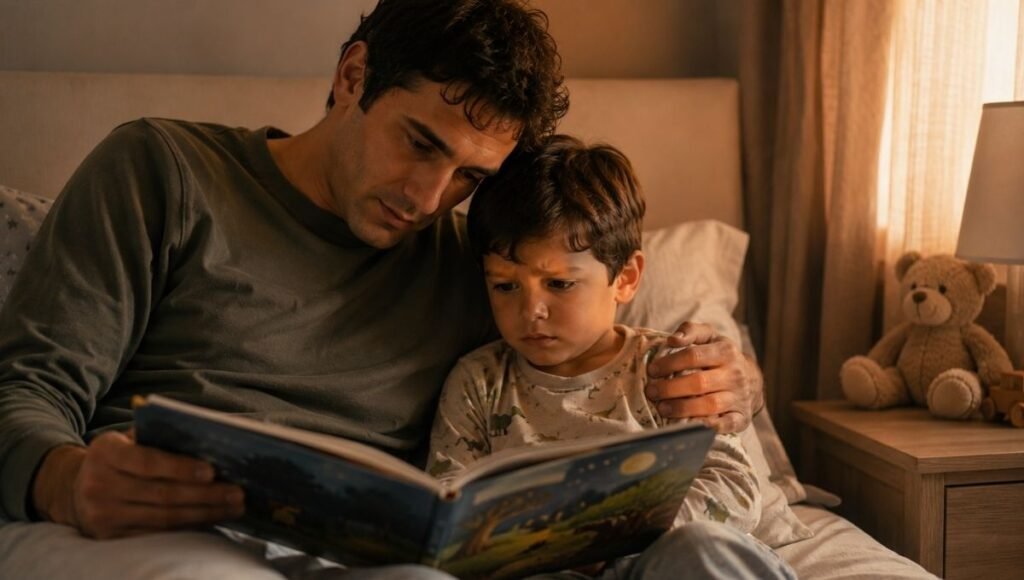
These are the books for children who are experiencing school for the very first time — where the unfamiliarity is total and the anxiety can be significant.
Wemberly Worried by Kevin Henkes
Wemberly worries about everything, and starting school is just the latest — and largest — worry on a very long list. What makes this book extraordinary is what it doesn’t do: it doesn’t tell Wemberly to stop worrying, and it doesn’t promise everything will be fine. It just accompanies her through the worry until she finds Jewel, another worrier, and something shifts.
Why it works: The ending doesn’t resolve the anxiety — it transforms it into connection. Wemberly doesn’t stop worrying; she finds someone to worry alongside. For children who are anxious about school, this is infinitely more honest than “you’ll love it once you’re there.”
When to read it: Phase 2 — the week before school. This is the book for the child who is already naming the worry.
How to read it: After reading, ask: “What is Wemberly most worried about? Do you have any worries like that?” Write them down if your child wants to. The act of externalizing the worry — putting it in a list, on paper, outside of the body — is its own small relief.
⭐ Worth the Splurge — this is one of the most important school books ever written
The Kissing Hand by Audrey Penn
Chester Raccoon doesn’t want to go to school. His mother gives him a kiss in his palm — a piece of her love he can press to his cheek any time he needs her. Chester gives her one back. The ritual has been adopted by thousands of families in real life.
Why it works: The kissing hand is a physical object — something a child can press to their cheek in the classroom when they miss home. Physical rituals work for children in ways that verbal reassurance alone cannot, because they engage the body as well as the mind.
When to read it: Phase 1 and 2. Start the ritual while reading the book, weeks before school starts. By the time the first day arrives, the gesture is already loaded with meaning.
How to read it: Do the ritual while you read. Kiss your child’s palm. Let them kiss yours. Read the book. The two things — the story and the gesture — become inseparable. On the first day, before you separate, press your kiss into their palm without saying anything. They’ll know.
💰 Budget Pick — a genuine classic
Ming Goes to School by Deirdre Sullivan, illustrated by Maja Löfdahl
Simple text, soft watercolors, a child navigating a new classroom gently and at their own pace. Ming doesn’t immediately love school; Ming gradually finds their way in. The pacing is slow and warm and feels true to how children actually settle into new environments — not instantly, but incrementally.
Why it works for preschoolers: The expectations are honest. School is new and can be overwhelming. Finding one small thing you like is enough for day one. The book gives children permission to take their time.
💰 Budget Pick
David Goes to School by David Shannon
David breaks every school rule in spectacular fashion — he’s late, he’s loud, he doesn’t raise his hand, he runs in the hallways. And at the end of the day, his teacher says: “Good job, David.” For children who are anxious about getting things wrong at school, this book does something unusual: it shows a child making every mistake and being received with warmth anyway.
Why it works: Anxiety about starting school is often specifically anxiety about getting things wrong. David demonstrates that mistakes don’t end the relationship between child and teacher. The teacher is still on David’s side. That’s the message.
How to read it: Let your child be the one who says “No, David!” at each page. The participation gives them the pleasure of knowing more than David does — and of knowing the rules, even while David breaks them.
💰 Budget Pick
Best First Day of Kindergarten Books (Ages 5–6)
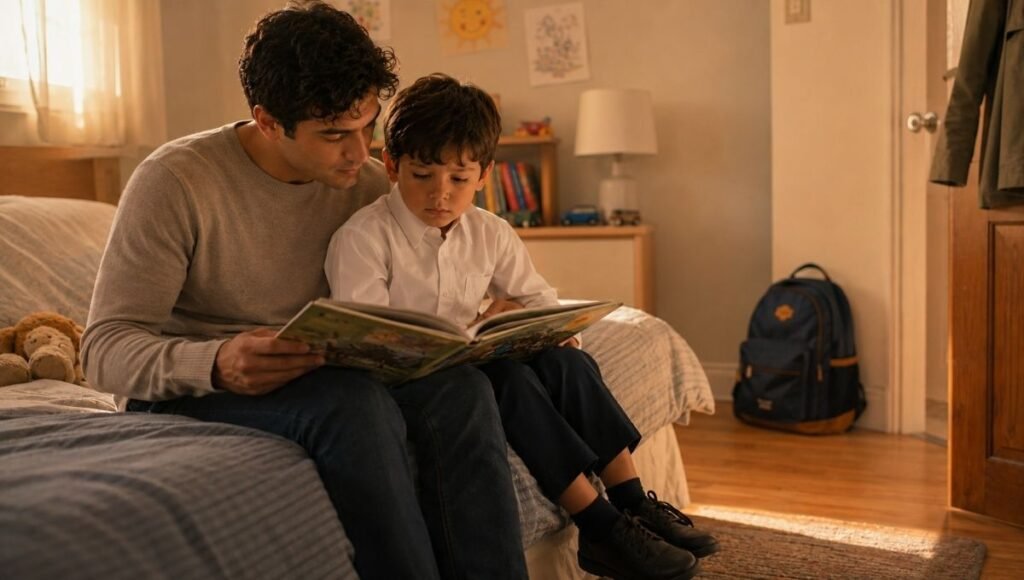
Kindergarten is a specific and significant transition — not just starting school, but starting the school. These books address the kindergarten experience in particular.
First Day Jitters by Julie Danneberg, illustrated by Judy Love
Sarah Jane Hartwell doesn’t want to go to school. She’s nervous, she’s scared, and she’s convinced that no one will like her. The twist at the end — which I will not spoil — reframes the entire book and produces one of the most satisfying surprise endings in the picture book genre.
Why it works: The surprise makes children want to read it again immediately. And on the second read, they catch everything they missed the first time — which is itself a lesson about perspective-taking. Don’t tell children what the twist is before they read it. The experience of discovering it is the whole point.
When to read it: Phase 2. Read it once for the experience, then let your child tell you what happened. Their retelling reveals what they understood and what resonated.
💰 Budget Pick
Chrysanthemum by Kevin Henkes
Chrysanthemum loves her unusual name until she goes to school and the other children make fun of it. Then her music teacher — whose name is Delphinium — saves the situation in the most perfect way. This is a book about names and identity and belonging, and it is one of Henkes’ finest.
Why it works at kindergarten: Children starting kindergarten are acutely aware of whether they fit in, and names are one of the first places difference is made visible. For children with unusual names, or names from other languages, or names that feel different from those of their classmates, this book is essential.
How to read it: Count the letters in your child’s name together. Tell them what you love about it. Tell them why you chose it. The book opens this conversation naturally.
💰 Budget Pick
The Night Before Kindergarten by Natasha Wing
Written in the style of “The Night Before Christmas,” the familiar rhythm makes this book feel comforting even before its content arrives. The night before kindergarten goes well; the first day of kindergarten goes well; the ending is positive without being falsely euphoric. For children who need a low-stakes preview of what the first day will feel like, this book provides exactly that.
When to read it: Phase 1. Start it early, when you want to build a positive association with school without addressing anxiety directly yet.
💰 Budget Pick
First Day of School Books for Elementary-Age Children (Ages 6–10)
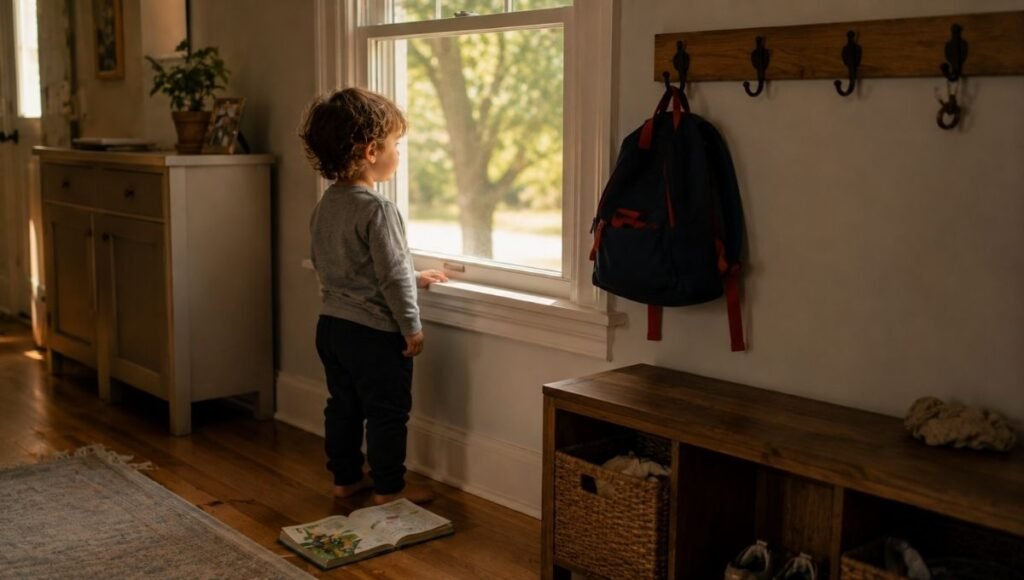
School transitions don’t end with kindergarten. Every new grade, every new school, every new classroom brings its own version of the first-day feeling. These books address the ongoing experience of navigating school as an older child.
The Recess Queen by Alexis O’Neill, illustrated by Laura Huliska-Beith
Mean Jean is the Recess Queen — no one swings or slides or plays until Mean Jean says so. Then a new girl named Katie Sue arrives and doesn’t know the rules, and what happens changes everything. A book about social dynamics, kindness, and the particular power of a child who simply doesn’t know to be afraid.
Why it works for older children: Elementary school children navigating established social hierarchies — who the popular kids are, who has power, what the rules are — find the recess dynamics in this book completely recognizable. Katie Sue’s accidental disruption of them is both funny and illuminating.
How to read it: After reading, ask: “Who is the Recess Queen at your school?” Don’t push for names. You’re asking about the dynamic, not the person.
💰 Budget Pick
Each Little Bird That Sings by Deborah Wiles
Comfort Snowberger is part of a family that runs a funeral home and knows everything about death — but nothing about how to handle the loss of the people she loves most. A middle-grade novel about grief, friendship, and the specific experience of being the kid who is different in ways other children don’t understand.
For: Ages 8–10, particularly children navigating a school year that includes something hard happening at home alongside the regular challenges of school.
💰 Budget Pick
How to Steal a Dog by Barbara O’Connor
Georgina’s family is living in their car. She has a plan to get them back into a house. The plan involves stealing a dog. This is a book about desperation and resourcefulness and moral complexity — and it’s also one of the most honest portrayals of what it’s like to be a child at school when something very hard is happening at home.
For: Ages 8–11. For children who have experienced home instability and for children who are learning to understand classmates whose home situations are different from their own.
💰 Budget Pick
Books for the Siblings Left Behind
This is the group most first-day-of-school book guides forget entirely. When an older sibling starts school, the younger child who stays home is also having a transition — one that involves loss, adjustment, and the need for their own acknowledgment.
Llama Llama Misses Mama by Anna Dewdney
Llama Llama’s mama drops him off at school and leaves. Llama Llama misses her. By the end of the day, he’s okay — but the missing was real, and the book honors it completely.
This works for the sibling left behind because: The missing is the experience both children are having simultaneously. The older child missing the parent at school; the younger child missing the sibling at home. This book gives language to the feeling for both.
💰 Budget Pick
Go to School, Little Monster by Helen Ketteman
Big sister Monster is nervous about her first day. Little Monster reassures her in all the ways little siblings do. Sweet, funny, and an unusual reversal of the usual dynamic.
When to read it: To the younger sibling, in the days before the older child starts school. It gives the younger child a role — the reassurer — rather than the experience of simply being left.
💰 Budget Pick
What If the Books Aren’t Helping?
Sometimes you read all the right books and your child is still in tears at drop-off for three weeks. This is more common than parents realize, and it is almost always temporary.
If drop-off distress continues past the first two weeks: Talk to your child’s teacher — not to report a problem, but to gather information. A teacher who knows your child is struggling can offer small interventions (a job in the classroom, a buddy at lunch, a specific check-in time) that make an enormous difference. The books gave your child language for the feeling; the teacher can give them a soft landing inside the experience.
If your child becomes avoidant of school in general: This is different from first-day nerves, and worth a conversation with your pediatrician. School avoidance that persists beyond the adjustment period, or that is accompanied by physical symptoms (stomachaches, headaches) on school mornings, can indicate something more specific — anxiety, a social difficulty, or a learning challenge — that benefits from early identification.
The books were right to name the feeling. Now you may need someone to help address it.
FAQ: What Parents Actually Search About First Day of School Books
What are the best first day of school books? Wemberly Worried for anxious children; The Kissing Hand for separation anxiety; First Day Jitters for the kindergarten transition; Chrysanthemum for children with names or identities that feel different from their classmates; The Recess Queen for older children navigating social dynamics. These five cover most of what parents are looking for.
When should I start reading first day of school books? Two to three weeks before school starts — not the night before. Repeated reading builds the mental model that makes the real experience feel familiar rather than completely unknown. The night-before reading is valuable, but it’s the last step, not the only step.
What are good first day of kindergarten books? First Day Jitters, The Night Before Kindergarten, Chrysanthemum, The Kissing Hand, and Wemberly Worried are all specifically well-suited to the kindergarten transition. For a child who loves a specific character — Daniel Tiger, Pete the Cat, Llama Llama — their corresponding school books are also excellent entry points.
How do I help a child who is scared of starting school? Read books that validate the fear rather than dismissing it — Wemberly Worried and The Kissing Hand both do this well. Establish a specific drop-off ritual you practice before the first day. Tell your child what you will do while they’re at school and what will happen when you pick them up. Concrete information about the routine reduces anxiety more effectively than general reassurance.
Are there first day of school books for older kids? Yes — The Recess Queen works well for ages 5–8, and middle-grade novels like How to Steal a Dog address the ongoing experience of navigating school as an older child. The transition anxiety doesn’t end at kindergarten; it just changes shape.
What books help with back-to-school anxiety? Any book that validates school anxiety without promising false resolution. Wemberly Worried, First Day Jitters, and Chrysanthemum are the strongest choices. For children whose anxiety is more general, Ruby’s Worry (on our feelings books list) also addresses school-adjacent anxiety effectively.
One Last Thing
My daughter is in fifth grade now. She doesn’t need first day of school books anymore — at least, she doesn’t think she does. But last August, when I was pulling out the school supplies and she walked past and saw the pile of books on the kitchen table — the same books from six years ago, spine-soft and page-worn — she picked up Wemberly Worried without saying anything and took it to her room.
She came back twenty minutes later. “I forgot how good that one is,” she said.
The books did their work. They’re still doing it, in ways I probably can’t fully see.
Pull them out this August. Start early. Read them more than once. Let your child bring them to school if they want to. Let the stories do the quiet preparation that only stories can do.
The first day will come. These books will have already been there.
Keep exploring on ZestRead:
- Best Books for 5-Year-Olds: Bridging Preschool and the Big Wide World
- Best Books for 6-Year-Olds: The Year They Start Reading Themselves
- Children’s Books About Feelings: The Right Book for Every Big Emotion
- Dialogic Reading: The Simple Technique That Makes Every Storytime Count
- Christmas Books for Kids: Building a Holiday Reading Tradition That Lasts
References
- Berthelsen, D., & Walker, S. (2008). “Parents’ Involvement in Their Children’s Education.” Family Matters, 79, 34–41. Australian Institute of Family Studies.
- Separation Anxiety in Children. American Academy of Pediatrics. (2022). https://www.healthychildren.org
- Ladd, G.W., & Dinella, L.M. (2009). “Continuity and Change in Early School Engagement: Predictive of Children’s Achievement Trajectories from First to Eighth Grade.” Journal of Educational Psychology, 101(1), 190–206.
- Zero to Three. (2020). “Starting School: How Families Can Help Children Thrive.” https://www.zerotothree.org
Laura Bennett is the founder of ZestRead and a mom who made a pile of seven first-day-of-school books the night before kindergarten and has never fully recovered from how fast that morning went. She writes about children’s reading, school transitions, and the books that help families navigate the moments that matter most. Reach her at info@zestread.com