

Some of the best reading moments in our house happen because of a holiday.
Not during the holiday — in the days and weeks before it. The October evening when we pull out the Halloween books and my daughter immediately reaches for the one she loved at four, even though she’s eleven now. The November afternoon when we read a Thanksgiving book and end up in a conversation that lasts through dinner. The Christmas Eve when we read The Polar Express for the ninth consecutive year and it still does what it always does.
Holidays give reading a reason and a rhythm. They create the specific conditions — anticipation, ritual, season, shared attention — that make books feel like more than entertainment. A book read at the right moment of the year, in the right context, with the right people, becomes part of how a family understands that moment. It gets woven into the holiday itself.
This is ZestRead’s complete guide to holiday books for kids across the entire year. Every section links to a full dedicated guide with detailed reviews, age-specific recommendations, and “how to read it” tips for each book. Consider this the map — and the individual guides the territory.
Key Takeaways
- Seasonal reading — books tied to specific holidays and times of year — builds reading habits more effectively than general encouragement, because the anticipation and ritual create positive emotional associations with books that persist across years.
- The best holiday book collections grow gradually: one or two carefully chosen books per year, across many years, becomes a collection rich enough to carry a family through an entire December without repetition.
- Holiday books work best when read before the holiday — not during or after. The books that do the most work are the ones that prepare children for what’s coming, give them language for what they’re feeling, and create a reading ritual that becomes part of the holiday itself.
- Holidays are one of the highest-leverage moments for reading aloud — because the seasonal context gives both parent and child a shared reason to slow down and pay attention.
- Every holiday on this list has books that meet children where they are — from board books for babies to chapter books for tweens. Age is not a barrier to seasonal reading at any stage of childhood.
Why Holiday Books Deserve Their Own Shelf
Most families keep holiday books somewhere — a box in the attic, a bin in the closet, a section of the bookshelf that gets rearranged every October. The families who use those books most effectively treat them as a collection with intention: built slowly, organized thoughtfully, and brought out with ceremony.
A holiday book collection is one of the most meaningful things you can build for a child across the years of their childhood. Here’s why:
The ritual of return. A book that comes out once a year, in the same season, for many years becomes something more than a book. It becomes a marker of time — a way of measuring how a child has changed. The same copy of Room on the Broom that a two-year-old couldn’t sit still for becomes, at six, a book they can recite from memory. That continuity is its own kind of magic.
The conversation that books open. Holiday books — particularly Thanksgiving and Easter books — are uniquely positioned to open conversations that would be harder to start otherwise. A book about Squanto’s perspective on the 1621 harvest gives a parent an entry point that a direct history lesson doesn’t. A book about what Easter means for different families opens a conversation about belief and tradition that children can access through story before they can access it through abstraction.
The reading habit that rituals build. Research on reading habits consistently shows that children who read in specific contexts — at a specific time, in a specific place, with specific books — are more likely to maintain reading habits long-term than those who read opportunistically. Seasonal reading creates exactly those contexts: this is when we read these books, and this is what that time feels like.
Halloween Books for Kids: From Cozy to Properly Spooky
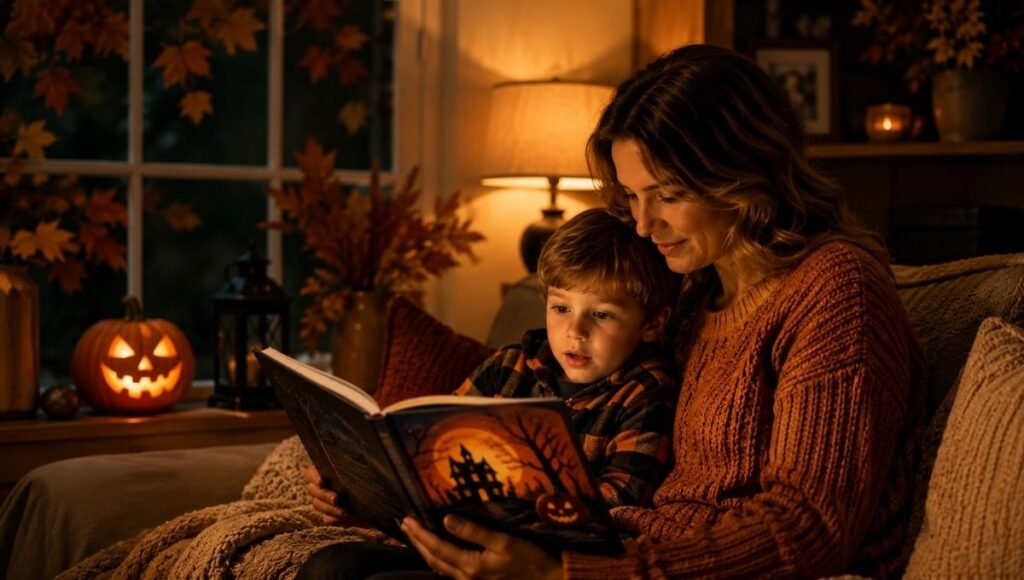
October is one of the best months to be a reader. The season itself creates exactly the right conditions: the light changes, the air changes, and there are books for every point on the spectrum from “warm and festive” to “actually designed to make your heart race.”
The key insight for Halloween reading: the books span a much wider range than most parents realize. Room on the Broom and Goosebumps are both Halloween books. They are doing completely different things, and the right one depends entirely on how brave your child is feeling tonight.
What you’ll find in the full guide:
- Cozy Halloween books for children who want festive, not frightening
- Mildly spooky picture books for children who want atmosphere without nightmares
- Genuinely scary chapter books for children who specifically want to be frightened
- How to build a Halloween reading ritual that builds across years
- The case for Scary Stories to Tell in the Dark and who it’s actually for
→ Read the full guide: Halloween Books for Kids: From Cozy to Spooky, Sorted by Bravery Level
Thanksgiving Books for Kids: The Ones That Start Real Conversations
Thanksgiving is the holiday most likely to generate genuine questions from children — questions that parents aren’t always ready for at the dinner table. “Who already lived here?” “What happened to the Native Americans after that?” “Why do we celebrate this?”
The best Thanksgiving books for kids don’t avoid those questions. They give families a vocabulary for approaching them — age-appropriately, honestly, and without turning the holiday into a history lecture.
What you’ll find in the full guide:
- Cozy Thanksgiving books for toddlers focused on family, warmth, and gratitude
- Books that introduce Indigenous perspectives for ages 5–8
- How to use Thanksgiving books to open the conversations that matter
- The difference between books that oversimplify and books that simplify well
- 1621, Squanto’s Journey, and Giving Thanks — why all three matter
Christmas Books for Kids: Building a Tradition That Lasts Decades
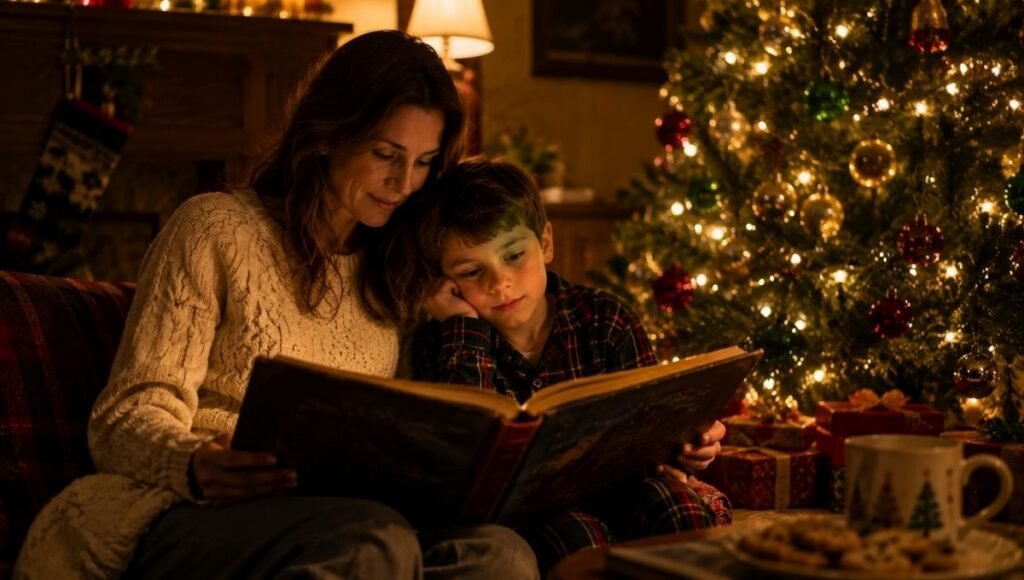
Christmas has more children’s books than any other holiday — which means the challenge is not finding books but finding the right ones. The ones worth buying. The ones worth reading every year. The ones that become part of what Christmas means in your family.
The best Christmas books are not just entertaining. They are formative — they shape how a child understands the season, what they feel when they smell Christmas tree, what the word “magic” means to them by the time they’re old enough to know it’s a story.
What you’ll find in the full guide:
- Christmas books for babies and toddlers that feel like the holiday without explaining it
- The essential Christmas picture books — the ones that cross generations
- Christmas books for older children who are ready for something with more weight
- The Polar Express, How the Grinch Stole Christmas!, and A Christmas Carol — why each belongs on a different shelf
- How to write dates inside every Christmas book and why that matters in ten years
→ Read the full guide: Christmas Books for Kids: Building a Holiday Reading Tradition That Lasts
First Day of School Books: What to Read Before, During, and After
The first day of school is its own kind of holiday — one of the most significant transitions in a child’s year, and one where books can do genuine preparatory work. The key insight: most parents read school books the night before the first day, which is the least effective timing. Starting two to three weeks earlier, reading repeatedly, transforms the same books from an introduction to a rehearsal.
What you’ll find in the full guide:
- Books for children who worry about starting school versus children who are excited
- The kissing hand ritual and why it works neurologically as well as emotionally
- First day of kindergarten books specifically
- Books for siblings who are left behind when an older child starts school
- When school avoidance goes beyond first-day nerves — and what to do
→ Read the full guide: First Day of School Books: What to Read Before, During, and After the Big Day
Easter Books for Kids: Religious, Secular, and Everything Spring
Easter is the holiday that means most different things to most different families — and the books reflect that range. From board books about the Easter Bunny for toddlers who mostly care about eggs and baskets, to deeply theological accounts of the Resurrection for Christian families, to spring books that celebrate new life without any holiday context at all.
The right Easter book depends entirely on what Easter means in your family — and this guide organizes recommendations accordingly, without assuming any particular tradition.
What you’ll find in the full guide:
- Easter board books for babies focused on bunnies, chicks, and springtime
- Secular Easter books for families who celebrate the season without religious context
- Christian Easter books that address the Resurrection at different ages and depths
- Spring books that belong in any family’s April reading regardless of tradition
- Easter basket book recommendations — and what actually works as a basket book
Summer Books for Kids: Preventing the Reading Slide One Great Book at a Time
Summer has a reading problem. The routine dissolves. The screens multiply. The habit built across nine months of school starts to erode. And the research is clear: children who don’t read over summer lose an average of two to three months of reading progress.
But summer is also one of the best possible times to read — because the long, unhurried days create exactly the conditions that make reading feel like pleasure rather than obligation. The solution to the summer slide is not a reading log. It’s the right book in the right moment.
What you’ll find in the full guide:
- Summer books organized by moment: beach days, backyard afternoons, car trips, evening read-alouds
- The summer library program — the highest-leverage free reading intervention available
- Books for toddlers and preschoolers whose summer is entirely sensory
- Chapter books and read-alouds for families who want summer to feel like an education
- Charlotte’s Web as the definitive summer read-aloud — why, and how to read it
→ Read the full guide: Summer Books for Kids: The Best Reads for Every Summer Moment
Beyond the Big Holidays: Other Seasonal Reading Worth Building
The six holidays above have dedicated guides on ZestRead. But seasonal reading doesn’t have to stop there. Here are the moments that deserve books even if they don’t have their own dedicated section yet.
Hanukkah. The best Hanukkah books for children combine the specific ritual of the holiday — the menorah, the latkes, the dreidel — with stories that feel genuinely Jewish rather than simply “Jewish Christmas.” Hershel and the Hanukkah Goblins by Eric Kimmel is the gold standard: a real trickster tale, rooted in Jewish folklore, that earns its place alongside the great holiday stories of any tradition.
Diwali. Binny’s Diwali by Thrity Umrigar is the picture book introduction to Diwali that actually works — it explains the holiday through the experience of a child who loves it and wants to share it, which is exactly the right approach for children of any background encountering Diwali for the first time.
Lunar New Year. Bringing in the New Year by Grace Lin is warm, specific, and beautifully illustrated — a Chinese American family’s preparations for the New Year, told with the detail and affection that comes from cultural inside knowledge.
Kwanzaa. My People by Langston Hughes, illustrated by Charles R. Smith Jr., is not strictly a Kwanzaa book — but it belongs in any collection that celebrates the seven principles of Kwanzaa. For a more direct introduction, Seven Spools of Thread: A Kwanzaa Story by Angela Shelf Medearis is the right choice for ages 5–8.
Valentine’s Day. Roses Are Pink, Your Feet Really Stink by Diane deGroat is one of the funniest Valentine’s Day picture books in print — Gilbert accidentally sends mean valentines and has to repair the friendships he damaged. For younger children, The Day It Rained Hearts by Felicia Bond is gentle and warm.
How to Build a Holiday Book Collection That Grows With Your Child
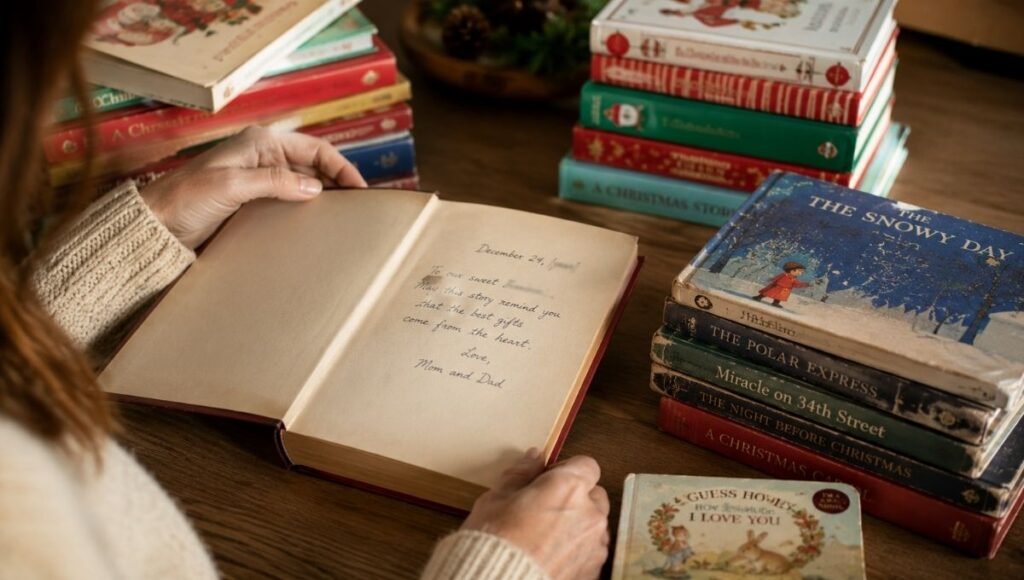
The families with the richest holiday reading traditions didn’t build their collections all at once. They built them one or two books at a time, year after year, until the collection became a record of childhood.
Start with one anchor book per holiday. Not a pile. Not a complete collection. One book per holiday that is genuinely excellent and genuinely right for where your child is right now. Add from there.
Write the year and a note inside every holiday book. “October 2022 — you asked for Room on the Broom fourteen nights in a row.” In ten years, that inscription will be worth more than the book itself.
Let the collection span years. The board books your child loved at two belong in the collection alongside the chapter books they love at ten. The span of the collection is the span of childhood — and children who can hold their own history in hand understand something about time that no other experience quite teaches.
Borrow before you buy. The library is the best place to preview holiday books before committing to a purchase. A book that seems perfect from a description may not land with your specific child. Find out first.
Buy good editions. Holiday books are read repeatedly and stored carefully. A well-made hardcover that holds up to annual handling is worth the investment over a paperback that falls apart after three seasons.
The Holiday Reading Calendar: A Simple Framework for the Year
| Month | Holiday | Where to Start |
|---|---|---|
| October | Halloween | Room on the Broom (cozy) or Where the Wild Things Are (atmospheric) |
| November | Thanksgiving | Bear Says Thanks (toddlers) or 1621 (ages 6–8) |
| December | Christmas / Hanukkah / Kwanzaa | The Polar Express / Hershel and the Hanukkah Goblins |
| Late August | First Day of School | The Kissing Hand (preschool) or First Day Jitters (kindergarten) |
| March–April | Easter / Spring | The Easter Egg (secular) or He Is Risen (religious) |
| June–August | Summer | Blueberries for Sal (toddlers) or Charlotte’s Web (family read-aloud) |
FAQ: What Parents Actually Search About Holiday Books for Kids
What are the best holiday books for kids? The answer depends on the holiday and the age. For Halloween: Room on the Broom for young children, Goosebumps for older ones. For Thanksgiving: Bear Says Thanks for toddlers, 1621 for ages 6–8. For Christmas: The Polar Express for ages 4 and up, A Christmas Carol for ages 10 and up. For each holiday, ZestRead has a dedicated guide with age-specific recommendations and reading tips.
How do I build a holiday book collection? Start with one genuinely excellent book per holiday. Add one or two books per year rather than buying a complete collection at once. Write dates inside every book. Use the library to preview before purchasing. Within five to seven years, you’ll have a collection rich enough to carry your family through every seasonal moment.
When should I start reading holiday books with my child? Start earlier than you think — two to three weeks before the holiday, not the night before. Repeated reading builds the mental model and emotional association that makes the actual holiday feel meaningful. The night-before reading is the last step, not the only step.
Are holiday books appropriate for all ages? Every holiday has books across the full age range — from board books for babies to chapter books for tweens and young adults. The key is matching the book to the child’s current developmental stage rather than to the holiday’s general demographic. ZestRead’s individual holiday guides all include age-specific recommendations.
What holiday books work for the whole family? The Polar Express works from age four to adult. How the Grinch Stole Christmas! works at any age. Room on the Broom is genuinely enjoyable for parents as well as children. Charlotte’s Web as a summer read-aloud works for the whole family simultaneously. The books that cross age groups are worth prioritizing — they’re the ones that build shared reading experiences across the family.
Do holiday books need to be religious? Not at all. The majority of holiday books for Halloween, Thanksgiving, Easter, and summer are entirely secular. Christmas has both deeply religious options and entirely secular ones. ZestRead’s Easter guide explicitly addresses both religious and secular families. The goal is finding the right book for your family’s tradition, whatever that tradition looks like.
One Last Thing
My daughter is eleven. She is old enough to be slightly embarrassed by most of the things she used to love. But every October, when I pull out the Halloween books, she sits down. And every Christmas Eve, when I reach for The Polar Express, she doesn’t go to her room.
Something about the holiday books is different. They’re part of the season in a way that makes them feel like hers — not mine, not something she’s too old for, but something that belongs to the specific texture of October or December in our particular family.
That’s the thing about holiday books built across years. They stop being books and start being part of the holiday itself. The season doesn’t quite feel right without them.
Start wherever you are in the year. Pick up one book for the next holiday on the calendar. Read it together, before the holiday arrives, more than once.
That’s the whole tradition. The rest builds itself.
Explore ZestRead’s complete holiday reading guides:
- 🎃 Halloween Books for Kids: From Cozy to Spooky, Sorted by Bravery Level
- 🍂 Thanksgiving Books for Kids: The Ones That Actually Start Conversations at the Table
- 🎄 Christmas Books for Kids: Building a Holiday Reading Tradition That Lasts
- 🎒 First Day of School Books: What to Read Before, During, and After the Big Day
- 🐣 Easter Books for Kids: The Best Picks for Every Family
- ☀️ Summer Books for Kids: The Best Reads for Every Summer Moment
Also on ZestRead:
- Classic Children’s Books Every Family Should Own: A Real Mom’s Guide by Age
- Dialogic Reading: The Simple Technique That Makes Every Storytime Count
- Early Literacy Skills: The 6 Building Blocks of Reading Every Parent Should Know
References
- Fiese, B.H., et al. (2002). “A Review of 50 Years of Research on Naturally Occurring Family Routines and Rituals.” Journal of Family Psychology, 16(4), 381–390.
- Mar, R.A., & Oatley, K. (2008). “The Function of Fiction is the Abstraction and Simulation of Social Experience.” Perspectives on Psychological Science, 3(3), 173–192.
- Mol, S.E., & Bus, A.G. (2011). “To Read or Not to Read: A Meta-Analysis of Print Exposure From Infancy to Early Adulthood.” Psychological Bulletin, 137(2), 267–296.
- American Library Association. (2023). “Building Family Reading Traditions.” https://www.ala.org
Laura Bennett is the founder of ZestRead and a mom who pulls out the Halloween books every October and the Christmas books every December and has never once regretted it. She writes about children’s reading, seasonal book traditions, and the specific magic of the right book at the right time of year. Reach her at info@zestread.com