
Some books outlast their moment. They survive decades, generations, entire centuries — not because they’re assigned in school or because someone declared them important, but because children keep finding something true in them.
My daughter found Charlotte’s Web at seven. She cried at the end in the way that children cry when a book has done something real to them — not performance, but genuine grief for something she understood for the first time. Two years later, she picked it up again and cried again, but differently. The book had changed because she had.
That’s what classic children’s books do. They grow with the reader. A child who reads The Secret Garden at nine and again at fourteen meets two different books. A parent who reads Goodnight Moon aloud for the hundredth time discovers things in it they didn’t notice the first ninety-nine times. The classics earn their place on the shelf not once, but over and over again.
This guide is organized by age — because the right classic at the wrong moment is just a hard book, and the right classic at the right moment is something you carry for the rest of your life.
Key Takeaways
- Classic children’s books have survived because they speak to something true about human experience that doesn’t age out — not because of nostalgia or critical consensus.
- The best classics for children are organized by when they’re most likely to land, not when children can technically decode them. A book read too early rarely becomes beloved; the same book at the right age can be formative.
- Many classic picture books remain essential at ages well beyond their target — the best picture books of all time operate at emotional and linguistic complexity that picture books for older audiences rarely match.
- Classic children’s novels build the reading stamina, narrative analysis, and emotional vocabulary that sustain lifelong reading. Children who read them with a parent who is also engaged get more from them than children who read them alone.
- This list is deliberately selective. Fifty books your child should read is fifty books they won’t. A shorter, deeper engagement with fewer books builds more than a long list of titles checked off.
What Makes a Children’s Book a Classic?
Before the list, it’s worth being clear about what “classic” actually means — because the word gets applied loosely and sometimes unhelpfully.
A classic children’s book is not simply an old book, or a book that won awards, or a book that adults remember fondly. Many old books are dated. Many award-winners don’t hold up. Many beloved childhood memories are more about the memory than the book.
A true classic does at least two of these three things:
It speaks to something children recognize as true about their own experience — not what adults think children feel, but what children actually feel. The specific loneliness of being nine. The terror and excitement of a first separation. The injustice of being told you’re too young to understand something you understand completely.
It uses language that rewards rereading. The best classic children’s books are not simple. They use words that stretch children, sentences that have rhythm and weight, images that stay with you. Charlotte’s Web is not a simple book. The Wind in the Willows is not simple. Their simplicity is sophisticated simplicity — accessible on the surface, deep underneath.
It has survived the test of generations. Not decades — generations. A book that children in the 1960s and children in the 2020s both find resonant has passed the hardest test there is: it is speaking to something about being human that transcends its historical moment.
Classic Picture Books for Babies and Toddlers (Ages 0–3)
The classics for the youngest readers are deceptively profound. They look simple. They are not simple. They have been refined to a kind of perfection that newer books rarely match.
Goodnight Moon by Margaret Wise Brown, illustrated by Clement Hurd
Published in 1947. Still the bedtime book. The rhythm is deliberately slowing — each page quieter than the last, each named object released. It mimics the descent into sleep so precisely that children’s nervous systems follow it. No book written since has done this better.
Best read at: 6 months–3 years, and as many times as your child asks for it. How to read it: Lower your voice with each page. By the last spread, you should be whispering.
💰 Budget Pick — board book edition under $8
The Very Hungry Caterpillar by Eric Carle
Published in 1969. Counting, days of the week, food names, the concept of transformation — all delivered through die-cut pages that children find physically irresistible. Eric Carle’s tissue-paper collage illustrations are among the most distinctive in children’s literature, and the story’s satisfying arc — hunger, abundance, transformation, emergence — is one children return to across years.
Best read at: 12 months–4 years. How to read it: Point to each food as you name it. Ask “what’s this one?” After several reads, pause and let your child name it first.
💰 Budget Pick — board book holds up to enthusiastic toddler handling
Where the Wild Things Are by Maurice Sendak
Published in 1963. Caldecott Medal winner. Max is sent to bed without supper and travels to where the wild things are. The entire arc — anger, escape, power, homesickness, return — takes under ten minutes to read aloud, and it has never once failed to hold a child completely. Sendak understood that children have dark feelings and that those feelings deserve to be honored in story.
Best read at: 2–6 years. How to read it: Make the rumpus loud. Let it be big. Then bring your voice all the way down for the ending. The contrast is everything.
⭐ Worth the Splurge — own this one, don’t borrow it
Corduroy by Don Freeman
Published in 1968. A small bear in a department store waits to be chosen. A girl named Lisa comes back for him — even when it isn’t easy. This book has never gone out of print because it tells the truth about wanting to belong and being chosen anyway, in a way that children feel immediately and adults feel all over again.
Best read at: 2–5 years. How to read it: Slow down on the pages where Corduroy is alone. Let the waiting breathe. The moment Lisa comes back lands harder after the stillness.
💰 Budget Pick
Pat the Bunny by Dorothy Kunhardt
Published in 1940. The original touch-and-feel book. Paul and Judy do things — pat the bunny, smell the flowers, look in the mirror — and so does the child holding the book. No narrative arc, no lesson, no resolution. Just the pure pleasure of a book that asks a baby to do something and then lets them do it. Revolutionary in 1940. Still unreplicated.
Best read at: 6 months–18 months.
💰 Budget Pick
Classic Picture Books for Preschoolers and Early Readers (Ages 3–6)
At three, four, and five, children are ready for picture books with genuine emotional complexity and narrative arc. These are the classics that operate at that level.
The Story of Ferdinand by Munro Leaf, illustrated by Robert Lawson
Published in 1936. Ferdinand the bull would rather sit under his cork tree and smell flowers than fight. He doesn’t learn to be different. He just gets to be himself, completely. Still quietly radical after nearly ninety years.
Why it’s a classic: A children’s book that says “your way of being in the world is valid” without any lesson attached is rarer than it should be. Children feel the radical gentleness of this book even when they can’t name it.
Best read at: 3–6 years.
💰 Budget Pick — in print for nearly 90 years
The Snowy Day by Ezra Jack Keats
Published in 1962. Caldecott Medal winner. Peter walks through snow. That’s the whole story. No conflict, no resolution — just a child and a winter day and the specific quality of pure sensory delight. The first picture book with a Black protagonist as the central, fully realized hero of a story about joy rather than adversity.
Best read at: 2–5 years. How to read it: Read slowly. Point at the illustrations. Let the book breathe.
💰 Budget Pick
Frog and Toad Are Friends by Arnold Lobel
Published in 1970. Newbery Honor. Five short stories about two friends who are different in almost every way and love each other completely anyway. Frog is confident; Toad is anxious. They are one of the great pairs in children’s literature, and at four or five, children start to recognize themselves in both of them.
Best read at: 4–7 years, as read-aloud and then independent reading. How to read it: One story per sitting. Give each story room to land before starting the next.
💰 Budget Pick — leads naturally to the complete Frog and Toad series
Don’t Let the Pigeon Drive the Bus! by Mo Willems
Published in 2003. Caldecott Honor. Too recent to be a “classic” in the traditional sense, and already completely canonical. The Pigeon’s increasingly dramatic demands to drive the bus — and the reader’s role in saying no — is one of the purest forms of toddler comedy ever written. Will be read by children in 2100.
Best read at: 2–6 years. How to read it: Really perform the Pigeon. Do the voice. Do the tantrum. The more committed the performance, the more your child will want to “read” it themselves.
📦 Series — the entire Pigeon universe
💰 Budget Pick
Charlotte’s Web by E.B. White
Published in 1952. Newbery Honor. Wilbur the pig is going to be killed. Charlotte the spider decides to save him. She does, and then she dies anyway. This book has been breaking children’s hearts for seventy years because it tells the truth about love and loss in a way that children can bear — just barely, in the best possible way.
Best read at: 6–9 years as read-aloud; 7–10 years independently. How to read it: Don’t warn them about the ending. Trust that they can handle it. Afterward, just be with them in it. Don’t rush to reassure.
⭐ Worth the Splurge — the hardcover illustrated edition with Garth Williams’ original drawings
Classic Children’s Novels for Middle Readers (Ages 8–12)
These are the books that do the deeper work — the ones that children carry into adulthood as the books that first made them feel the full weight of what reading can do.
The Secret Garden by Frances Hodgson Burnett
Published in 1911. Mary Lennox is unpleasant, lonely, and grieving in ways she doesn’t have words for. She finds a locked garden. She finds a hidden boy. Something grows in all three of them. Still in print after more than a century because it is, at its core, about the life-giving power of tending to something.
Best read at: 8–11 years. How to read it: Read it aloud if you can — the Yorkshire moor atmosphere is best carried in a voice. Read slowly. This is a book for lingering.
💰 Budget Pick — adapted illustrated editions work beautifully at this age
A Wrinkle in Time by Madeleine L’Engle
Published in 1962. Newbery Medal. Meg Murry is awkward, angry, and certain she is not good enough. Her father has disappeared. She travels through the universe to rescue him. She is the hero not because she is special in any obvious way, but because of her love and her stubbornness — qualities that children who feel imperfect recognize as the things they actually have.
Best read at: 9–12 years. How to read it: Read it together. The ending conversation — about what Meg actually uses to defeat IT — is worth discussing. The answer matters.
💰 Budget Pick
The Phantom Tollbooth by Norton Juster, illustrated by Jules Feiffer
Published in 1961. Milo is bored with everything until a mysterious tollbooth appears in his room. He drives through it and finds himself in a land where words and numbers are at war. One of the most linguistically inventive books ever written for children — a book that rewards intelligence and that children reread across years, finding new layers each time.
Best read at: 9–12 years. How to read it: Stop at every pun. Don’t move past it. Ask: “Did you catch that one?” The wordplay is dense enough that multiple reads are designed in.
⭐ Worth the Splurge — the illustrated edition with Feiffer’s original artwork
The Hobbit by J.R.R. Tolkien
Published in 1937. Bilbo Baggins wants nothing more than to stay home. He is recruited into an adventure he didn’t ask for, and he turns out to be exactly what the company needed — not because he is strongest or bravest, but because he is resourceful and kind and underestimated. Shorter and warmer than The Lord of the Rings, and a perfect entry to Tolkien at this age.
Best read at: 10–13 years. How to read it: Read it aloud together — Tolkien’s prose rewards being heard, and the songs and riddles land best as performance. Many families who read The Hobbit aloud at ten go on to read Lord of the Rings together across the following years.
⭐ Worth the Splurge — the illustrated Alan Lee edition is genuinely beautiful
Little Women by Louisa May Alcott
Published in 1868. The March sisters — Meg, Jo, Beth, and Amy — navigate the Civil War years, poverty, romance, loss, and the question of what a woman’s life is allowed to be. Jo March remains one of the most beloved characters in American literature because she refuses easy answers. Children who find Jo find a companion for years.
Best read at: 10–13 years. How to read it: Read independently for older, stronger readers; as a read-aloud for ten-year-olds who are ready for the emotional weight but need the support of a voice carrying it.
💰 Budget Pick — many illustrated editions available
Treasure Island by Robert Louis Stevenson
Published in 1883. Jim Hawkins, a treasure map, Long John Silver, and one of the great adventure stories ever written. The morality is genuinely complex — Long John Silver is both villain and something uncomfortably close to a hero — and children who are ready for that complexity find it thrilling.
Best read at: 10–13 years. How to read it: Adapted editions for this age work beautifully — the Victorian language of the original can slow young readers without adding proportionate reward. Find a good adaptation and save the original for fourteen or fifteen.
💰 Budget Pick
Classic Children’s Books That Belong in Every Home Library
A shorter list of the books that cross age groups — the ones that work at five and again at twelve, that parents read alongside children and find themselves moved by, that function as a kind of family inheritance:
- Goodnight Moon — Margaret Wise Brown
- Where the Wild Things Are — Maurice Sendak
- Charlotte’s Web — E.B. White
- Frog and Toad Are Friends — Arnold Lobel
- The Secret Garden — Frances Hodgson Burnett
- A Wrinkle in Time — Madeleine L’Engle
- The Phantom Tollbooth — Norton Juster
- The Story of Ferdinand — Munro Leaf
These eight books, owned and read and reread, are more than enough foundation for a reading life.
Classic Books vs. Contemporary Books: A Note on Balance
The case for classic children’s books is not a case against contemporary ones. The best new children’s books are building the canon of 2060 — books like Last Stop on Market Street, The Day You Begin, and the Elephant and Piggie series are already classics in everything but age.
What the classics offer that newer books cannot is simply time — the evidence of survival. A book that children in 1950 and children in 2025 both find resonant has passed a test that no amount of marketing or critical acclaim can replace.
The ideal bookshelf holds both: classics that have earned their place across generations, and contemporary books that speak to this specific moment in a child’s life. Neither alone is enough.
FAQ: What Parents Actually Ask About Classic Children’s Books
What are the best classic children’s books of all time? The books most consistently cited across literary traditions and time: Goodnight Moon, Where the Wild Things Are, Charlotte’s Web, The Secret Garden, A Wrinkle in Time, The Phantom Tollbooth, Little Women, The Hobbit, Treasure Island, and Frog and Toad Are Friends. This is a beginning, not an exhaustive list — but any child who reads these has read a significant portion of what children’s literature has to offer.
At what age should children read the classics? The right classic at the right age is the whole question. Goodnight Moon at 12 months. Where the Wild Things Are at three. Charlotte’s Web at seven. The Secret Garden at nine. A Wrinkle in Time at ten. The classics are best understood as age-appropriate tools rather than a fixed canon to be consumed in any particular order or at any particular speed.
Are classic children’s books better than modern ones? Neither is categorically better. The classics have passed the test of generational survival — that’s meaningful evidence of quality. Contemporary books speak to today’s children in today’s world — that’s also meaningful. The best reading life contains both. A child who reads only classics misses the richness of contemporary children’s literature; a child who reads only contemporary books misses the depth that survival across generations tends to produce.
What classic picture books are worth buying? For a core collection: Goodnight Moon, The Very Hungry Caterpillar, Where the Wild Things Are, Corduroy, The Snowy Day, The Story of Ferdinand, and the Frog and Toad series. These seven form a foundation from which everything else grows.
Which classic children’s novels should I read aloud with my child? Charlotte’s Web (ages 6–9), The Secret Garden (ages 8–11), A Wrinkle in Time (ages 9–12), The Phantom Tollbooth (ages 9–12), and The Hobbit (ages 10–13) are all particularly well-suited to being read aloud — the prose rewards being heard, and the emotional weight is better carried together.
Are there classic children’s books I should skip? Some classics have not aged well in specific ways — depictions of race, gender, and disability that reflect the assumptions of their historical moment. Little House on the Prairie and Doctor Dolittle, for instance, contain content that warrants conversation. This doesn’t mean they should never be read, but that they should be read with awareness and discussion, not treated as uncomplicated classics.
One Last Thing
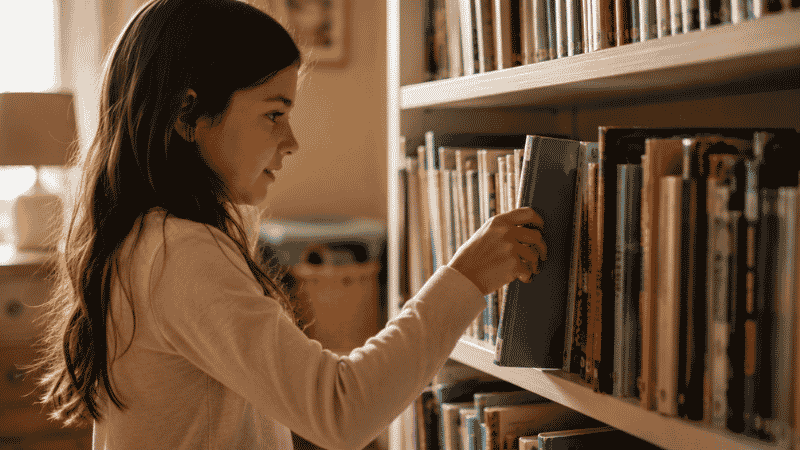
My daughter pulled Charlotte’s Web off the shelf last month. She’s eleven now, four years past the first read and two years past the second.
“I want to see if it still makes me cry,” she said.
It did.
That’s the thing about the classics. They don’t give you less as you get older. They give you more — because you bring more to them. The book you read at seven and the book you read at eleven are the same words. The reader is different. That difference is what the classics are made for.
Start with one. Any one from this list. Read it at the right age, which might be tonight.
Find the right classic for your child’s age:
- Best Books for 2-Year-Olds: What They’ll Actually Sit Still For
- Best Books for 3-Year-Olds: What Actually Works at Storytime
- Best Books for 4-Year-Olds: When Stories Start Getting Really Good
- Best Books for 5-Year-Olds: Bridging Preschool and the Big Wide World
- Best Books for 6-Year-Olds: The Year They Start Reading Themselves
- Best Books for 7-Year-Olds: When Reading Really Takes Off
- Best Books for 8-Year-Olds: Readers Finding Their Own Path
- Best Books for 9-Year-Olds: The Independent Reader Who Still Needs You
- Best Books for 10-Year-Olds: The Last Year Before Everything Changes
- Best Books for 11-Year-Olds: Books That Actually Compete With Their Phone
- Best Books for 12-Year-Olds: The Bridge to the Reader They’re Becoming
References
- Nodelman, P. (2008). The Hidden Adult: Defining Children’s Literature. Johns Hopkins University Press.
- Hunt, P. (Ed.). (1999). Understanding Children’s Literature. Routledge.
- American Library Association. (2023). “Caldecott Medal and Honor Books.” https://www.ala.org
- National Endowment for the Arts. (2007). To Read or Not to Read: A Question of National Consequence. https://www.arts.gov
Laura Bennett is the founder of ZestRead and a mom who watched her daughter pull Charlotte’s Web off the shelf for the third time at age eleven, just to see if it still made her cry. It did. She writes about children’s reading, family education, and the books that outlast every moment. Reach her at info@zestread.com