
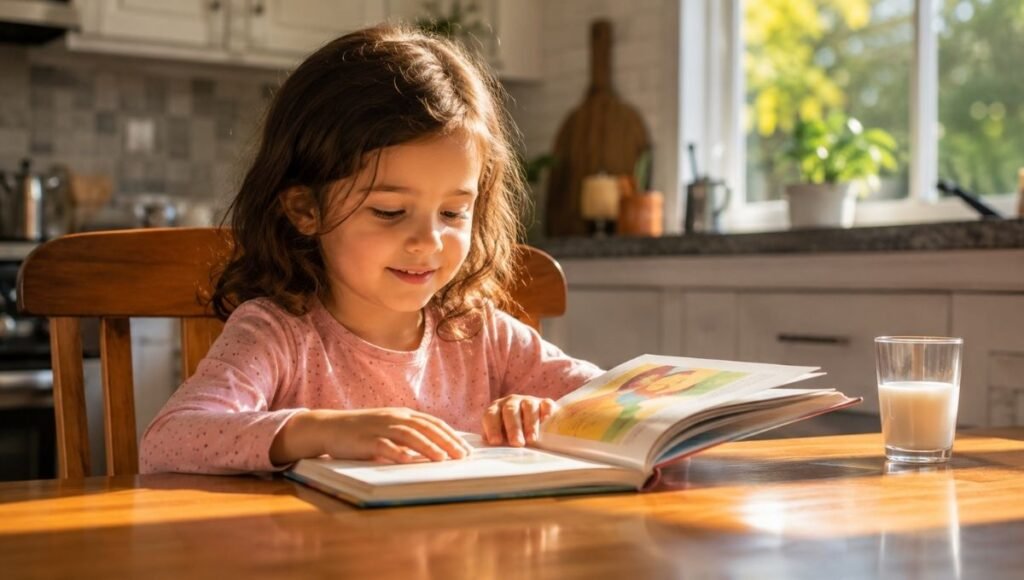
First grade is the year everything changes — and nobody tells you exactly how.
Your child walked into kindergarten carrying a backpack that was almost as big as they were. You took the photo. You cried a little. And they came home that first day completely fine, maybe even a little bored, because kindergarten was still mostly play.
First grade is different. First grade is when reading instruction gets serious. When some kids suddenly sprint ahead and others seem to stall. When the books that worked in kindergarten feel too easy but the chapter books everyone else seems to be reading feel impossibly long. When your child comes home from school and announces that they hate reading — or worse, that they’re bad at it.
I’ve been through this. I know exactly how that sentence lands.
The good news: the right books at the right moment in first grade can completely change a child’s relationship with reading. Not the books assigned at school — the books you choose together, at home, for the specific reader your child is right now. This guide will help you find them.
Key Takeaways
- First grade (ages 6–7) is the developmental window when most children make the critical transition from “learning to read” to “reading to learn” — the books you choose at home powerfully reinforce what’s happening in the classroom.
- First graders span an enormous reading range: some are still working on phonics fundamentals; others are ready for their first chapter books. This guide covers the full range.
- Research from the National Reading Panel consistently shows that children who read at least 20 minutes per day outside of school achieve reading gains significantly greater than those who read only at school.
- The biggest mistake parents make in first grade: choosing books that are either too hard (causing frustration) or too easy (causing boredom). The right book is one your child can read with about 95% accuracy — challenging enough to build skills, accessible enough to build confidence.
- Series books are the single most powerful reading motivation tool available to first-grade parents. Once a child is inside a series they love, they will read without being asked.
What First Grade Readers Actually Need (It’s Not What You Think)
Here is the thing almost no one tells parents about first-grade reading: the goal is not to rush to chapter books.
I know. The pressure feels enormous. Maybe your child’s classmate is reading a Magic Tree House book. Maybe your neighbor’s kid was reading chapter books before Christmas break. Maybe you read Charlotte’s Web in first grade and you remember it clearly.
But what research on early literacy consistently shows — and what good first-grade teachers know — is that children who spend first grade building genuine fluency and deep engagement with picture books and early readers develop stronger long-term reading outcomes than children who are pushed to chapter books before they’re ready.
Fluency means reading smoothly, automatically, with expression. It means not having to work so hard to decode each word that there’s no cognitive space left for understanding the story. Fluency is built through practice — and practice happens when children choose to reread books they love.
The books your first grader reads at home are for one thing above all others: building the positive association with reading that sustains the habit for life. Save the instruction for school. At home, make books feel like something worth loving.
Books for 1st Graders Who Are Still Building Reading Confidence

These are the books for children who are working hard at reading — who can sound out words but find it effortful, who need the pictures to carry some of the story, who would rather be read to than read independently. This is completely normal at the start of first grade.
Elephant and Piggie series by Mo Willems
Gerald the elephant is anxious about everything. Piggie is enthusiastic about everything. Together they navigate friendship, misunderstanding, and the small social complications of daily life. The books are short, the text is large, and the dialogue format means children can follow who is speaking without being confused by attribution.
Why they work for building readers: The books are perfectly engineered for beginning readers. The vocabulary is controlled; the sentences are short; the humor rewards the reader immediately. Children who struggle through a long book and feel nothing get to finish one Elephant and Piggie book and feel the specific pleasure of completion — which is the beginning of reading identity.
How to use them: Let your child read Piggie’s lines while you read Gerald’s. The back-and-forth creates shared reading without making the child do all the work. When they’re ready, they’ll want both parts.
📦 Series — 25 books; start anywhere
💰 Budget Pick
Fly Guy series by Tedd Arnold
Buzz has a pet fly. His name is Fly Guy. Fly Guy can say Buzz’s name. Together they have adventures that are funny, slightly gross, and completely absorbing for six-year-olds who are just discovering that books can be about the things they actually find interesting.
Why they work: The Fly Guy books are early reader books — designed for children who are just becoming independent readers, with controlled vocabulary and short chapters. They are also genuinely funny, which is important. A child who laughs at a book will want to read another one.
Reading level: Lexile 170L–390L. Right for most beginning first graders.
📦 Series — 20+ books
💰 Budget Pick
Bob Books series by Bobby Lynn Maslen
Bob Books are not entertaining in the way that Elephant and Piggie are entertaining. They are phonics-based early readers designed to build decoding confidence systematically. “Mat sat. Mat sat on Sam.” But for children who are working on the mechanics of reading, the ability to actually decode every word on a page — to feel the success of reading without help — is its own profound reward.
When to use them: Bob Books are a tool, not a destination. Use them to build confidence in decoding; use Elephant and Piggie and Fly Guy to build the love of reading. Both are needed.
📦 Series — sets organized by skill level
💰 Budget Pick
Green Eggs and Ham by Dr. Seuss
Still essential. The controlled vocabulary — Seuss famously wrote this book using only 50 different words — means children with limited decoding ability can still access the whole story. The repetitive structure builds fluency through natural repetition. And the message — try things before you decide you don’t like them — lands with particular force for children who are deciding how they feel about reading.
💰 Budget Pick — own this one
Frog and Toad Are Friends by Arnold Lobel
Five short stories about two friends. Frog is confident; Toad is anxious. Together they navigate the ordinary complications of close friendship with warmth and humor. The Newbery Honor was completely deserved.
Why it matters for first graders specifically: The stories are short enough to finish in one sitting but substantial enough to feel like real reading. The vocabulary is challenging without being inaccessible. And the friendship between Frog and Toad models something most first graders are navigating for the first time — the complex, tender work of having a best friend who is very different from you.
Reading level: Lexile 400L. Perfect for mid-year first graders.
📦 Series — Frog and Toad Together, Frog and Toad All Year, Days with Frog and Toad
💰 Budget Pick
Best Picture Books for 1st Graders to Read Together
First grade is not too old for picture books. This needs to be said clearly, because there is a pervasive cultural assumption that once a child can read independently, picture books are babyish. They are not.
The best picture books for first graders are operating at emotional and linguistic complexity that early reader books can’t yet reach. They give children access to rich vocabulary, complex narrative structures, and emotional depth while the pictures carry enough of the story to make comprehension possible. Read-alouds of excellent picture books in first grade are doing some of the most important literacy work available.
The Dot by Peter H. Reynolds
Vashti hates art. She stares at her blank paper at the end of art class and does nothing. Her teacher asks her to just make a mark and see where it takes her. Vashti jabs her pencil into the paper. From that single angry dot, something extraordinary grows.
Why it’s essential for first graders: Every first grader knows the experience of staring at a blank paper. Every first grader knows the feeling of being certain they can’t do something before they’ve tried. The Dot gives them language for that feeling — and an alternative.
How to read it: After finishing, give your child a piece of paper and say “Just make a mark.” See what happens.
⭐ Worth the Splurge — this is a book that stays
Ramona the Pest by Beverly Cleary
Ramona Quimby is starting kindergarten and has very strong opinions about how it should go. This is actually a first-grade read-aloud, not an independent read — the vocabulary and sentence complexity are right for reading aloud to first graders while they follow along.
Why first graders love it: Ramona says the things children think but aren’t supposed to say. She does the things children want to do but aren’t supposed to do. She is enthusiastic in ways that get her in trouble and she cannot understand why the world keeps responding to her enthusiasm as if it were a problem.
Every first grader who has ever gotten in trouble for being too much of something will recognize themselves in Ramona.
📦 Series — multiple Ramona books follow
💰 Budget Pick
The True Story of the Three Little Pigs by Jon Scieszka
The wolf’s version of what happened. He just wanted to borrow some sugar, and the sneezing was not his fault. The humor comes from unreliable narration — the gap between what the wolf claims and what the reader knows is true — which is a sophisticated literary device that first graders grasp immediately and find hilarious.
Why it matters: Perspective-taking — the ability to understand that different people experience the same event differently — is a foundational skill for reading comprehension, empathy, and social reasoning. This book teaches it through comedy.
💰 Budget Pick
Where the Wild Things Are by Maurice Sendak
Max misbehaves. He is sent to bed without supper. His room transforms into a forest. He sails to where the wild things are, becomes their king, leads a rumpus, and then comes home to find his supper still warm.
For first graders specifically: The emotional arc — anger, escape into fantasy, the satisfaction of power, homesickness, return — is the exact arc many first graders are navigating. The wild things are the big feelings. The warm supper at the end is the love that was never gone.
⭐ Worth the Splurge — own this one
Tuesday by David Wiesner
Frogs on flying lily pads, rising at dusk. No text. The whole story is told in illustrations. For a first grader who is working hard at reading and feeling tired of the effort, Tuesday gives them the experience of “reading” a book — following a narrative, predicting outcomes, understanding causality — entirely through images. This is reading. It is also restoration.
How to use it: Let your child tell you the story. Ask “what do you think happens next?” Ask “why do you think the frogs are flying?” The narration they produce is more sophisticated than anything they could decode from a page.
💰 Budget Pick — Caldecott Medal
Best First Chapter Books for 1st Graders
These are the books for children who are ready to start reading independently but need books that are shorter, more accessible, and more forgiving than the chapter books aimed at older elementary readers.
Magic Tree House series by Mary Pope Osborne
Jack and Annie discover a tree house in the woods that takes them back in time. Dinosaurs, knights, Egyptian mummies, ninjas — each book is a different adventure in a different historical period, with just enough historical fact woven in to make it educational without making it feel like school.
Why it works as a first chapter book: The chapters are short. The vocabulary is accessible. The adventure moves fast. And the series has 60+ books, which means a child who is hooked will have something to read for the next two years. The first book — Dinosaurs Before Dark — takes most confident first graders about a week to finish independently.
Reading level: Lexile 270L–560L. Most accessible entry at Book 1.
📦 Series — 60+ books plus companion Merlin Missions series
💰 Budget Pick
Nate the Great series by Marjorie Weinman Sharmat
Nate is a boy detective who solves neighborhood mysteries while eating pancakes. The cases are simple; the humor is warm; the writing is clean and confident. Nate the Great books are perfect first chapter books because they feel like real chapter books — they have chapters, mysteries, resolutions — without the length that overwhelms early independent readers.
Reading level: Lexile 500L–640L. Right for confident first graders.
📦 Series — 25+ books
💰 Budget Pick
Mercy Watson series by Kate DiCamillo
Mercy Watson is a pig who is treated like a daughter by Mr. and Mrs. Watson. She loves buttered toast. She creates chaos everywhere she goes, entirely without malice. The books are warm, funny, and beautifully written — DiCamillo’s sentences are the best in early reader fiction.
Why it works: The humor is gentle and the situations are absurd in a specific way that first graders find completely satisfying. And the books look like chapter books — proper chapters, some illustrations — which matters to children who are measuring themselves against what their classmates are reading.
📦 Series — 6 books
💰 Budget Pick
Horrible Harry series by Suzy Kline
Doug narrates his first-grade classroom adventures and his best friend Harry, who is odd and wonderful and always doing something slightly unexpected. The books are set in a first-grade classroom, which means first graders reading them are reading about their own world — their own anxieties about school, friendship, fitting in, and getting things wrong.
Why the classroom setting matters: Books set in school give first graders a framework for processing what school is actually like — the social dynamics, the classroom rituals, the specific anxiety of not knowing what comes next. Horrible Harry is the rare book that makes that world funny rather than frightening.
📦 Series — 30+ books
💰 Budget Pick
The Transition Problem: When Your Child Is Between Levels
This is the part of first-grade reading that nobody prepares you for.
Your child has finished their Elephant and Piggie books. They’re reading Fly Guy independently. But Magic Tree House still feels too long and too dense. They pick it up, read three pages, put it down. They say they’re bored. They say they don’t want to read.
They are not bored. They are in the gap.
The gap is the space between early readers and first chapter books, and it is one of the most challenging reading moments in a child’s development. The books that got them here are now too easy; the books waiting for them are not yet accessible. This gap can last weeks or months, and if it’s handled badly — if a child is pushed toward books that frustrate them, or if they’re left without any books that feel right — it can become the point where they decide reading is not for them.
What to do in the gap:
Read aloud together more. This is the exact moment when a parent reading a slightly more complex book aloud — Ramona the Pest, Charlotte’s Web, the Magic Tree House books — builds the bridge. The child’s listening comprehension exceeds their reading level; the read-aloud gives them access to books they can’t yet read independently, which builds vocabulary and narrative understanding that makes independent reading more accessible when it comes.
Bridge books to try:
- Hi! Fly Guy by Tedd Arnold (the Fly Guy books at their most accessible)
- Biscuit series by Alyssa Satin Capucilli (very short, very accessible)
- I Can Read Level 2 books — various authors — designed specifically for the gap
- Vet Volunteers series by Laurie Halse Anderson — slightly longer but highly motivating for animal lovers
- Rotten School series by R.L. Stine — for children who love humor and gross things
What to Read Aloud to 1st Graders (Keep Going — Even When They Can Read)
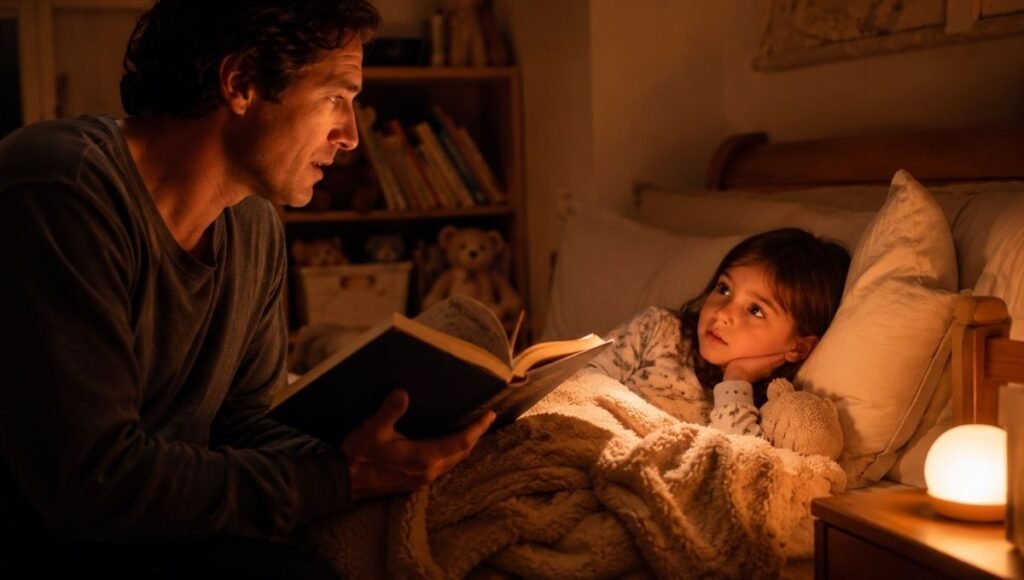
The most common mistake parents make when their child starts reading independently: stopping the read-aloud.
Please don’t.
A first grader’s listening comprehension is years ahead of their reading level. When you read aloud to them, you’re giving them access to vocabulary, narrative complexity, and ideas they could not access on their own — and you’re building the reading level they’ll be reading at independently in two or three years.
Essential first-grade read-alouds:
Charlotte’s Web by E.B. White — Start it in the first semester if you can. Read two chapters per night. Don’t warn them about the ending. Trust that they can handle it. Be there when they do.
The BFG by Roald Dahl — The vocabulary is extraordinary; the humor is exactly right for first graders; the friendship between Sophie and the Big Friendly Giant models something beautiful about the relationship between small and large, young and old, powerless and powerful.
Winnie-the-Pooh by A.A. Milne — Slower than most first graders expect, and richer than most adults remember. The characters are distinct psychological types; the humor is gentle and sophisticated; the world is completely safe. Read one chapter per night and let it build.
My Father’s Dragon by Ruth Stiles Gannett — A boy’s father runs away to an island where a baby dragon is being held captive. He has a plan to rescue it. The book is an adventure story with the specific warmth of a story told by someone who loves the person they’re telling it to.
When to Talk to Someone About First Grade Reading
Most reading variation in first grade is completely normal. But some patterns are worth raising with your child’s teacher.
Mention it to the teacher if your first grader:
- Cannot identify letter sounds by the end of the first semester
- Has significant difficulty rhyming or hearing sounds within words
- Is making no visible reading progress despite instruction and regular practice at home
- Shows signs of significant distress around reading — refusing completely, crying, becoming physically avoidant
- Has regressed — was reading things they can no longer read
An early conversation with the teacher is information, not alarm. First-grade teachers see many children developing simultaneously and can tell you whether what you’re observing is within the typical range. If there is a concern, first grade is an excellent time to identify it — early support for reading difficulties produces significantly better outcomes than waiting.
FAQ: What Parents Actually Search About Books for 1st Graders
What reading level should a 1st grader be at? By the end of first grade, most children are reading at approximately DRA Level 16–28, or Guided Reading Level J–M. However, the range is wide: children who begin first grade already reading may be at Level 20+, while children who are still developing phonics fundamentals may be at Level 4–8 and are still completely within normal development. What matters more than level is trajectory — is your child making consistent progress?
What are the best books for 1st graders? For beginning readers: Elephant and Piggie, Fly Guy, Bob Books. For confident readers ready for chapter books: Magic Tree House, Nate the Great, Mercy Watson. For read-alouds: Charlotte’s Web, The BFG, Ramona the Pest. For picture books: The Dot, Where the Wild Things Are, Tuesday. Choose based on where your child is right now, not where they should be.
How many books should a 1st grader read per month? Research suggests 20 minutes of daily reading outside of school is the threshold that produces significant reading gains. In practice, this might be 4–6 picture books per week, or 1–2 early reader books per week, or one chapter book every two weeks. Volume matters less than consistency — daily reading of any amount is more effective than occasional long sessions.
What are early reader books for 1st grade? Early reader books are books specifically designed for children who are just becoming independent readers — with controlled vocabulary, short sentences, large text, and illustrations that support the text. The Fly Guy series, Elephant and Piggie, Nate the Great, and the Biscuit series are all early reader books. They are distinct from beginning chapter books like Magic Tree House, which assume more fluency.
My 1st grader says they hate reading. What do I do? First: don’t panic. This is extremely common and almost never permanent. Second: don’t argue with the feeling. “I hear you — reading is hard work right now” is more useful than “No you don’t, reading is fun!” Third: find the book that might change their mind. For most resistant first-grade readers, that book is funny — Fly Guy, Dog Man, Elephant and Piggie. Humor is the most reliable gateway to reading engagement for children who are struggling.
Should I let my 1st grader choose their own books? Yes, with gentle guidance. Children who choose their own books read more than children who are assigned books, and reading more is the single most effective way to improve reading. Your role is to stock the environment — bring home books from the library, keep a pile accessible, suggest without insisting. Let them choose from the pile.
What books help 1st graders who are struggling with reading? Bob Books for phonics mechanics; Elephant and Piggie and Fly Guy for early independent reading; read-alouds by a parent for vocabulary and comprehension. If a child is significantly behind their peers despite regular reading practice, talk to their teacher — early identification and support for reading difficulties produces much better outcomes than waiting.
One Last Thing
My daughter’s first-grade teacher sent home a reading log at the start of the year. Twenty minutes per night. A box to check. A parent signature.
For the first few weeks, we checked the boxes. We read the assigned books. My daughter stared at the pages with the specific expression of someone doing homework.
And then she found Elephant and Piggie. I don’t even remember how — library, maybe, or a school book fair. She read There Is a Bird on Your Head and she laughed out loud. She read it again. She read it a third time at breakfast.
That was the beginning of the reading life. Not the reading log. The bird on Gerald’s head.
Find the book that makes your first grader laugh, or wonder, or feel understood. Let that book do the work. Everything else follows.
Keep exploring on ZestRead:
- Best Books for 6-Year-Olds: The Year They Start Reading Themselves
- Best Books for 7-Year-Olds: When Reading Really Takes Off
- What Age Do Kids Learn to Read? Reading Milestones by Age
- Early Literacy Skills: The 6 Building Blocks of Reading Every Parent Should Know
- Dialogic Reading: The Simple Technique That Makes Every Storytime Count
References
- National Reading Panel. (2000). Teaching Children to Read: An Evidence-Based Assessment of the Scientific Research Literature on Reading and Its Implications for Reading Instruction. National Institute of Child Health and Human Development. https://www.nichd.nih.gov
- Anderson, R.C., Wilson, P.T., & Fielding, L.G. (1988). “Growth in Reading and How Children Spend Their Time Outside of School.” Reading Research Quarterly, 23(3), 285–303.
- Chall, J.S. (1983). Stages of Reading Development. McGraw-Hill.
- Reading Rockets. (2023). “Reading 101 for Parents: Your First Grader.” https://www.readingrockets.org
Laura Bennett is the founder of ZestRead and a mom whose daughter discovered Elephant and Piggie at age six and read There Is a Bird on Your Head three times in one morning. She writes about children’s reading, reading development, and the books that change everything. Reach her at info@zestread.com